BREAKING NEW: Majority of Americans Support Taking Legal Action Against Trump—Public Debate Intensifies
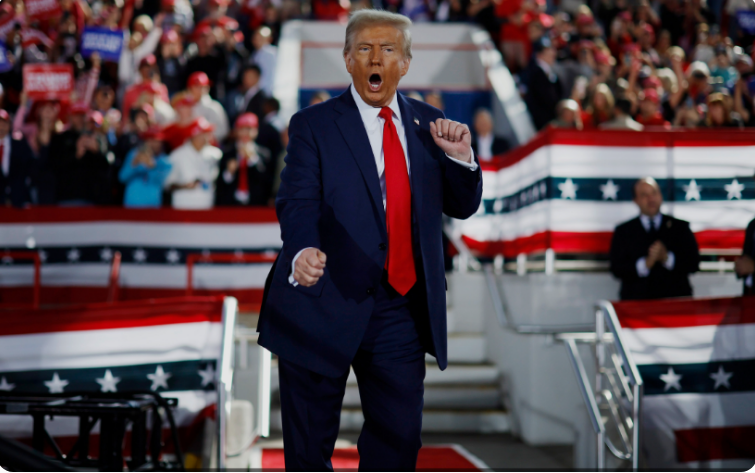
BREAKING NEW: Majority of Americans Support Taking Legal Action Against Trump—Public Debate Intensifies
New Polling Highlights Shifting Views on Accountability and Presidential Power
A new wave of polling data is drawing attention to evolving public attitudes toward presidential accountability in the United States, particularly regarding Donald Trump. As political debate intensifies ahead of the 2026 midterm elections, recent surveys suggest a noticeable shift in how voters evaluate leadership, performance, and constitutional checks on executive authority.
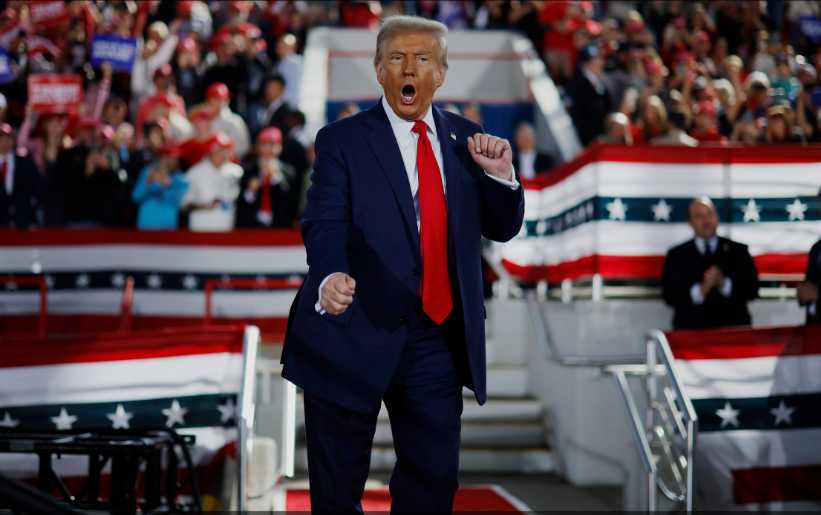
An April 2026 survey conducted by Lake Research Partners indicates that 52% of likely voters now support impeachment proceedings, with a significant portion expressing strong support.
The findings come just over a year into Trump’s second term and reflect growing scrutiny among certain segments of the electorate. While public opinion on such matters has historically fluctuated, the data points to increasing engagement with questions about accountability at the highest levels of government.
Earlier in the year, polling from CNN found that 58% of Americans viewed the president’s first year in office as unsuccessful. Respondents cited a range of concerns, including economic conditions, the use of executive authority, and the direction of foreign policy.
These issues have remained central to national discussions, shaping how voters interpret both policy decisions and leadership style.Despite these shifts, the country remains deeply divided along political lines. Approval ratings among Republicans remain high, with approximately 89% expressing support for Trump’s performance.
In contrast, about 84% of Democrats favor removal from office, underscoring a stark partisan divide that continues to define American politics. Independent voters, often seen as a key group in determining electoral outcomes, appear more varied in their views, reflecting a broader uncertainty about the current political landscape.(Image by Free Speech for People/Lake Research Partners)Constitutional experts emphasize that while public opinion plays a role in shaping political momentum, the process of removing a president is clearly defined and intentionally rigorous. Under the U.S. Constitution, impeachment begins in the House of Representatives and requires a majority vote. If articles of impeachment are approved, the process moves to the Senate, where a two-thirds majority is needed for conviction and removal from office. In a closely divided Congress, reaching that threshold presents a significant challenge.
Legal scholars note that this structure was designed to balance accountability with stability. The high bar for removal ensures that such actions are not taken lightly, while still providing a mechanism for addressing serious concerns. As debates continue, the distinction between political opinion and constitutional procedure remains an important part of the conversation.
The current polling trends also highlight broader questions about how Americans view executive power. Discussions about the scope of presidential authority, the role of oversight, and the importance of institutional checks have become increasingly prominent. These themes are likely to play a central role as candidates and voters prepare for the upcoming midterm elections.Political analysts suggest that the 2026 midterms could serve as a referendum on these issues. Voter turnout, campaign messaging, and shifting alliances will all influence how the electorate responds to the current climate.For some, the focus will be on policy outcomes and economic performance; for others, the emphasis may be on governance, transparency, and adherence to democratic norms.As the political landscape continues to evolve, the latest polling serves as a snapshot of a nation engaged in active debate about leadership and accountability. While opinions remain divided, the data underscores a shared interest in the functioning of democratic institutions and the balance of power within the federal government.
In the months ahead, these conversations are expected to intensify, shaping not only the midterm elections but also the broader direction of American political discourse.
2 MINUTES AGO! END IS NEAR? BIGGEST TRAGEDY JUST HAPPENED IN THE USA NM
2 MINUTES AGO! END IS NEAR? BIGGEST TRAGEDY JUST HAPPENED IN THE USA
The sky turned a bruised, unnatural shade of violet just moments before the sirens began their mournful wail, a sound that cut through the humid air like a jagged blade. Across the heartland, families who were merely finishing their dinner found their lives upended in a heartbeat as the horizon seemed to buckle under the weight of an unseen force. It wasn’t just the physical destruction that left the nation reeling, but the sudden, suffocating realization that we were standing on the edge of…
…a precipice we had long ignored. In the aftermath of the devastation, silence has become the most haunting sound of all. Survivors wander through the wreckage of their own lives, clutching photographs and remnants of a past that feels like it belongs to someone else. There is a collective, visceral reaction rippling through the country—a deep-seated intuition that this tragedy is not merely a statistical anomaly or a stroke of bad luck, but a profound, chilling signal that the foundations of our society are far more fragile than we dared to believe.
History is often written in the ink of catastrophe, and in the quiet hours following the event, the conversation has shifted from the logistics of recovery to the metaphysics of survival. Why now? Why here? These questions are being whispered in prayer circles, debated in the halls of power, and grappled with in the lonely hours of the night. For many, the sheer scale of the ruin serves as a mirror, reflecting the fractures in our own moral and communal lives. We have become a nation obsessed with the immediate, the digital, and the trivial, often losing sight of the bedrock values that once anchored us against the storms of time.
There is a dignity in how the survivors have reached out to one another, their hands calloused from moving debris, their eyes heavy with the weight of loss. This is the human response to tragedy: to rebuild, to comfort, and to find meaning in the ashes. Yet, the lingering question remains—is this a warning? If we view the world through a lens of cause and effect, we must eventually confront the possibility that our trajectory has been unsustainable. The tragedy acts as a forced pause, a moment where the frantic pace of modern existence is brought to a screeching halt, demanding that we look at what truly matters.
As the sun sets over the scarred landscape, the flickering lights of emergency vehicles illuminate the faces of people who are no longer the same as they were yesterday. They have been touched by the reality of how quickly everything can vanish. This is not the end of the story, but it is certainly the end of an era of complacency. We are being asked to look inward, to evaluate the integrity of our choices, and to consider whether we have been building our houses on sand. The warning is not in the destruction itself, but in the opportunity it provides for a fundamental shift in how we treat our neighbors and how we honor the fragile gift of life.
Resonance is found in the way we choose to move forward. We can either retreat into fear, waiting for the next blow to fall, or we can use this moment as a catalyst for a deeper, more meaningful connection to one another. The tragedy has stripped away the pretenses of our daily lives, leaving us raw and exposed. In that vulnerability, there is a chance for renewal. The ground may have trembled, but the spirit of the people remains, bruised but unbroken, searching for a path that leads away from the abyss and toward a horizon that promises more than just survival—it promises a chance to begin again, with eyes wide open to the truth.
The sky turned a bruised, unnatural shade of violet just moments before the sirens began their mournful wail, a sound that cut through the humid air like a jagged blade. Across the heartland, families who were merely finishing their dinner found their lives upended in a heartbeat as the horizon seemed to buckle under the weight of an unseen force. It wasn’t just the physical destruction that left the nation reeling, but the sudden, suffocating realization that we were standing on the edge of…
…a precipice we had long ignored. In the aftermath of the devastation, silence has become the most haunting sound of all. Survivors wander through the wreckage of their own lives, clutching photographs and remnants of a past that feels like it belongs to someone else.
There is a collective, visceral reaction rippling through the country—a deep-seated intuition that this tragedy is not merely a statistical anomaly or a stroke of bad luck, but a profound, chilling signal that the foundations of our society are far more fragile than we dared to believe.
History is often written in the ink of catastrophe, and in the quiet hours following the event, the conversation has shifted from the logistics of recovery to the metaphysics of survival. Why now? Why here? These questions are being whispered in prayer circles, debated in the halls of power, and grappled with in the lonely hours of the night.
For many, the sheer scale of the ruin serves as a mirror, reflecting the fractures in our own moral and communal lives. We have become a nation obsessed with the immediate, the digital, and the trivial, often losing sight of the bedrock values that once anchored us against the storms of time.
There is a dignity in how the survivors have reached out to one another, their hands calloused from moving debris, their eyes heavy with the weight of loss. This is the human response to tragedy: to rebuild, to comfort, and to find meaning in the ashes.
Yet, the lingering question remains—is this a warning? If we view the world through a lens of cause and effect, we must eventually confront the possibility that our trajectory has been unsustainable. The tragedy acts as a forced pause, a moment where the frantic pace of moder
n existence is brought to a screeching halt, demanding that we look at what truly matters.
As the sun sets over the scarred landscape, the flickering lights of emergency vehicles illuminate the faces of people who are no longer the same as they were yesterday. They have been touched by the reality of how quickly everything can vanish.
This is not the end of the story, but it is certainly the end of an era of complacency. We are being asked to look inward, to evaluate the integrity of our choices, and to consider whether we have been building our houses on sand. The warning is not in the destruction itself, but in the opportunity it provides for a fundamental shift in how we treat our neighbors and how we honor the fragile gift of life.
Resonance is found in the way we choose to move forward. We can either retreat into fear, waiting for the next blow to fall, or we can use this moment as a catalyst for a deeper, more meaningful connection to one another. The tragedy has stripped away the pretenses of our daily lives, leaving us raw and exposed. In that vulnerability, there is a chance for renewal. The ground may have trembled, but the spirit of the people remains, bruised but unbroken, searching for a path that leads away from the abyss and toward a horizon that promises more than just survival—it promises a chance to begin again, with eyes wide open to the truth.
😹 BREAKING: Former CIA Chief Calls to Remove Trump as War Tensions Explode
🚨 BREAKING: Former CIA Chief Calls to Remove Trump as War Tensions Explode
A political firestorm is erupting in Washington tonight…
Former CIA Director John Brennan is now openly calling for the removal of U.S. President Donald Trump, warning that the country may be facing a serious national security crisis.
In a statement that is rapidly going viral, Brennan argued that the 25th Amendment—a constitutional mechanism designed to remove a president deemed unfit—was effectively “written with Trump in mind.”
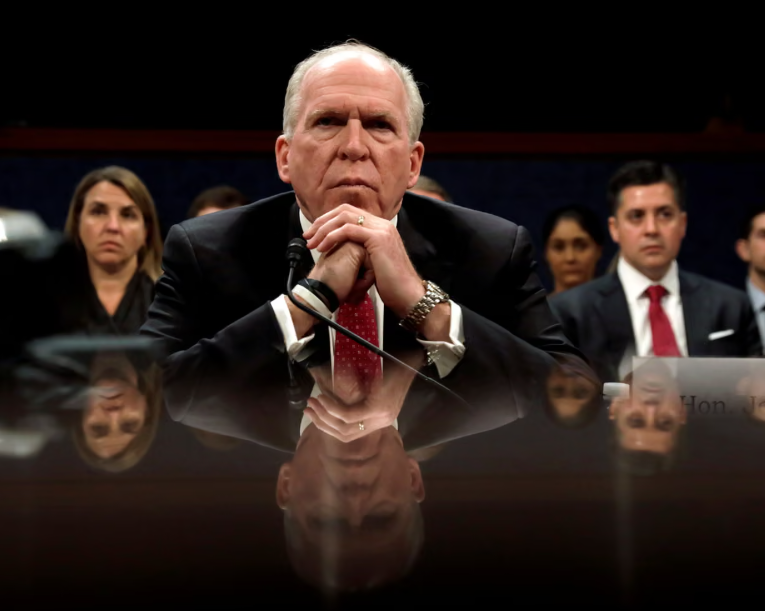
Former CIA director John Brennan in Washington DC on 23 May 2017. Photograph: Kevin Lamarque/Reuters
⚠️ “UNFIT FOR OFFICE” — SHOCK CLAIMS
Brennan did not hold back.
He described Trump’s recent rhetoric, particularly regarding Iran, as dangerous and deeply alarming, raising concerns about the president’s judgment at a time of escalating global tension.
The comments come as Trump has reportedly considered military action against Iran, including potential strikes and aggressive moves targeting critical infrastructure.
For critics, the combination of war threats and unpredictable messaging has triggered urgent questions:
👉 Is the president capable of safely exercising power?
👉 And should extraordinary measures now be taken?
🧠 25TH AMENDMENT PUSH GAINS MOMENTUM
The controversy is no longer limited to one voice.
Lawmakers in Washington are increasingly discussing the possibility of invoking the 25th Amendment to the United States Constitution, which allows the vice president and cabinet to remove a sitting president deemed unable to perform their duties.
Some politicians have even gone further—calling for cognitive tests to assess Trump’s fitness for office.
While such a move would be unprecedented, the conversation itself is spreading rapidly across political circles and social media.
🌍 IRAN CRISIS FUELS THE FIRE
At the center of the storm is the growing crisis with Iran.
Trump’s warnings—including statements suggesting devastating consequences for Iran—have intensified fears of a broader conflict in the Middle East.
Critics argue that this kind of rhetoric, combined with real military options under consideration, could push the region—and the world—toward dangerous escalation.
Supporters, however, say Trump is projecting strength and deterrence.
💥 POLITICAL EXPLOSION IN REAL TIME
This is quickly becoming one of the most explosive political moments in recent U.S. history.
Calls for removal…
Talk of war…
Questions about presidential power…
All unfolding at the same time.
And while invoking the 25th Amendment remains highly unlikely without support from within Trump’s own administration, one thing is clear:
👉 The pressure is building.
👉 The stakes are rising.
👉 And the world is watching.
📢 FINAL LINE
As tensions grow both at home and abroad, the question now isn’t just about politics—
It’s about stability, leadership, and what happens next.
Brennan, who served as head of the spy agency during Barack Obama’s presidency, told MS Now on Saturday that Trump’s recent volatile remarks about destroying Iranian civilization and the danger he posed to so many lives merited his removal from the Oval Office.
“This person is clearly unhinged,” he said. “I think the 25th amendment was written with Donald Trump in mind.”
Brennan added that Trump was too much of a liability to be allowed to continue to be commander-in-chief, with immense firepower at his disposal, including the US nuclear arsenal.
The ex-CIA director’s comments cast him at the forefront of a mounting debate over Trump’s decision to go to war with Iran and his increasingly violent threats to inflict mass destruction on that country. On 7 April, the president warned that Iran’s “whole civilisation will die tonight” if the Iranian regime failed to meet his ultimatum – a threat Brennan said hinted at the deployment of nuclear capabilities.
As Trump has ramped up his aggressive and expletive-filled rhetoric, an increasing number of Democrats have responded by calling for the 25th amendment to be invoked. The measure, baked into the US constitution in 1967, allows for the vice-president and a majority of the cabinet to remove the president on the basis that he is “unable to discharge the powers and duties of his office”.
More than 70 Democrats in Congress have called for the amendment to be applied, according to the latest count by NBC News.
The chances of that actually happening are close to nil, given the lock-tight loyalty that continues to be shown to Trump by his vice-president, JD Vance, and his entire cabinet. However, concern about Trump’s increasingly charged language and dystopian threats are likely to persist given the failure of peace talks between the US and Iran on Saturday as well as the possibility of renewed hostilities.
Brennan’s comments were especially striking given that he is under active investigation by Trump’s US justice department as part of the president’s vendetta against his perceived enemies. Under pressure from the White House, the justice department put Brennan and the former FBI director James Comey under criminal investigation in July.
May you like



Two months later, Comey was charged with two counts accusing him of lying to Congress during testimony in 2020 over the Russia election interference investigation. A judge has thrown out that prosecution.
It is understood that the investigation into Brennan is ongoing. In March, the chair of the House judiciary committee, Trump ally Jim Jordan, claimed the inquiry was “heating up”.







