Chapter 12 - The Blue DoorSpring came late that year.
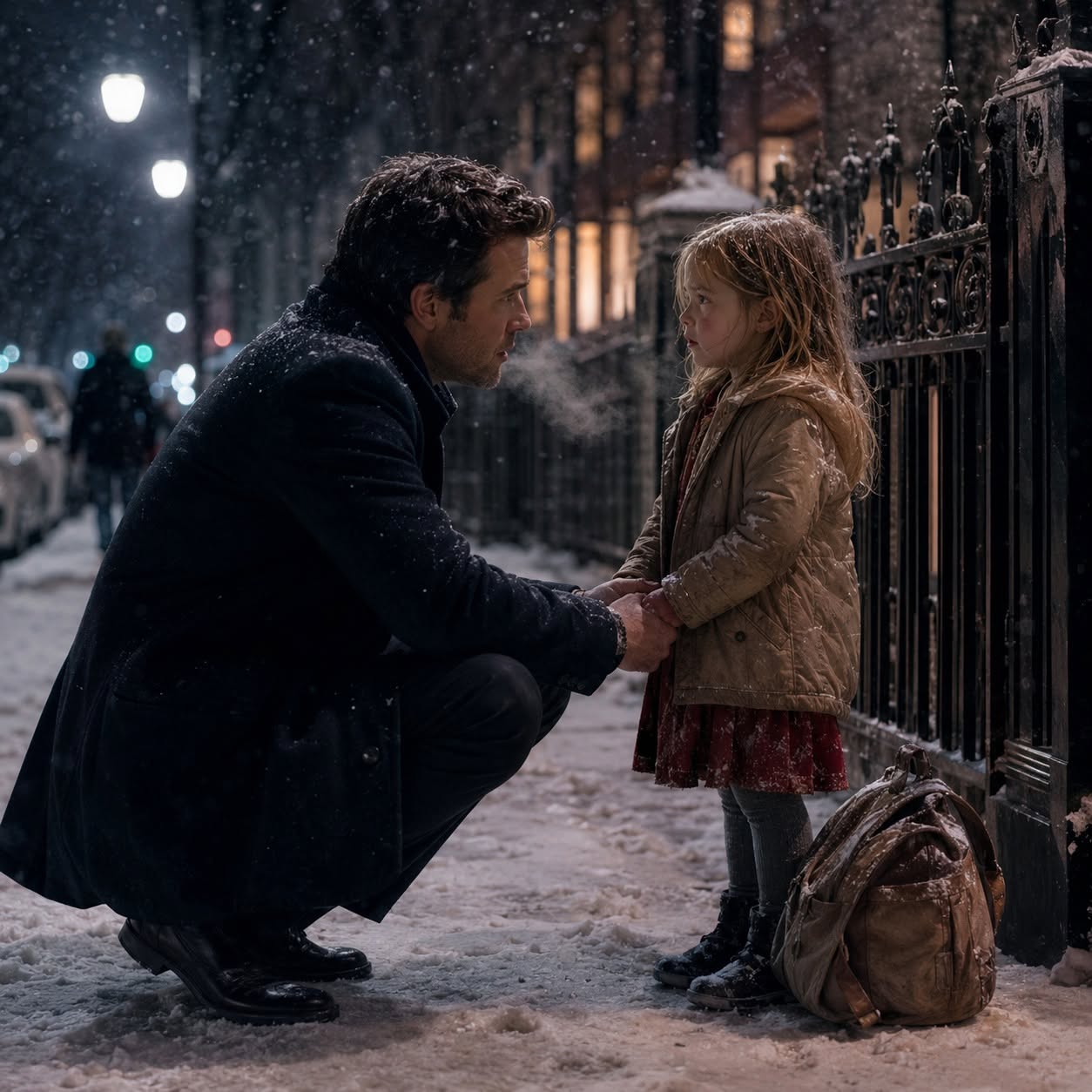
For months, it felt impossible that the snow would ever leave the city. Dirty piles lingered at curbs. Ice clung to shaded sidewalks. Cold lived in people’s shoulders.
Then one morning, Lucy ran into my office holding a paper cup with a green sprout inside.
“Bean plant,” she announced. “His name is Gerald.”
Grace followed behind her, healthier now, her color back, her hair loose around her shoulders.
“Gerald needs sunlight,” Lucy said. “Your office has too much window for one person.”
That was how a bean plant became the first living thing on my desk.
Not a trophy.
Not a signed deal.
A bean plant named Gerald.
Hart Industries survived, but changed so completely that some people said it had died and something better had taken its place. I stepped down as permanent CEO and stayed as chairman only long enough to rebuild the board. Then I hired someone who understood people were not numbers with coats on.
The Hart Foundation became Daniel’s Foundation.
Grace hated the idea at first.
“He wouldn’t want his name on buildings,” she said.
“No,” I agreed. “He’d want it on rent relief checks, hospital advocates, emergency childcare, and legal aid.”
That convinced her.
The first Daniel Hart Family Center opened in the same neighborhood where Lucy had once walked through the storm. It had after-school care, a nurse’s clinic, emergency parent support, and a rule posted in the lobby in bright letters:
NO CHILD WAITS ALONE.
Lucy cut the ribbon.
She used scissors too big for her hands and took three tries.
Everyone clapped anyway.
Reporters asked her how she felt.
She looked at them seriously.
“Hungry.”
So the first official act of the Daniel Hart Family Center was ordering pizza.
Victor Sloane took a plea deal and gave up names that made headlines for weeks. Celeste Hart fought every charge, lost most of them, and discovered that legacy did not keep a person warm in a prison cell. Elise entered witness protection with Anna, though before she left, she gave me a box of Daniel’s old notes.
Inside was a letter addressed to me.
Nate,
If I don’t make it, don’t become Dad just because grief is easier when it has armor. You were always better than him when you forgot to be afraid. Find Grace. Find Lucy. And if they find you first, don’t waste the miracle.
—D
I read it once.
Then again.
Then I sat on the floor of my penthouse, the place I had once believed meant success, and cried like a man finally old enough to be young again.
Six months after the snowstorm, Grace invited me to dinner.
Not hospital food.
Not takeout.
Dinner.
At her apartment.
The yellow building with the faded blue door.
Mrs. Alvarez made rice pudding downstairs and pretended not to spy. Aunt May came early, rearranged Grace’s kitchen, insulted my tie, then kissed my cheek like I had passed a test I did not know I was taking.
Lucy wore pajamas with stars on them and showed me three new drawings.
One of Mommy.
One of Daddy with wings.
One of me.
In the drawing, I was holding a briefcase in one hand and a pancake in the other.
Above my head, Lucy had written:
UNCLE NATHAN, GOOD GROWN-UP.
I stared at those words too long.
Grace saw.
After Lucy fell asleep, Grace and I sat at the small kitchen table where the half-dead vase of flowers had been replaced by fresh tulips.
“I used to be afraid of your name,” she said.
“I used to be proud of it.”
“And now?”
I looked around the apartment.
At Lucy’s drawings.
At Daniel’s photograph on the shelf.
At the blue door beyond the living room.
“Now it depends who says it.”
Grace smiled softly.
For a while, we said nothing.
Silence, I had learned, was different when it was safe.
Then she reached across the table and took my hand.
Not dramatically.
Not like a movie.
Like someone choosing not to be alone with the past anymore.
“Daniel loved you,” she said.
My throat tightened.
“I loved him too. I just let anger make me forget.”
“He knew you’d remember.”
Outside, the city moved on. Cars passed. People hurried. Somewhere, snow existed only as water running toward drains.
Inside, a little girl slept under a roof no one would take from her.
A mother breathed without fear.
And I sat at a kitchen table that cost less than one chair in my boardroom, feeling richer than I ever had in my life.
The next morning, Lucy insisted we all visit Daniel’s grave.
Grace brought flowers.
I brought the letter.
Lucy brought Gerald the bean plant because she said Daddy should meet him.
We stood together beneath a bright sky.
For years, Daniel’s stone had been marked by lies people whispered and truths no one dared speak.
Now Lucy placed one hand on his name.
“Hi, Daddy,” she said. “Uncle Nathan found us. Or maybe I found him. Mommy says both can be true.”
Grace cried quietly.
I slipped my arm around her shoulders.
Lucy looked back at me.
“Are we family forever now?”
There are questions adults complicate because they are afraid simple answers will demand too much.
But Lucy had never needed complicated.
She needed someone to stop in the snow.
She needed someone to come when she called.
She needed proof that grown-ups could fail and still choose better.
I knelt beside her.
“Yes,” I said. “Forever.”
Lucy smiled.
Grace took my hand.
And in that moment, I understood what Grace had meant in the hospital when she said family like it was more than thank you.
Family was not blood alone.
It was not money.
It was not a name carved into buildings.
Family was the person who came back.
The person who stayed.
The person who opened the blue door and promised there were no monsters left inside.
For the first time in my life, I believed it.
May you like
And so did Lucy.
THE END.