Chapter 13 - WHAT I TOOK BACK
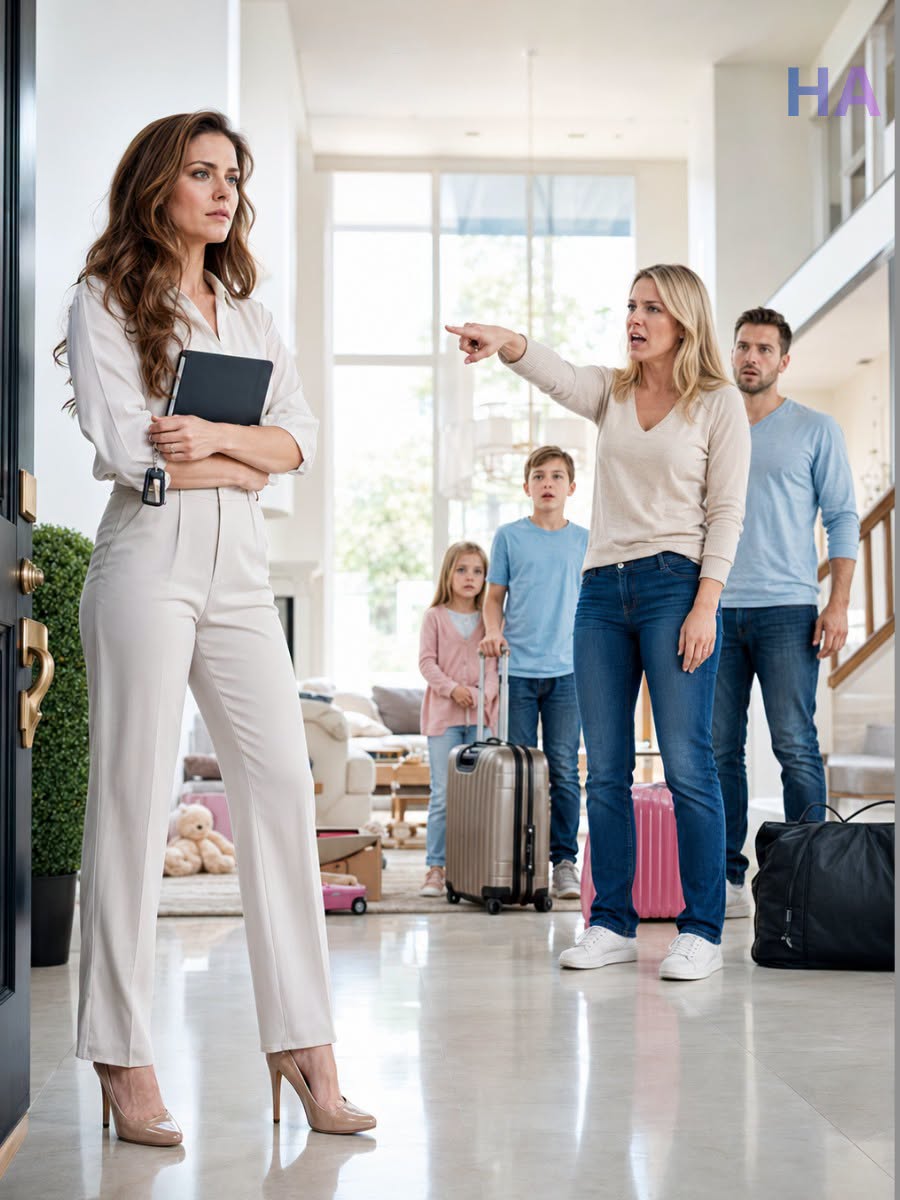
Two years after the night Rachel told me to leave, I stood in my kitchen at 11:38 on a Thursday.
The time was a coincidence.
I noticed it anyway.
The house was quiet except for rain tapping the windows.
A glass of wine stood beside my laptop.
But I was not alone.
Priya sat at the island reviewing paperwork.
Andrew Palmer stood by the stove opening champagne.
My two senior designers, Camille and Jonah, argued over whether a ribbon should be cut indoors or on the porch.
We were celebrating the purchase of a small commercial building for Mercer Design Studio.
My company had outgrown rented offices.
The new building had a materials library, two conference rooms, four private offices and windows facing a row of old oak trees.
I had bought it without a cosigner.
Without a fraudulent loan.
Without anyone’s permission.
Andrew lifted the bottle.
“Ready?”
“Not near the ceiling.”
He opened it anyway.
The cork struck a cabinet.
Everyone laughed.
I did too.
The sound filled the kitchen without making me feel invaded.
That was the difference between guests and occupants.
Between a gathering and a takeover.
Between generosity and surrender.
The doorbell rang.
Rachel stood on the porch carrying flowers.
She had asked whether she could come.
I had said yes.
Behind her, Lily and Mason held a cake box.
“Congratulations,” Rachel said.
“Come in.”
She stepped across the threshold.
No key.
No assumption.
An invitation.
The children placed the cake on the island.
It read MERCER DESIGN HAS A NEW HOME.
Mason had added a small icing house in the corner.
“Did you decorate this?” I asked.
He nodded proudly.
“It is not your house. It is your office.”
“Good distinction.”
Rachel laughed.
She looked healthier.
Her hair was shorter. She had completed probation six months early after fulfilling every condition and paying restitution consistently.
She rented a modest townhouse now.
Her credit was improving.
She had been promoted.
She had not asked me for money in two years.
Evan remained in prison.
The children spoke with him through supervised calls.
Rachel never asked me to take a position on that relationship.
She handled it with their therapist.
After the others left, Rachel remained to help clear dishes.
She lifted the damaged walnut coffee table coaster I kept in a drawer.
The white ring from the first party was still visible.
“You kept this?”
“I kept the table.”
“I meant the coaster.”
“It reminds me.”
“Of me being awful?”
“Of when I stopped explaining boundaries to people determined not to respect them.”
Rachel placed it down.
“Fair.”
She washed a glass.
Then she said, “I have something to tell you.”
I waited.
“I was offered a job in Raleigh.”
“That is great.”
“It pays more. Better benefits. The kids would need to change schools.”
“How do they feel?”
“Nervous. But Lily wants the arts program there.”
“What do you want?”
She looked surprised.
“I want the job.”
“Then take it.”
“Mom thinks I should stay close.”
“Mom is allowed to feel that.”
“You don’t think I am abandoning everyone?”
“No.”
She smiled faintly.
“I knew you would say that.”
“Then why ask?”
“Because I wanted to hear what it sounds like when someone does not turn love into an obligation.”
The sentence stayed with me.
Rachel took the job.
Before moving, she held a small dinner at her townhouse.
For the first time, I entered a home she paid for herself.
The furniture was secondhand.
The kitchen was narrow.
The walls needed paint.
She looked proud.
“You could do something with this place,” she said.
I raised an eyebrow.
“I mean professionally. I will pay.”
“What is your budget?”
She gave me a real number.
We laughed.
I helped her choose paint as a sister.
My company installed shelves as a client project.
She paid every invoice.
On the morning she left for Raleigh, Rachel drove to my house alone.
She stood on the porch.
“I used to think you took everything back when you evicted us.”
“I did not evict you. You left before the deadline.”
“You know what I mean.”
I waited.
She continued.
“The house. The rooms. The keys.”
“Yes.”
“But that wasn’t everything, was it?”
“No.”
She looked through the front window.
“What else did you take back?”
I thought about it.
“My right to be believed.”
She nodded.
“My work.”
Another nod.
“My relationship with the kids without you using it to bargain.”
Her eyes filled.
“My ability to say no without putting myself on trial.”
“I am glad.”
“So am I.”
She hugged me.
The embrace lasted only as long as we both wanted.
Then she stepped away.
“Goodbye, Nat.”
“Call when you arrive.”
“I will.”
She drove away.
I sat on the porch with coffee and watched sunlight move across the maple floor inside.
For years, I had defined the house as proof.
Proof that I was successful.
Independent.
Safe.
After everything that happened, it became something better.
Not proof that nobody could take from me.
Proof that when someone tried, I would no longer help them do it.
EPILOGUE — THE KEY
Five years after Rachel moved into my house under a lie, Lily came to stay with me for the summer.
She was fourteen.
Tall, observant and already better at color theory than some design students I had interviewed.
Rachel had accepted another promotion that required training in Atlanta. Instead of assuming I would take Lily and Mason, she called six months ahead.
She explained the schedule.
She offered to pay for food and activities.
She asked whether I wanted to host either child for part of the summer.
I said yes to Lily for four weeks.
Mason chose soccer camp with my parents.
The arrangement was written in a shared calendar.
Simple.
Respectful.
Almost ordinary.
On Lily’s first night, she stood in the guest room—an actual guest room now—and placed her suitcase beside the bed.
“Can I put pictures on the wall?”
“With removable strips.”
“Can I move the chair?”
“Yes.”
“Can my friend visit?”
“Ask me first.”
She smiled.
“Mom said you love rules.”
“Your mother is correct.”
“She said rules are how people know they are safe.”
I looked at her.
“That sounds like something she learned the hard way.”
Lily sat on the bed.
“Do you trust Mom now?”
The question deserved care.
“Yes.”
“Like before?”
“No.”
She waited.
“Trust after betrayal is different,” I said. “It is not less real. But it is built with visible pieces.”
“Like what?”
“Truth. Consistency. Respect. Time.”
“Did she do all that?”
“She keeps doing it.”
Lily nodded.
At the end of the summer, I gave her a key.
Not to the front door.
To the new Mercer Design Studio.
She had earned a paid internship organizing the materials library and helping Camille prepare digital boards.
Lily stared at the key on her palm.
“Mom said you do not give keys to anyone.”
“I give them when there is a reason.”
“Do you trust me?”
“Yes.”
Her eyes shone.
“I will not lose it.”
“You might. That is why we have a replacement policy.”
She laughed.
Rachel arrived that afternoon.
She stood in the studio lobby beneath a wall displaying photographs of our completed projects.
One image showed the Palmer Hotel.
Another showed my parents’ accessible bedroom.
A third showed Rachel’s Raleigh townhouse after renovation.
Rachel looked at Lily’s key.
“She earned it?”
“She did.”
Lily hugged her.
Then she ran upstairs to show Camille a fabric sample.
Rachel watched her go.
“You are good with her.”
“I always was.”
Rachel winced.
“I deserved that.”
“I did not mean it as punishment.”
“I know.”
She glanced around the studio.
“You built all this after Evan tried to destroy your business.”
“Yes.”
“Does that ever feel strange?”
“Sometimes.”
“Like you won?”
I considered it.
Winning would have meant defeating an enemy.
What happened was more complicated.
Evan went to prison, but the years he took from his children could not be returned.
Rachel changed, but our old closeness did not magically reappear.
My parents apologized, but childhood patterns left shadows.
I kept my house, but safety never again felt automatic.
“I do not think of it as winning,” I said.
“What do you call it?”
“Continuing.”
Rachel smiled.
“That sounds like you.”
Before leaving, she handed me a small box.
Inside was a brass drawer pull.
The same design I had chosen for my kitchen years earlier.
One had broken during the move-out.
Rachel had kept it.
“I found it in an old box,” she said. “I thought you might want it.”
I turned it in my hand.
That tiny piece of hardware had once represented everything I loved about the house.
The care.
The choices.
The ownership.
“I already replaced it.”
“I know.”
“Why give it back?”
“Because it was yours.”
There was no deeper explanation.
None was needed.
I took it home and placed it in the top drawer of my office desk.
Not as evidence.
Not as a warning.
As a reminder that returning what belonged to someone could be a form of love too.
That evening, I sat on my porch while rain moved through the crepe myrtles.
The maple floors glowed through the windows.
The walnut table stood in the living room.
The damaged white ring had faded after refinishing but never vanished entirely.
I could have replaced the table.
I chose not to.
Some marks were not failures.
They were records.
At 11:38, my phone rang.
Rachel.
“Lily left her studio key in my car,” she said.
I laughed.
“She promised she would not lose it.”
“She technically knows where it is.”
“Bring it tomorrow.”
“I will.”
A pause followed.
Then Rachel said, “Thank you for giving her one.”
“She earned it.”
“I know.”
Another pause.
“Good night, Nat.”
“Good night.”
I ended the call.
Then I locked the front door.
The sound was soft.
Ordinary.
Once, I had believed a locked door meant shutting people out.
Now I understood it differently.
A door could open with love.
It could close without cruelty.
A key could be offered.
It could be returned.
And a home was not truly yours because your name appeared on the deed.
May you like



It became yours in every moment you decided that kindness would no longer require your disappearance.
THE END







