Chapter 3 - The Yacht Named After a Lie
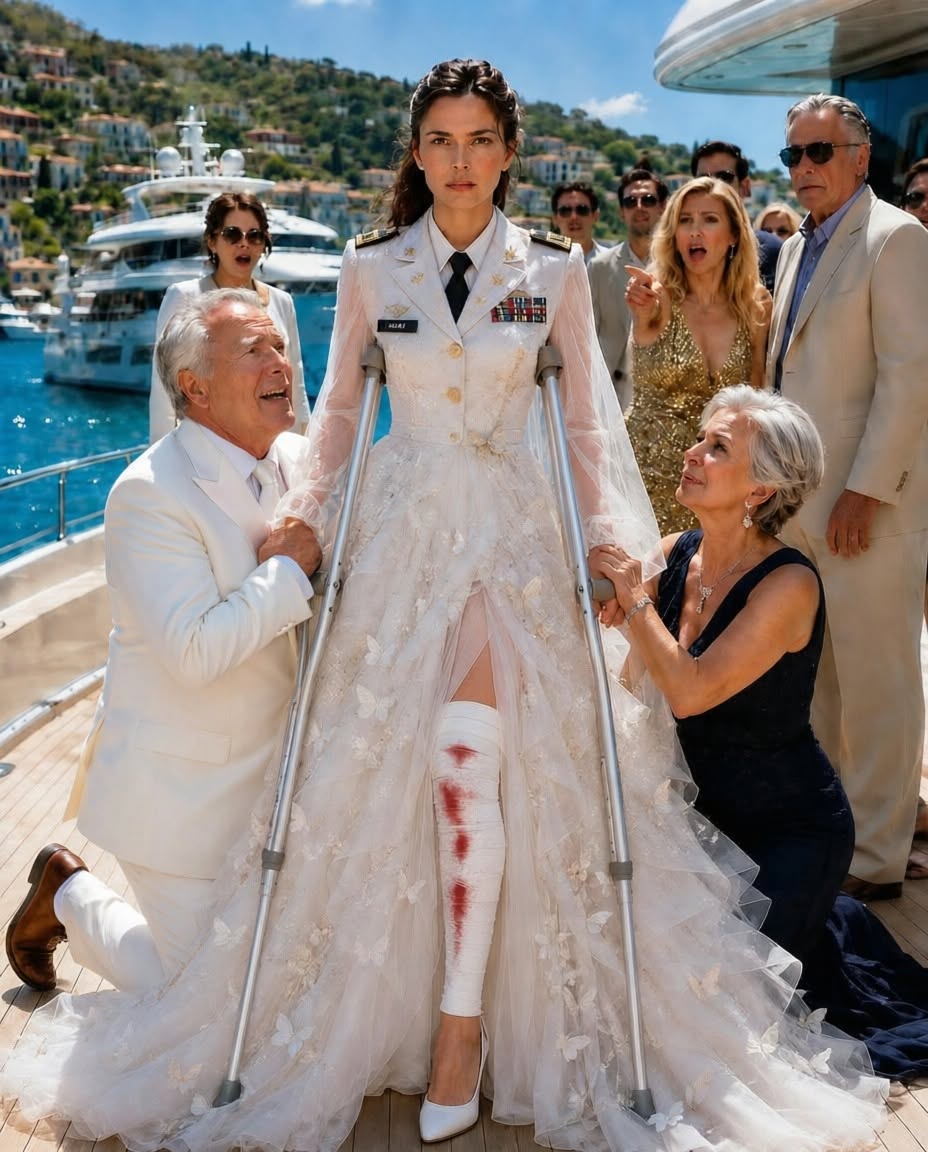
Madison named the yacht Golden Girl.
Emily found out through Instagram.
She was sitting in her apartment three weeks after surgery, her leg elevated on pillows, a physical therapy band stretched between her hands, when Jake walked in with a grocery bag and a face like he had swallowed nails.
“What?” Emily asked.
“Nothing.”
“Jake.”
He placed the bag on the counter too carefully.
That was how Emily knew it was bad.
He was only gentle when he was angry.
“What happened?”
He pulled out his phone and handed it to her.
Madison’s latest post filled the screen.
She stood barefoot on a white yacht deck, wearing sunglasses large enough to hide half her face, one hand wrapped around a champagne glass. Their mother stood beside her in a silk dress, smiling like the world had never once been unfair to anyone. Their father held a bottle in the background, laughing.
The caption read:
Daddy said every princess needs a kingdom. Welcome home, Golden Girl.
Emily stared at the photo.
Golden Girl.
That was what Grandpa used to call Emily.
Not Madison.
Emily.
When she was little, before everything changed, Grandpa would lift her onto the hood of his old Chevy and tell her she had sunlight in her bones.
“There’s my golden girl,” he would say. “Toughest kid in the whole county.”
Then Madison was born.
Tiny. Pretty. Loud.
Suddenly Emily was too rough, too serious, too difficult.
Madison became princess.
Emily became problem.
And now Madison had named a stolen yacht after the last pure thing Emily had left from childhood.
Jake watched her carefully.
“I shouldn’t have shown you.”
“No,” Emily said. “You should have.”
“She did it on purpose.”
“Probably.”
“She knows Grandpa called you that.”
“Yes.”
Jake’s jaw flexed.
“I want to smash that boat.”
Emily handed the phone back.
“No.”
“Emily—”
“No. We don’t smash evidence.”
Jake’s anger paused.
Then slowly, despite himself, he smiled.
“You are terrifying now.”
“I was terrifying before. I just didn’t have funding.”
The doorbell rang.
Jake’s smile vanished.
Emily nodded toward the drawer where she kept pepper spray.
He opened it.
But the person outside was not their father.
It was a man in a navy suit carrying a sealed envelope.
“Emily Carter?”
“Yes.”
“You’ve been served.”
Jake stepped forward. “Served with what?”
The man handed Emily the envelope and walked away.
Emily opened it at the kitchen table.
Inside was a formal notice from Carter Family Holdings.
Her father’s company.
It claimed Emily owed the family $38,000 for “educational support, housing assistance, emergency advances, and personal loans” given over the past decade.
Jake exploded.
“Loans? What loans?”
Emily read silently.
There it was.
Every insult converted into accounting.
The used car her father had “gifted” her when she enlisted.
A medical bill Grandpa had actually paid.
Three months of rent after she came home injured from training years ago, money her mother had called “what family does.”
Even the plane ticket to Grandpa’s funeral.
They had turned grief into debt.
At the bottom was a warning.
If payment was not received within thirty days, Carter Family Holdings reserved the right to pursue collection, wage garnishment, and legal action.
Jake slammed his hand on the table.
“They’re doing this now? After you asked for surgery money?”
Emily sat very still.
Then she laughed.
Jake looked frightened.
“Em?”
“They’re scared.”
“What?”
She slid the paper toward him.
“This isn’t about collecting money. This is a message. They must have heard I met with Russell.”
Jake read it again, slower this time.
“You think they know?”
“They know something.”
Emily reached for her phone and called Russell.
He answered on the second ring.
“I assume you received something unpleasant.”
“You knew?”
“I received a copy from their attorney ten minutes ago.”
“Can they do this?”
“They can try.”
“Russell.”
“They fabricated debts. That creates another problem for them.”
Emily looked at Jake, whose face had gone from furious to alert.
“What kind of problem?”
“The kind juries understand.”
Emily smiled.
Not happy.
Never happy.
But satisfied.
Her parents had just made a mistake.
Stealing trusts was complicated. Forged documents were technical. Misused accounts could be explained away by expensive lawyers and carefully chosen words.
But trying to charge a wounded veteran for attending her grandfather’s funeral?
That was something people could feel in their bones.
Russell continued, “Do not respond. Do not call them. Do not post anything. Let them believe they still control the story.”
Emily glanced at Madison’s yacht photo again.
Golden Girl gleamed under the California sun.
Let them have their party.
Let them pop bottles.
Let them laugh.
Because the thing about yachts was simple.
May you like



They looked beautiful when floating.
But when the tide turned, even the prettiest ones could sink.







