Chapter 7 - The Toddler Who Saw Too MuchRosa did not sleep that night.
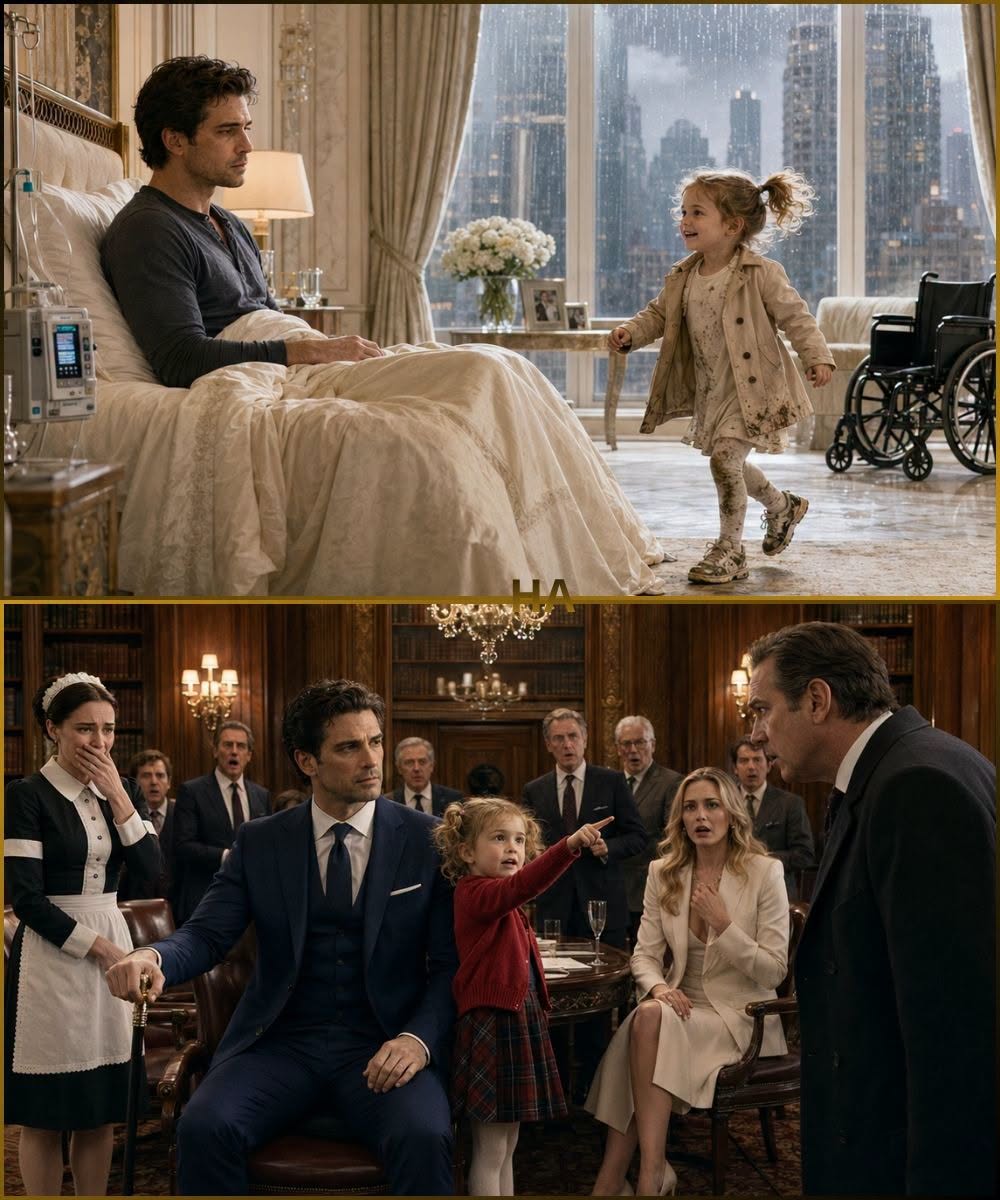
The carriage house apartment was beautiful in a way that made fear sharper. Soft blankets. Clean windows. A kitchen with cabinets that closed quietly. A bathroom where hot water arrived immediately instead of negotiating with old pipes.
Lily slept in the bedroom beneath three blankets, one arm around her rabbit, peaceful in the careless way children could be when adults stood guard against nightmares.
Rosa sat at the kitchen table with the lights off.
A security man stood outside the building.
Another patrolled the driveway.
Rosa should have felt safer.
Instead, she felt visible.
People like her survived by not becoming part of rich people’s wars. She had failed at that. Her daughter had walked into a sick man’s bedroom and placed a paper heart on a billionaire’s blanket, and somehow that tiny act had pulled them into a conspiracy involving drugs, money, and men who sent photographs through the dark.
At 2:17 a.m., Lily cried out.
Rosa rushed to her.
The little girl was sitting up, eyes wide, cheeks wet.
“Baby?”
“Bad juice,” Lily sobbed.
Rosa gathered her close.
“It’s okay. You’re safe.”
“He say shhh.”
“Who?”
Lily shook her head and cried harder.
Rosa rocked her until dawn.
At breakfast, Marcus asked to speak with Lily.
Rosa almost refused.
Then she saw him in the morning room.
He was not in bed. He sat in his wheelchair near the windows, wearing a dark sweater instead of a suit, looking less like a king and more like a man who had been awake with pain and worry.
On the table were pancakes shaped badly like rabbits.
Mrs. Callaway stood beside them with the grim expression of someone forced into whimsy.
Lily stared.
“Rabbit pancakes?”
Marcus said, “That was the intention.”
“They funny.”
“Yes. The chef has been informed.”
Lily climbed into the chair beside Rosa.
Marcus did not begin with questions.
He let Lily pour too much syrup. He let her tell him her rabbit’s full name, which changed twice during the meal. He listened while she explained that the carriage house was nice but the shadows were too tall.
Only after she finished eating did he ask gently, “Lily, do you remember the bad juice?”
Rosa’s arms tightened.
Lily looked at her mother.
Rosa nodded.
“You can tell the truth, baby.”
Lily looked at Marcus.
“Mr. Colin put drops.”
“Yes.”
“Mr. Gerald took white candy.”
“Yes.”
“Mean lady had bottle.”
“Yes.”
Marcus kept his voice calm though every word added weight to the case against him.
“Did anyone else touch my medicine?”
Lily frowned with deep concentration.
Then she pointed toward the hallway.
“Him.”
Marcus turned.
No one stood there.
“Who?”
“The whisper man.”
Mrs. Callaway’s face changed.
Rosa asked, “What whisper man?”
Lily lowered her voice dramatically.
“He talk like snake. In phone. He say sad man sign papers when sleepy.”
Marcus went still.
“Where did you hear this?”
“By big flowers.”
“The foyer?”
Lily nodded.
“When?”
She shrugged.
Time meant little to her.
Mrs. Callaway spoke.
“She may mean the day Vanessa returned. There were flowers in the foyer.”
Marcus leaned forward.
“What did the whisper man look like?”
Lily touched her hair.
“No hair here.”
Balding.
“Glasses?”
She nodded.
“Blue tie.”
Mrs. Callaway whispered, “Arthur Bell.”
Marcus’s corporate counsel.
Not Gerald’s man, officially.
His.
Marcus felt the circle widening.
Arthur Bell had prepared the emergency governance documents.
Arthur Bell had advised him to sign while he was heavily fogged.
Arthur Bell had said, “Just temporary language, Marcus. We can revisit when you’re stronger.”
Marcus looked at Mrs. Callaway.
“Call Arthur. Tell him I want him here at two.”
“And Gerald?”
“No. Let Arthur come alone.”
But Arthur Bell did not arrive at two.
At 1:35, his assistant called to say Mr. Bell had suffered a sudden medical emergency.
A heart attack, she said.
He was dead before reaching the hospital.
The room went silent when Mrs. Callaway delivered the news.
Rosa covered Lily’s ears too late, though the child did not understand.
Marcus looked out the window.
Gerald was cleaning the board.
One witness at a time.
That afternoon, Marcus’s private attorney, Naomi Frost, arrived.
Naomi was not impressed by wealth because she had spent twenty years suing people who owned too much of it. She wore a black suit, no jewelry, and carried a tablet full of documents Marcus had forgotten existed.
She reviewed everything.
Security footage. Blood test. Sedative bottle. Lily’s statements. Vanessa’s admission. Colin entering Gerald’s car. Arthur’s suspicious death.
Then she looked at Marcus and said, “You’re in more trouble than you think.”
“I assumed that.”
“No, you assumed betrayal. This is structural.”
Naomi pulled up the emergency governance amendment.
“If Gerald can prove you are medically impaired, he can trigger a protective leadership clause. If the board votes, he becomes interim executive authority. If you challenge, they drag your diagnosis into court and claim your judgment is compromised.”
Marcus’s jaw tightened.
“Because I am sick.”
“Because they can make sick look incapable.”
Rosa, who had been standing quietly near the door, said, “They were making him look more sick.”
Naomi turned to her.
“Yes.”
The simplicity of it chilled the room.
Gerald did not need to kill Marcus immediately.
He needed to make him legally vanish.
A living man with no control.
A billionaire trapped inside signatures.
Marcus looked at Lily, who was coloring on the rug with a security guard standing just outside the door.
“She saw him.”
Naomi’s expression softened slightly.
“She did.”
“She is three.”
“Yes.”
“Can that matter?”
“In court? Carefully. In truth? Absolutely.”
Rosa spoke sharply.
“She is not going to court.”
Naomi nodded.
“I agree.”
Marcus looked at Rosa.
“No one will put her on display.”
Rosa’s eyes searched his face.
She believed him a little more than yesterday.
That mattered to him more than it should.
At five o’clock, Gerald called.
Marcus put him on speaker with Naomi listening silently.
“Marcus,” Gerald said warmly. “I heard about Arthur. Terrible shock.”
“You sound devastated.”
“I am. He was a good man.”
“He was a useful man.”
A pause.
“What is that supposed to mean?”
“It means I know.”
Gerald sighed.
“I was afraid you might become confused.”
“There it is again. Confused. Vulnerable. Emotional. Impaired. You’ve been building vocabulary around my grave.”
“Marcus, listen to yourself.”
“I am listening.”
“You are surrounding yourself with a maid, a toddler, a hostile estate manager, and an outside attorney. You pushed away Vanessa. You suspended Colin without process. You’re accusing loyal people based on the babbling of a child.”
Rosa flinched.
Marcus’s voice turned cold.
“Say one more word about the child.”
Gerald’s tone changed.
Not much.
Enough.
“You always were sentimental beneath the cruelty. I wondered when it would finally cost you.”
Marcus smiled slightly.
“Come to the house tomorrow.”
“Why?”
“Board meeting. Emergency session. Bring whoever you think you own.”
Gerald laughed softly.
“You’re sure?”
“No,” Marcus said. “But I am finished being managed from my sickbed.”
After the call ended, Naomi looked at him.
“That was either brave or stupid.”
“Can it be both?”
“Often.”
Rosa approached the desk.
“Mr. Hail, tomorrow Lily and I should leave.”
Marcus looked up.
“Where would you go?”
“Home.”
“Gerald knows where you live.”
Fear flashed across her face.
Naomi spoke gently.
“He likely does.”
Rosa’s voice trembled.
“I hate this.”
“I know,” Marcus said.
“No, you don’t. You hate losing control. I hate that my daughter saw something she never should have seen. I hate that telling the truth makes her less safe. I hate that rich men can turn a house into a storm and call everyone else emotional for getting wet.”
The room went silent.
Marcus absorbed every word.
Then Lily looked up from her coloring.
“Mama mad.”
Rosa covered her face.
A laugh broke from Marcus.
Then Naomi.
Then, impossibly, Mrs. Callaway.
Rosa lowered her hands, caught between anger and exhaustion, and laughed too.
The moment lasted only seconds.
But it changed the air.
That night, Marcus slept less than two hours.
At dawn, he asked Mrs. Callaway to bring him his charcoal suit.
“The dark one,” he said.
She looked at his wheelchair, then at him.
“Are you certain?”
“No.”
She nodded.
“Very good.”
By noon, the board would arrive.
Gerald would smile.
Documents would open.
May you like



Lies would dress themselves as concern.
And somewhere in the mansion, a toddler with crooked pigtails would remember one more thing that no adult had thought to ask.
Related Stories







