Chapter 13 - WHAT FIVE YEARS COULD NOT STEALFive years after Dominic found Elena at Bellini’s, the triplets turned ten.
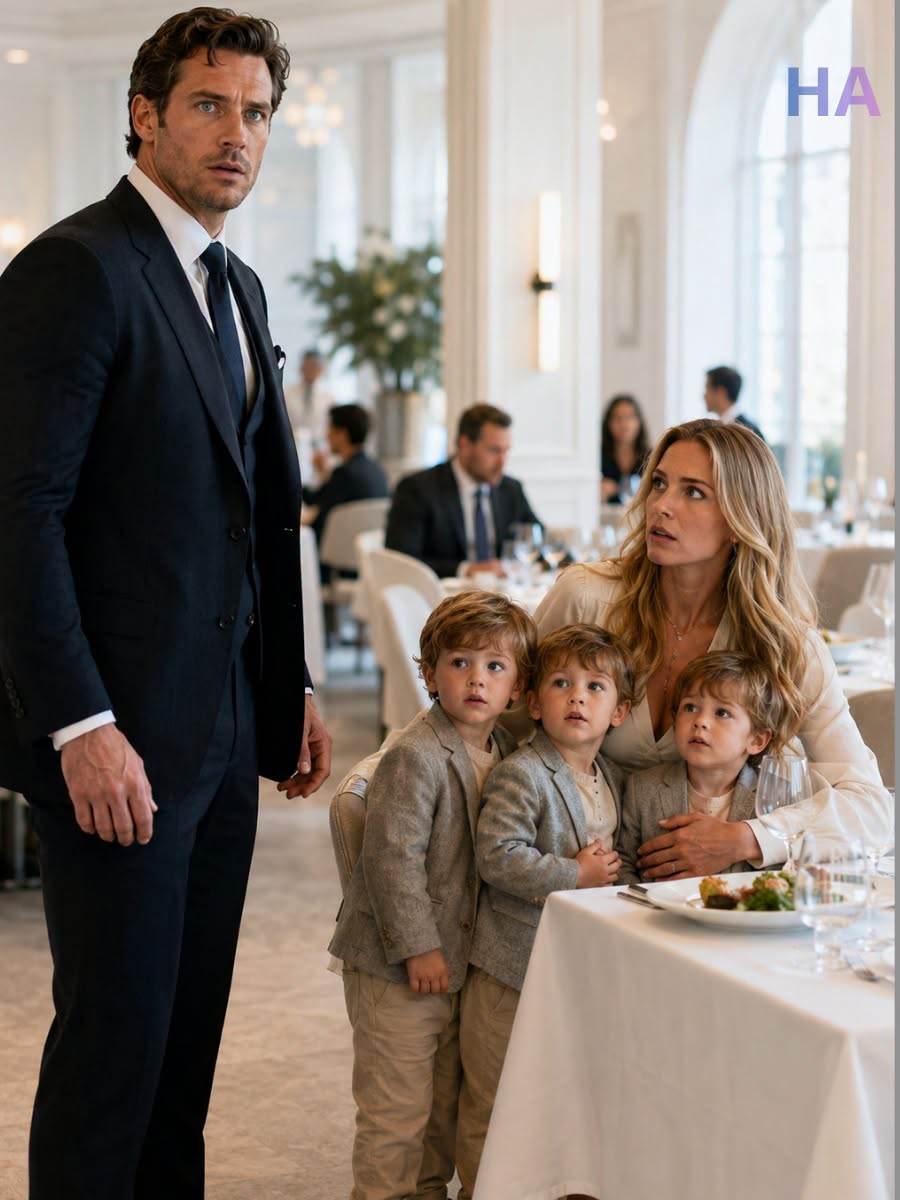
Caleb no longer looked like a small version of Dominic.
He had developed Elena’s patience and Ethan’s habit of questioning every rule.
Noah remained gentler, though he became fiercely competitive on the soccer field.
Sophie wore her dark curls longer and played piano at school concerts without fear.
Dominic attended every performance.
He sat in the front row.
He arrived too early.
He clapped too loudly.
The children complained and secretly loved it.
Moretti Renewal Logistics became one of Chicago’s largest employee-owned transportation networks.
Dominic served as an advisor but held no unilateral authority.
The company prohibited weapons shipments, private enforcement contracts, and undisclosed political payments.
Gabriel became chief legal officer.
He joked that legitimacy involved more paperwork than crime.
Ethan led an international organization protecting whistleblowers in shipping and construction industries.
He spoke to Elena every Sunday.
Sometimes their conversations were awkward.
They continued anyway.
Rebecca Sloan remained the family’s attorney and Caleb’s favorite adult because she answered legal questions without laughing.
Margaret survived in federal medical custody.
Elena visited once a year.
The children did not visit.
When they became adults, the choice would belong to them.
Margaret sent letters.
Elena stored them unopened in a locked box.
She would give them to the triplets when they were old enough to decide.
Vittoria died in prison without seeing Dominic again.
Luca and Julian Cross remained incarcerated.
Dominic did not celebrate their suffering.
He also did not rescue them from consequences.
The old Moretti estate became a public center for families affected by organized crime and coercive control.
Elena chose the name.
The Open Door House.
Dominic objected to turning his childhood home into a charity.
Then Sophie explained that scary houses deserved a chance to become good.
He signed the papers.
On the anniversary of the Bellini’s reunion, the family returned to the restaurant.
The manager kept the same table available.
Dominic claimed he had not paid for that privilege.
Elena knew he had.
They sat near the windows.
Caleb read the menu as though reviewing a business contract.
Noah ordered two desserts.
Sophie wore a pink ribbon in her hair, recreating the detail Dominic remembered from the first night.
Elena noticed him staring.
“What?”
“The ribbon.”
“She chose it.”
Sophie smiled.
“Dad said I wore one when he found us.”
Caleb corrected her.
“We found him.”
The argument had become family tradition.
Dominic looked around the table.
Five years earlier, he approached believing he had been betrayed by Elena.
He now understood betrayal had surrounded both of them.
But the final decision had always remained theirs.
They could allow the betrayal to define the family.
Or they could define what came after.
Dinner ended with chocolate cake.
Noah pushed half his slice toward Dominic.
“Tradition.”
Dominic accepted it.
The first gift Noah ever gave him had also been half a piece of chocolate cake.
Dominic had preserved the original plate in a secure display cabinet for three years until Elena discovered it.
She threw it away.
He considered that a marital wound.
After dinner, they walked along the Riverwalk.
Chicago moved around them.
Boats passed beneath bridges.
Music drifted from restaurants.
The city no longer felt like enemy territory.
Sophie walked between Dominic and Elena, holding one hand from each.
Caleb and Noah raced ahead.
Dominic counted.
One.
Two.
Three.
Elena heard.
“They’re ten.”
“I know.”
“They can cross a sidewalk.”
“I know.”
“You still count.”
“Always.”
She rested her head briefly against his shoulder as they walked.
“Do you still think about the five years?”
“Every day.”
“Does it still hurt?”
“Yes.”
He had learned not to lie about pain.
Elena looked toward the children.
“Me too.”
Dominic tightened his hand around hers.
“But I stopped thinking only about what we lost,” he said.
“What do you think about now?”
“What they taught me.”
“Such as?”
“That Caleb asks questions because he needs truth, not because he is challenging authority.”
“He is often challenging authority.”
“Both can be true.”
Elena smiled.
“Noah taught me kindness is not weakness.”
“And Sophie?”
“That the smallest person in the room may control everyone through ribbon selection.”
Sophie looked up.
“I heard that.”
“You were meant to.”
Elena asked, “What did I teach you?”
Dominic stopped walking.
The children turned.
City lights reflected in Elena’s eyes.
“You taught me that love is not proven by how tightly you hold someone.”
She waited.
“It is proven by whether they are still free while you hold them.”
Elena kissed him.
Caleb groaned.
Noah pretended to photograph them.
Sophie applauded.
They continued toward the bridge.
At home, Dominic entered the children’s rooms before bed.
Caleb had books stacked across his desk.
Noah had soccer medals hanging from the wall.
Sophie’s piano sheets covered her floor.
Evidence of years Dominic had not missed.
He turned off lights and closed doors halfway.
Elena waited in their bedroom.
On the dresser stood a framed photograph from their second wedding.
Beside it sat the original divorce papers.
Not displayed as punishment.
Preserved as proof.
The sentence Elena wrote five years before Bellini’s remained visible.
I cannot live this life anymore.
Beneath it, Dominic had added a second line after their remarriage.
So we built another one.
Elena entered behind him.
“You’re looking at that again.”
“Yes.”
“Regret?”
“No.”
She raised an eyebrow.
“Pain?”
“Yes.”
“Gratitude?”
He turned.
“Yes.”
The first marriage had taught them how love could disappear beneath control, family pressure, secrecy, and fear.
The second taught them love could survive only when both people remained visible.
Dominic touched the wedding ring on her hand.
“Would you choose me again?”
“Tonight?”
“Yes.”
“Did you put your shoes away?”
He glanced toward the chair.
“No.”
“Then the decision is under review.”
Dominic laughed.
The sound would have shocked the man he had been ten years earlier.
That man believed laughter exposed weakness.
This man lived in a house where children interrupted meetings, his wife rejected his orders, and no one lowered their voice because he entered a room.
He had never been safer.
Not because danger disappeared.
Because fear no longer ruled every decision.
Elena took his hand.
Down the hallway, Noah shouted that Caleb had stolen his charger.
Sophie began playing the piano despite the hour.
Caleb denied everything with unnecessary legal precision.
Dominic sighed.
“Should I handle it?”
“No threats.”
“I know.”
“No corporate restructuring.”
“I know.”
“No offering money for silence.”
“That would be efficient.”
Elena gave him a look.
He kissed her forehead.
“Together?”
“Together.”
They walked toward the noise.
Five years had been stolen from them.
First steps.
First words.
Sleepless nights.
Birthdays Dominic never saw.
A thousand ordinary moments no wealth could purchase or return.
But betrayal had not stolen everything.
It had not stolen Caleb’s ability to trust.
It had not stolen Noah’s kindness.
It had not stolen Sophie’s joy.
It had not stolen Elena’s courage.
And it had not stolen Dominic’s chance to become the father and husband he should have been from the beginning.
At the end of the hall, three children waited.
Dominic counted them once.
Then again.
One.
Two.
Three.
Elena slipped her hand into his.
The house was loud.
The future was uncertain.
The past remained real.
And every person inside was free to stay.
May you like



They stayed.
THE END







