Chapter 13 - THE LAST DOORVoss came for Sofia three nights later.
Not with guns.
Not with fire.
With a lullaby.
The estate had become a fortress since St. Ambrose.
Federal protection outside. My men inside. Cameras doubled. Guards rotated. No one entered without three confirmations and a prayer from Mrs. Alvarez.
Still, at 2:13 in the morning, Sofia woke screaming.
I was in the hallway before the second scream.
Elena reached her first.
Anna seconds behind.
Sofia sat upright in Isabella’s bed, shaking so hard the blanket trembled.
“He’s singing.”
The room went silent.
“What?” I asked.
“The bad house song.”
No one else heard anything.
Then my phone rang.
Unknown number.
I answered.
Voss hummed softly.
Blue house, white door…
I closed my eyes.
“Where are you?”
“Closer than grief.”
“You are out of exits.”
He laughed. “Dante, men like us are exits.”
“We are not alike.”
“No. You had the luxury of pretending family made you better.”
I walked to the window.
The grounds were dark.
Too dark near the old greenhouse.
“You used Anna,” I said. “You used Elena. You used children.”
“And your father used me. And his father used others. Spare me morality delivered from a stolen throne.”
“There are no thrones tonight.”
“No,” he said. “Only inheritances.”
The line clicked dead.
Then the power went out.
The estate plunged into black.
Sofia whimpered.
Elena pulled her close.
Anna grabbed the flashlight from the drawer.
Mrs. Alvarez appeared with her shotgun like she had been born in the darkness.
“Basement,” she said.
“What?”
“There’s an old service passage under the greenhouse. Your father sealed it after Isabella was born.”
Of course.
Another family secret.
Another old door.
We moved quickly.
This time, no armies.
Only the people Voss had broken and failed to finish.
Me.
Elena.
Anna.
Mrs. Alvarez.
And Marco, against medical orders, appearing at the top of the stairs in a sling and hospital slippers.
I stared at him.
“You escaped intensive care?”
“I discharged myself.”
“You were shot.”
“I noticed.”
Mrs. Alvarez glared. “Men are useless.”
We found the greenhouse doors open.
Cold air moved through dead vines.
At the back, beneath cracked tile, was the passage.
Voss had entered my home through my father’s bones.
We followed the tunnel down.
It ended beneath the old wine cellar.
And there he stood.
Elias Voss.
Holding a gun.
Beside him was a crate of documents and cash.
Escape money.
Blackmail files.
The last pieces of his empire.
“You should have run farther,” I said.
“I did not come to run.”
His eyes moved to Anna.
“I came to collect what is mine.”
Anna stepped forward.
“I was never yours.”
He smiled. “I named you.”
“My mother named me.”
“I fed you.”
“You starved children beside me.”
“I taught you power.”
“My sister taught me courage.”
The word sister hit the room.
Isabella was gone, but she stood there anyway.
In Anna’s voice.
In Sofia’s survival.
In my restraint.
Voss’s smile thinned.
“You think a dead girl saved you?”
“No,” I said. “She saved us.”
He raised the gun.
Marco fired first.
His shot struck Voss’s hand.
The gun clattered.
Voss lunged for the crate.
Elena moved faster than I expected.
She kicked it away, papers scattering across the floor like filthy snow.
Voss grabbed her wrist.
I saw red.
But Anna reached him first.
She slammed the silver key into his shoulder—not deep enough to kill, just enough to make him release Elena.
Then she stepped back, breathing hard.
Not afraid.
Not his.
Mine.
Elena’s.
Isabella’s.
Her own.
Federal agents stormed through the cellar entrance behind us.
Claire Mason had followed the blackout protocol we gave her. The moment the estate power died, she called everyone.
Voss looked around at the guns, the badges, the witnesses.
For the first time, he seemed old.
“You won’t survive what comes out,” he told me.
I looked at the papers on the floor.
My father’s sins.
My family’s rot.
The blood cost of silence.
“Then let it come out.”
Voss stared.
He had expected pride.
Fear.
A deal.
Not surrender to truth.
That was the one language evil never learns.
As they cuffed him, he looked at Sofia standing at the cellar doorway with Mrs. Alvarez.
“You,” he hissed. “All this because of one little girl.”
Sofia stepped behind Mrs. Alvarez.
But then she looked at him.
“No,” she said, voice small but clear. “Because Miss Isabella came back for me.”
Voss was taken away before sunrise.
This time, no secret tunnel opened.
No judge answered his call.
No old friend made evidence disappear.
By noon, every major network carried the story.
By evening, the city knew Isabella Moretti had not been a reckless heiress who died in bad weather.
She had been a woman who followed a van, found a stolen sister, protected a little girl, and left a trail bright enough for the living to follow.
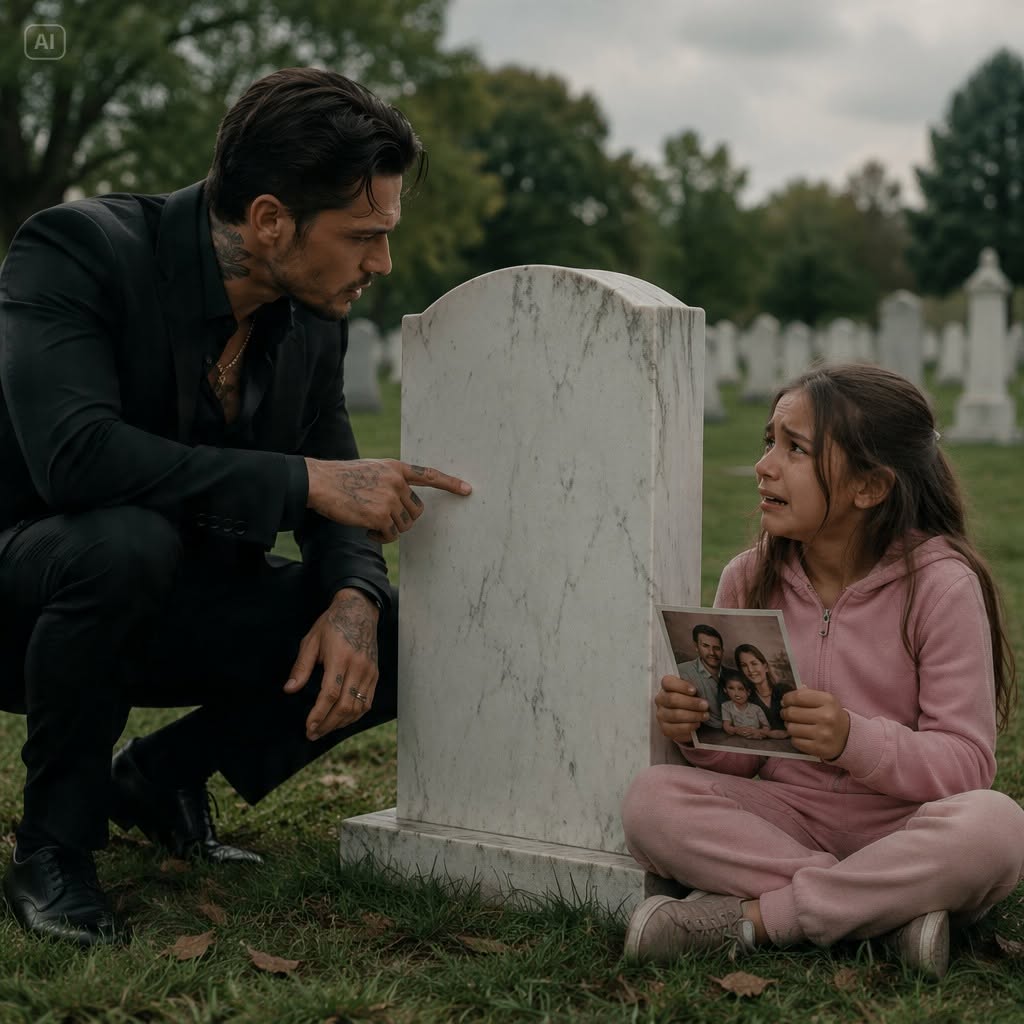
At sunset, I returned to her grave.
Not alone.
Sofia stood on my left.
Anna on my right.
Elena behind us, one hand resting lightly on Anna’s shoulder.
Marco leaned on a cane beside Mrs. Alvarez, who complained that graves were too cold and men were too dramatic.
I placed Isabella’s locket on the stone.
“You did it, baby,” I whispered.
The wind moved through the cemetery trees.
Sofia stepped forward and laid a drawing beside the flowers.
It showed a girl with angel wings, a lion, a woman with dark hair, another with silver in her hair, and many children standing in front of a house with open doors.
At the top, in careful letters, Sofia had written:
HOME.
Anna began to cry.
Elena pulled her close.
This time, Anna let her.
I looked at my daughter’s name.
For months, I had come to this grave to tell Isabella what she missed.
Now I understood.
May you like



She had not missed the ending.
She had written it.







