Chapter 14 - THE HOUSE WITH OPEN DOORSSix months later, the blue house was gone.
Not burned.
Not hidden.
Gone.
The city demolished it under a gray sky while survivors watched from across the street with blankets around their shoulders and counselors beside them.
No speeches were made by politicians.
I made sure of that.
The land was transferred to a trust Isabella had secretly created three weeks before her death.
She had named it The Little Bird Foundation.
Because of course she had.
My daughter never met a wounded thing she did not try to teach to fly.
The new building did not look like a charity.
Anna insisted on that.
“No sad beige walls,” she said at the first planning meeting.
Elena nodded. “No locked bedroom doors.”
Sofia raised her hand.
“No scary soup.”
Everyone went quiet.
Then Mrs. Alvarez said, “Fine. Only excellent soup.”
And somehow, that became law.
The house had yellow curtains, a library, a therapy wing, a legal clinic, a garden, and a kitchen that always smelled like something warm.
No child entered through a back door.
No child was photographed for donors.
No child was renamed without consent.
No child had to earn kindness.
Anna ran the foundation.
Not as penance.
Not after a while.
At first, yes. She punished herself with work until Elena finally took her face in both hands and said, “You do not have to bleed forever to prove you were wounded.”
After that, Anna began to live.
Slowly.
Awkwardly.
With guilt beside her but not driving.
Elena stayed.
That was another miracle I had no right to receive.
We did not become young again.
We did not pretend time had waited politely for us.
There were too many ghosts between us.
Too many nights stolen.
Too many birthdays missed.
But some mornings, she drank coffee in my kitchen.
Some evenings, we sat on the terrace and let silence become gentle.
Once, she touched the scar on my hand and said, “You got old.”
I said, “You got mean.”
She smiled.
There she was.
The woman from the rooftop.
Older.
Alive.
Enough.
Marco survived too.
He retired from the street and became, against all logic, the foundation’s security director.
Children adored him because he looked terrifying and secretly carried candy.
Sofia called him Grandpa Grumble.
He cried the first time.
Denied it forever.
Enzo went to trial.
He tried every trick I taught him.
Charm. Delay. Fear. Money.
None worked.
Claire Mason published everything.
Harlan testified.
Anna testified.
Elena testified.
And then, in a closed session, Sofia spoke to a judge with a stuffed bear in her lap and Mrs. Alvarez holding her hand.
She did not have to face cameras.
She did not have to become a symbol.
She only had to tell the truth once.
That was enough.
Enzo was convicted.
Voss too.
So were judges, doctors, donors, officers, and men whose names had once opened doors.
Now their names closed cells.
On the first anniversary of Isabella’s death, we gathered at the new house.
Not the cemetery.
The house.
Children ran across the lawn, screaming with the kind of joy adults cannot manufacture.
Anna stood on the porch, holding a plaque covered with a cloth.
Sofia wore a blue dress and new shoes that lit up when she jumped.
She had chosen them herself.
That mattered.
I stood beside Elena.
My hands were empty.
No gun.
No phone.
No orders waiting.
Just hands.
Anna pulled the cloth away.
The plaque read:
THE ISABELLA MORETTI LITTLE BIRD HOUSE
For every child who was promised someone would come back.
Sofia read it slowly.
Then she looked up at me.
“She did come back.”
I crouched beside her.
“Yes.”
“In people?”
I looked at Anna.
At Elena.
At Marco pretending not to cry.
At Mrs. Alvarez feeding children from a tray.
At the open doors.
“Yes,” I said. “In people.”
Sofia slipped her small hand into mine.
“Can I stay with you?”
The question was quiet.
Terrified.
Hopeful.
The kind of question that can rebuild or ruin a life depending on the answer.
I had signed the adoption papers that morning.
They were folded inside my jacket, close to my heart.
But I did not show her yet.
Not like business.
Not like a transaction.
I looked at Elena.
She nodded.
Anna smiled through tears.
I turned back to Sofia.
“For as long as you want to call it home.”
Her face changed.
Children who have lost too much do not trust happiness immediately.
They approach it like a wild animal.
Slowly.
Ready to run.
“Really?”
“Really.”
She threw her arms around my neck.
I held her carefully at first.
Then tighter.
The old lion, who had once terrified a city, stood in the sunlight holding a little girl in light-up shoes and discovered that being feared had never made him powerful.
Being trusted did.
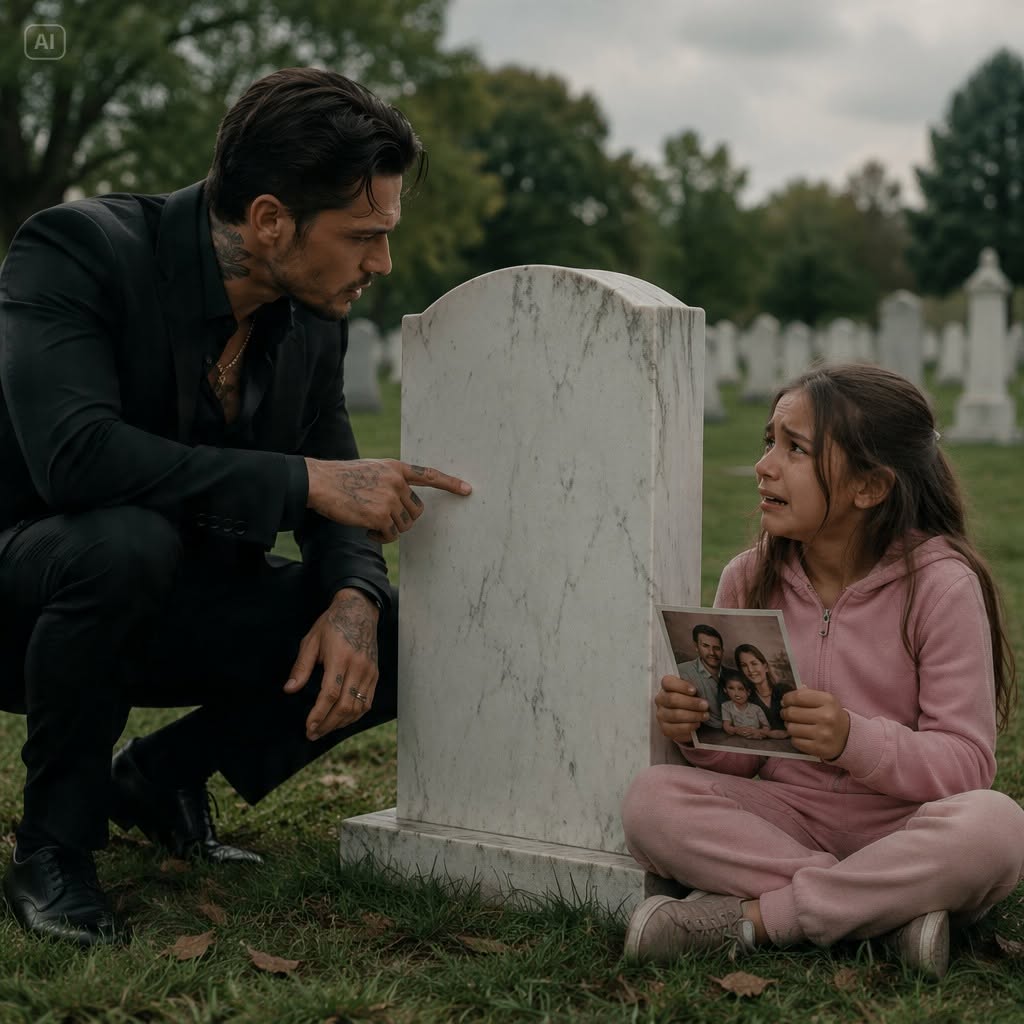
That evening, after everyone left, I went alone to Isabella’s grave.
I brought no flowers.
Only a photograph.
Sofia on the porch.
Anna laughing.
Elena looking at me like forgiveness was still difficult but possible.
Marco holding a tray of cookies with the expression of a man guarding diamonds.
Mrs. Alvarez scolding everyone.
The house behind them, bright and open.
I placed the photo against the stone.
“For once,” I said, “I don’t have to tell you what you missed.”
The wind moved softly.
I smiled.
“You already know.”
And for the first time since my daughter died, I left the cemetery before dark.
Not because grief was gone.
Grief does not leave.
It changes rooms.
It learns to sit beside love without swallowing it.
Behind me, Isabella’s name remained carved in stone.
But ahead of me, Sofia was waiting at home.
Anna was making dinner badly.
Elena was pretending not to correct her.
Marco was probably letting the children cheat at cards.
Mrs. Alvarez was definitely yelling.
And the house, once too large and too quiet for one grieving man, had finally become what Isabella always believed it could be.
Not a castle.
Not a fortress.
May you like



A home.
THE END







