Chapter 11 - I Faced Him in CourtThe courtroom was full before I arrived.
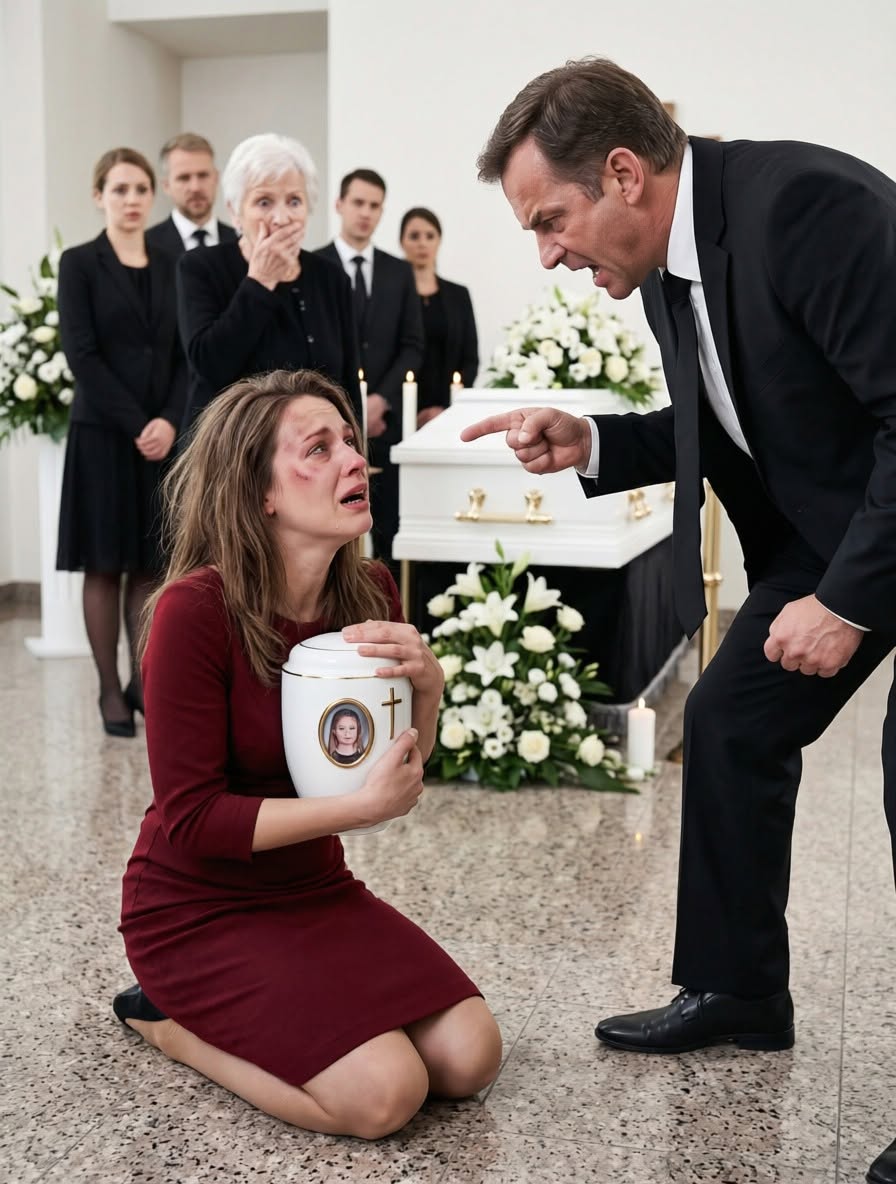
Charles Mercer sat at the defense table wearing a navy suit.
No handcuffs.
No visible restraints.
If you did not know what he had done, he looked like a respected grandfather waiting for a business hearing.
That was Charles’s greatest skill.
He knew evil was more effective when properly dressed.
I took the witness stand.
The prosecutor began gently.
“Please state your name.”
“Claire Bennett Mercer.”
“Are you married?”
“Legally, not anymore.”
Charles glanced toward me.
Our divorce had been finalized six days earlier.
The prosecutor asked about my father.
Then Daniel.
Then Sophie.
A photograph appeared on a courtroom monitor.
Sophie at age two wearing red rain boots.
The sight almost broke me.
“What was she like?”
I smiled despite myself.
“Loud.”
A few jurors smiled.
“She sang constantly. Usually the wrong lyrics. She loved blueberries but called them blue babies. She was afraid of vacuum cleaners but not dogs, even enormous ones.”
My voice shook.
“She thought every person wearing a white coat was a doctor, including chefs.”
A juror wiped her eye.
“She was not an insurance policy,” I said.
The courtroom became silent.
“She was not leverage. She was not a problem. She was a three-year-old girl.”
The prosecutor walked me through her illness.
The altered medication.
The night she died.
Then Daniel’s call.
“What did your husband say when you finally reached him?”
Charles’s attorney stood.
“Objection. Relevance.”
“Overruled.”
I looked at the jury.
“He told me to stop bothering him.”
I heard a woman inhale.
“He said the hospital bill had been paid and told me to bring Sophie home.”
The prosecutor paused.
“Where was Sophie at that time?”
My throat tightened.
“She was already dead.”
There was no sound in the courtroom.
The prosecutor gave me a moment.
Then came Dad.
The payment to Helen.
Charles’s visit.
The hidden files.
The threats.
Finally:
“Mrs. Bennett Mercer, do you recognize the defendant?”
“Yes.”
“Who is he?”
“My former father-in-law.”
“And did you hear him admit he authorized the altered concentration of your daughter’s medication?”
“Yes.”
“When?”
“The night he came to kill me.”
Charles’s attorney objected again.
This time the judge overruled him sharply.
The defense cross-examination began after lunch.
Charles’s lawyer was skilled.
He started softly.
“You were under extraordinary emotional distress at the time, correct?”
“Yes.”
“You had just lost your child.”
“Yes.”
“You were sleeping poorly.”
“Yes.”
“Taking prescribed anti-anxiety medication?”
“Yes.”
He turned toward the jury.
“Memory can be unreliable under trauma, can’t it?”
“Sometimes.”
“So it’s possible you misunderstood Charles.”
“No.”
“You’re certain?”
“Yes.”
“You were in a dark house during a violent confrontation.”
“Yes.”
“With armed men present.”
“Yes.”
“You feared for your life.”
“Yes.”
“So your perception—”
“I remember every word.”
He smiled.
“Human memory doesn’t work like a recording, Mrs. Mercer.”
“You’re right.”
He looked pleased.
I continued.
“That’s why Michael’s security system recorded the conversation.”
His smile vanished.
The prosecution had disclosed the recording.
Apparently the defense had hoped jurors would forget.
They did not.
Later, audio of Charles admitting he authorized the altered drug concentration played inside the courtroom.
His own voice:
I did not intend for her to die.
Several jurors looked directly at him.
Charles stared at the table.
Then came Daniel.
He testified in prison-issued clothing.
For the first time since I had known him, Daniel looked ordinary.
No expensive suit.
No watch.
No assistant.
No power.
He admitted everything.
Our engineered meeting.
The financial fraud.
The affair.
Keller.
Charles’s control.
The prosecutor asked:
“Did your father tell you the medication could harm Sophie?”
“No.”
“Did you independently verify it was safe?”
“No.”
“Why not?”
Daniel looked at me.
“Because I wanted to believe what benefited me.”
That answer mattered.
Not because it absolved him.
Because it was finally true.
Charles’s attorney attacked him.
“You’re blaming your father to reduce your own sentence.”
“Yes.”
The attorney paused.
Daniel continued.
“I am cooperating because I want a reduced sentence. I am also telling the truth.”
“You expect this jury to trust an admitted liar?”
“No.”
Daniel looked toward the jury.
“I expect you to trust the records.”
Charles watched his son with pure hatred.
Then Peter testified.
Then Helen.
Then Vanessa.
Then forensic specialists.
Banking experts.
Toxicologists.
Medical professionals.
The trial lasted seven weeks.
The defense argued Sophie could have died from leukemia complications regardless of the medication.
The prosecution did not claim otherwise.
Instead, they proved that Charles intentionally altered a vulnerable child’s treatment to manipulate her mother.
The charge related to Sophie was felony murder under the prosecution’s legal theory combined with conspiracy and poisoning-related offenses.
For Dad, the medical evidence was more difficult.
But Helen’s testimony, Charles’s payments, and pharmaceutical records showed an unexplained sedative source connected to a company he controlled.
The jury deliberated for eleven hours.
I waited in a room with Michael.
When the message came, my legs shook.
Verdict reached.
We returned.
Charles stood.
The clerk read count after count.
Guilty.
Guilty.
Guilty.
Wire fraud.
Conspiracy.
Witness intimidation.
Attempted murder.
Murder of Evan Keller.
Crimes connected to my father’s death.
Then Sophie.
I stopped breathing.
“Guilty.”
I closed my eyes.
No triumph came.
Sophie was still dead.
Dad was still dead.
Justice does not reverse time.
It simply tells the truth out loud.
At sentencing three weeks later, I was allowed to speak.
Charles refused to look at me.
So I looked at the judge.
“For a long time, I believed this case was about money.”
I paused.
“It wasn’t.”
“It was about entitlement.”
Charles finally looked up.
“A man decided other people’s lives belonged beneath his ambition.”
I thought of Dad.
Of Sophie.
Of Keller.
Of Vanessa hiding in a motel.
Of Peter bleeding on my floor.
Of Daniel crying behind glass.
“I cannot ask this court to give my daughter back.”
My voice broke.
“But I can ask that no other family ever has to learn what Charles Mercer is willing to do when someone stands between him and something he wants.”
Charles received a sentence that meant he would almost certainly die in prison.
As marshals led him away, he looked at me.
I expected hatred.
Instead, he looked old.
Small.
For years, he had seemed like a monster large enough to control every room.
Now he was simply a man in handcuffs.
He had taken my father.
He had contributed to my daughter’s death.
He had tried to take me.
But he would not take the years I had left.
Outside the courthouse, reporters shouted questions.
I walked past them.
Then one asked:
“Claire, what happens now?”
I stopped.
What happens now?
For almost a year, every day had been defined by death.
Sophie’s diagnosis.
Dad’s investigation.
Daniel’s betrayal.
Charles’s crimes.
I looked up at the bright spring sky.
And for the first time, I realized I had no idea what came next.
That terrified me.
It also felt like freedom.
“I go home,” I said.
But I did not mean the Mercer estate.
I had sold it two weeks earlier.
May you like



I was going somewhere else.
Somewhere Sophie had loved.







