Chapter 12 - The House With Yellow FlowersOne year after Sophie died, I woke before sunrise.
For several seconds, I did not know why.
Then I saw the clock.
3:17.
I smiled.
“Good morning, baby.”
The room was quiet.
Grief still lived with me.
I had learned it probably always would.
But grief had changed shape.
In the beginning it was an ocean.
Then a storm.
Then a wound.
Now it was more like a room inside my heart.
Some days I entered voluntarily.
Other days I found myself there without knowing how.
But it was no longer the entire house.
I got out of bed and walked downstairs.
My new home stood forty minutes outside Boston on six acres of land.
It was smaller than the Mercer estate.
Much smaller.
Daniel would have called it impractical.
I loved everything about it.
Especially the garden.
Hundreds of yellow flowers grew along the back fence.
Daffodils.
Black-eyed Susans.
Tulips.
Sophie loved yellow.
She used to call it “sunshine color.”
That morning, volunteers were already arriving.
Today was the opening.
A wooden sign near the driveway read:
THE SOPHIE BENNETT CENTERSupport for Families Facing Pediatric IllnessI had used recovered money from the Mercer fraud to build it.
Not all of the money.
Most returned to the Bennett trust.
Millions went to charities harmed by the Mercer Foundation scheme.
But enough remained for something I could not stop thinking about.
During Sophie’s treatment, I had met parents sleeping in cars because they could not afford Boston hotels.
Mothers choosing between hospital parking fees and groceries.
Fathers missing treatments because they could not take unpaid leave.
Children going through chemotherapy while their parents fought insurance companies.
Money could not save Sophie.
But it could make someone else’s worst day less cruel.
The center provided temporary housing.
Meals.
Transportation.
Childcare for siblings.
Legal assistance.
Counseling.
No press gala.
No giant ceremonial checks.
No Mercer-style speeches.
Just help.
Michael arrived carrying coffee.
He had left private investigations six months earlier and joined the center’s board.
“You’ve been awake since three, haven’t you?”
“Maybe.”
“You’re terrible at following medical advice.”
“So I’ve been told.”
He handed me a cup.
We walked through the garden.
Our friendship had become one of the unexpected gifts of the previous year.
Nothing dramatic.
Nothing complicated.
Just steady.
He had seen me furious.
Broken.
Suspicious.
Grieving.
He never tried to rescue me.
I appreciated that.
“How many families arrive next week?” I asked.
“Seven.”
“Transportation?”
“Covered.”
“Meal schedule?”
“Covered.”
“Counselors?”
“Claire.”
“What?”
“It’s opening day. The staff knows their jobs.”
I smiled.
“I know.”
“You don’t.”
“I’m learning.”
Near the entrance stood a small plaque.
FOR SOPHIE — WHO LOVED LOUDLY FOR THREE BEAUTIFUL YEARS.
I touched it as I passed.
At ten o’clock, the first families arrived.
One little boy wore a superhero cape over his hospital clothes.
A mother carrying a sleeping toddler began crying when a volunteer showed her the family apartment.
“You mean we can stay here without paying?”
“Yes.”
“For how long?”
“As long as your daughter is receiving treatment nearby.”
She covered her face.
I knew that cry.
Relief can sound a lot like grief.
Around noon, Michael approached me.
“You have a visitor.”
My stomach tightened automatically.
Some instincts remained.
“Who?”
He handed me an envelope.
The return address belonged to a federal correctional facility.
Daniel.
I had received several letters over the year.
I had answered none.
This one was different.
Inside was a single sheet.
Claire,
Today would have been Sophie’s fifth birthday next month. I know you know that.
Of course I knew.
I heard about the center. My attorney sent me an article.
There is nothing I can give you that belongs in your new life, but there is something Sophie made while I was with her at the hospital. I found it among property returned after my sentencing. I think it belongs to you.
A second envelope contained a folded piece of paper.
Crayon covered both sides.
Three stick figures stood beneath a huge yellow sun.
One tall figure.
One smaller.
One tiny.
Above them, in Sophie’s shaky handwriting:
MOMMY DADDY SOPHIE
Below, someone had helped her write:
MY FAMILY
I sat down.
For several minutes, I cried.
Not because the picture represented what we had lost.
Because it represented something that had existed.
Daniel’s betrayals could not erase every good morning.
Every bedtime story.
Every trip to the zoo.
Every time Sophie sat on his shoulders.
I had spent months questioning whether anything in my marriage had been real.
But Sophie was real.
My love for her was real.
And whatever failures came later, there had once been moments when Daniel loved her too.
I turned the page over.
Daniel had added one sentence in pencil.
I’m sorry I became someone she wouldn’t recognize.
I folded the paper.
Michael sat beside me.
“You okay?”
“No.”
He waited.
I smiled through tears.
“But I will be.”
That was the difference.
A year earlier, I did not believe there was a future beyond pain.
Now I knew better.
Not because pain disappeared.
Because life grew around it.
Later that afternoon, children filled the center’s playroom.
Someone turned on music.
A little girl began dancing badly.
Her mother laughed.
For a second, the sound pierced me.
Sophie used to dance exactly like that.
Arms everywhere.
No rhythm.
Absolute confidence.
I walked outside before anyone noticed my tears.
The yellow flowers moved in the wind.
I sat on a garden bench.
Sophie’s urn was no longer beside my bed.
Six months earlier, I had scattered most of her ashes at Cape Cod, where she had once chased seagulls until she fell laughing into the sand.
I kept a small amount inside a pendant I wore beneath my shirt.
At first, letting the ashes go felt impossible.
Like losing her again.
Then my grief counselor asked me something.
“Do you believe Sophie lives inside an urn?”
Of course not.
Sophie lived in yellow flowers.
In blueberry pancakes.
In ridiculous songs.
In every child who received help because she existed.
She lived in me.
A car pulled into the driveway.
Vanessa stepped out.
Her sentence had been reduced because of her cooperation.
She had served several months and would spend years on probation while making restitution.
We were not friends.
I did not know if we ever would be.
But I had invited her.
Not for Daniel.
Not for the past.
Because Vanessa had preserved the bottle that exposed what happened to Sophie.
People are complicated.
Sometimes the same person who helps destroy one part of your life helps save the truth about another.
She approached slowly.
“I wasn’t sure you meant it.”
“I did.”
She looked at the building.
“It’s beautiful.”
“Sophie would have liked the playroom.”
Vanessa smiled.
“She would have taken over the playroom.”
“Yes.”
For a while we stood in silence.
Then she asked, “Do you hate him?”
I knew who she meant.
Daniel.
I considered the question.
“No.”
She looked surprised.
“I did.”
“What changed?”
“I got tired.”
“Tired?”
“Hate keeps people connected.”
I looked toward the yellow flowers.
“I don’t want Daniel connected to the rest of my life.”
“Have you forgiven him?”
“Some days.”
She nodded as though she understood perfectly.
Maybe she did.
That evening, after everyone left, I walked through the center alone.
Seven family apartments.
A kitchen.
A library.
A playroom.
Counseling offices.
In the hallway outside the pediatric lounge hung a photograph of Sophie.
Not the hospital photograph.
Not the picture from her urn.
A photograph from the beach.
She was running toward the ocean in a yellow dress, arms spread wide.
Alive.
That was how I wanted people to know her.
Not as the little girl whose grandfather poisoned her medicine.
Not as the child whose father failed her.
Not as evidence in a murder trial.
Sophie Bennett Mercer had been three years old.
She loved pancakes shaped like bears.
She hated socks.
She kissed dogs on the nose.
She believed the moon followed our car.
She called blueberries blue babies.
She made strangers smile.
That was her story.
The crimes were merely what happened around it.
I turned off the hallway lights and stepped outside.
Michael was waiting by his car.
“You’re still here?”
“I figured you’d stay until midnight.”
“Only because you distracted me.”
“Dinner?”
I looked toward the house.
A year ago, going home to an empty room terrified me.
Tonight it did not.
Still, dinner sounded good.
“Okay.”
We drove to a small Italian restaurant.
No cameras.
No bodyguards.
No headlines.
After dinner, Michael walked me back to my door.
He hesitated.
“I’m going to ask you something, and you can say no.”
I smiled.
“That introduction never leads anywhere good.”
He laughed.
Then he held out two tickets.
“Cape Cod. Next weekend. There’s a little inn near the beach.”
My heart reacted before my mind did.
Fear.
Not because of Michael.
Because wanting anything again felt dangerous.
Love had once made me blind.
Trust had once cost me almost everything.
Michael seemed to understand.
“No expectations,” he said. “Two rooms. Walk on the beach. Terrible seafood if the reviews are accurate.”
“Why would you advertise terrible seafood?”
“Transparency.”
I laughed.
Sophie would have liked him.
That thought no longer felt like betrayal.
“I’ll go.”
Michael smiled.
“Good.”
He left.
I stood alone beneath the porch light.
Above me, the sky was clear.
The moon hung over the trees.
I remembered Sophie sitting in the back seat one night.
“Mommy?”
“Yes, baby?”
“The moon is following us.”
“It is.”
“Why?”
I had answered without thinking.
“Because it wants to make sure you get home safely.”
That memory once would have destroyed me.
Tonight, I smiled.
I looked toward the moon.
“I made it home, Soph.”
Wind moved softly through the yellow flowers.
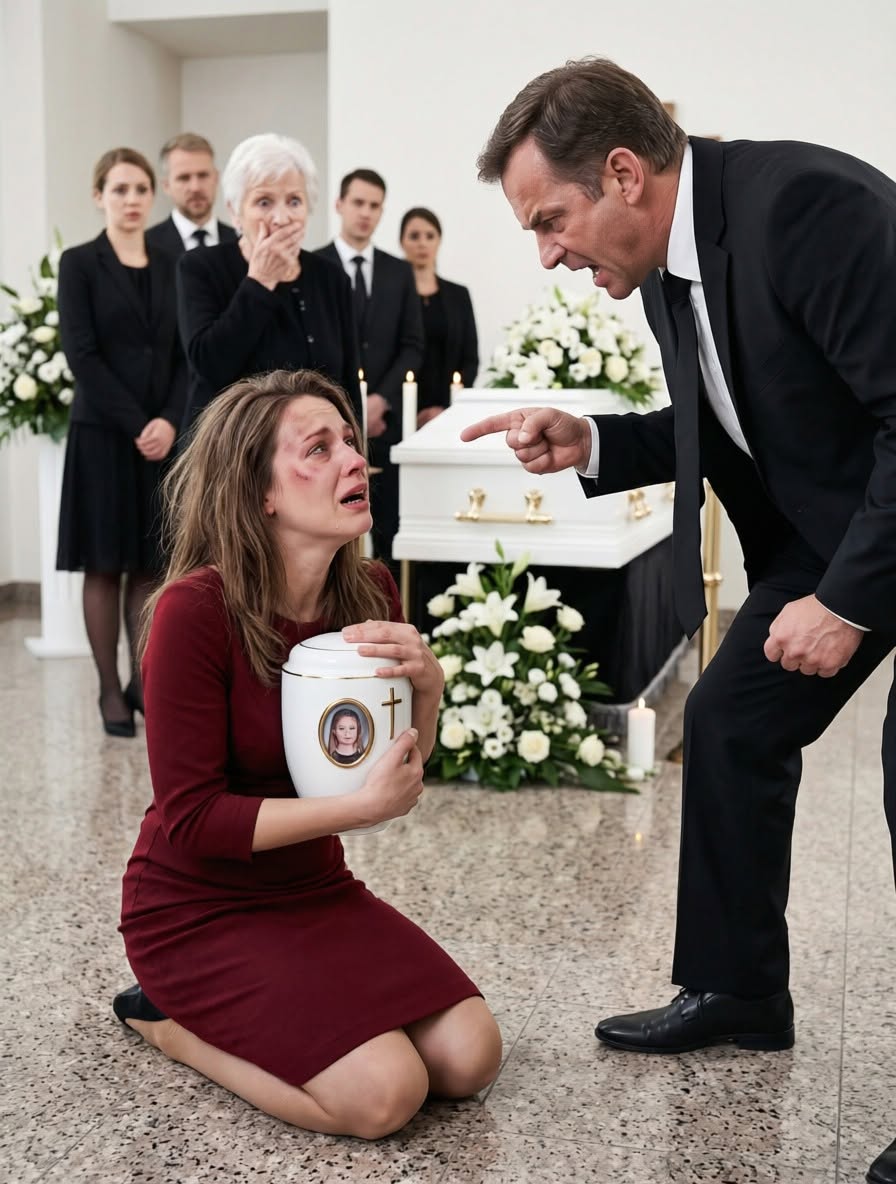
My old life had ended the night I walked out of St. Catherine’s carrying a white urn.
I had believed I was leaving the hospital with nothing.
I was wrong.
I carried evidence of terrible loss.
But I also carried three years of laughter.
Three years of being called Mommy.
Three years of loving someone more fiercely than I had known possible.
Charles Mercer had believed money was the most powerful thing my father left behind.
Daniel had believed wealth was the thing that defined our marriage.
Both men were wrong.
My father’s greatest inheritance was the truth he protected long enough for me to find.
And Sophie’s inheritance was even greater.
She had taught me that a short life could still create an enormous amount of love.
The following spring, we planted another thousand yellow flowers around the center.
Families came and went.
Some children recovered.
Some did not.
Every parent who walked through those doors was reminded of one thing:
They did not have to face the worst days of their lives alone.
Years later, people still occasionally asked me about the Mercer scandal.
They wanted to know about Charles.
Daniel.
The millions.
The trial.
I answered politely when necessary.
But eventually I learned how to redirect the question.
“Would you like to hear about Sophie?”
Because that was the story worth telling.
Not how she died.
How she lived.
And if there is such a thing as winning after losing everything, perhaps that was mine.
Charles tried to erase my family for money.
Instead, my father’s name funded a place that saved families from financial ruin.
Daniel abandoned his daughter in her final hours.
Instead, Sophie’s name became attached to a building where frightened parents would never have to stand alone.
And the little girl whose ashes I carried out of a hospital on the darkest night of my life became the reason thousands of brighter days existed for other people.
I never got my old life back.
I built another one.
May you like



And for the first time in years, it was truly mine.
THE END







