Chapter 12 - THE DOOR I FINALLY OPENEDOne year after Daniel, Sophie, and Caleb died, I woke before sunrise.

For several minutes, I lay still.
The house was silent.
Not the violent silence of those first months.
A gentler one.
I walked downstairs barefoot and made coffee.
Three framed photographs sat on the kitchen shelf.
Daniel laughing beside a campfire.
Sophie holding a science trophy.
Caleb asleep with his baseball glove under one arm.
“Morning,” I said.
It had taken almost a year before talking to photographs stopped making me feel ridiculous.
Outside, spring rain touched the windows.
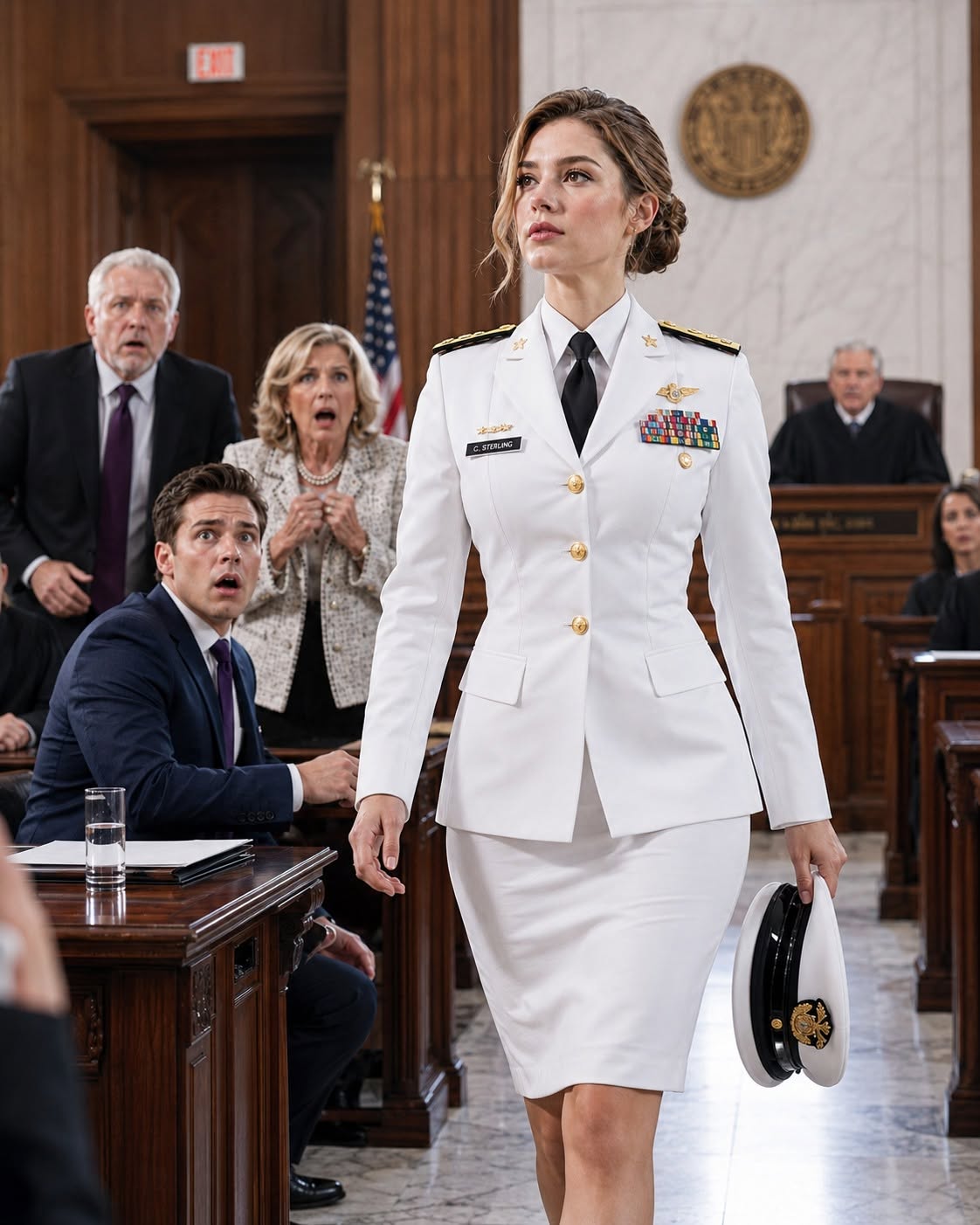
At nine o’clock, I dressed in white.
Not my Army uniform.
A simple white suit.
The foundation’s memorial garden would officially open that morning.
Twelve Japanese maples lined the path.
At the center stood three young oak trees.
One for Daniel.
One for Sophie.
One for Caleb.
The Daniel, Sophie & Caleb Hart Foundation had been operating for four months.
In that time, twenty-eight military families had stayed in our apartments.
Seventeen children received emergency childcare.
Six surviving spouses received legal assistance.
Two families received grants that prevented foreclosure.
One widow stayed in Apartment Four for six weeks after losing her husband to a training accident.
Her name was Maya Lopez.
The same woman who wrote me the first letter.
She now worked for us.
“I’m telling you,” Maya said as I arrived, “if you cry before the ceremony, I’m charging you for tissues.”
“You work for me.”
“Exactly. I know what we can afford.”
I laughed.
Margaret was already arranging flowers.
“You’re late.”
“I’m fifteen minutes early.”
“To civilians.”
Brooke stood nearby helping Claire’s youngest son attach ribbons to folding chairs.
That sight still sometimes stopped me.
My sisters.
Plural.
Brooke had changed.
Not magically.
She still talked too much when nervous.
Still loved expensive shoes.
Still occasionally said something self-centered and caught herself halfway through.
But she sold the condo.
After settling the fraudulent lien issues, she donated the legitimate proceeds to the foundation.
Then she took a job.
A normal one.
No office belonging to Dad.
No family bookkeeping.
She worked for a nonprofit arts organization and complained cheerfully about her salary.
Claire remained mostly in Charleston but visited once or twice a month.
We were building a relationship without pretending genetics created instant intimacy.
Sometimes she felt like my sister.
Sometimes she felt like a new friend who happened to share my grandfather.
Both were okay.
Dad had been sentenced three weeks earlier.
Six years in federal prison.
Restitution requirements would follow him much longer.
I attended sentencing.
Not because he asked.
Because I needed to see the story reach a legal ending.
Before marshals led him away, Dad turned toward me.
He didn’t beg.
He simply mouthed:
I’m sorry.
I nodded.
That was all.
Mom received three years’ supervised probation, community service, financial restrictions, and restitution obligations.
She moved into a small apartment.
For the first time since nineteen, she lived alone.
We spoke twice a month.
Briefly.
Carefully.
Healing wasn’t a bridge people crossed once.
It was more like rebuilding after a flood.
You tested every board before putting weight on it.
At ten forty-five, guests filled the garden.
Military families.
Daniel’s former coworkers.
My Army friends.
Sophie’s teacher.
Caleb’s old baseball coach.
Neighbors.
Jonathan.
Agent Grant even attended unofficially and stood near the back.
Three chairs remained empty in the front row.
They would always remain empty.
I walked toward the podium.
A breeze moved through the oak leaves.
“One year ago today,” I began, “I believed my life had ended even though my heart kept beating.”
The crowd was quiet.
“I don’t say that dramatically. I genuinely could not imagine a future I wanted to participate in.”
Margaret lowered her eyes.
“People often say grief teaches us what matters.”
I smiled sadly.
“I’m not sure grief teaches gently enough to deserve credit.”
A few people laughed softly.
“But loss stripped away certain illusions.”
I looked toward Brooke.
“I learned that being related to someone does not guarantee they will protect you.”
Then toward Margaret.
“I learned that people who owe you nothing can choose to stand beside you anyway.”
Margaret wiped her cheek.
“I learned that forgiveness and reconciliation are different things.”
Mom stood in the back.
I had invited her.
Not as a reward.
Because I wanted to.
She wore a plain navy dress.
When our eyes met, she didn’t wave.
She simply nodded.
“I learned that money cannot replace anything worth grieving.”
I gestured around us.
“But it can still become useful.”
Behind me, children played near the new family center.
“A settlement became apartments.”
I pointed toward the childcare wing.
“A headline became daycare.”
Toward the legal office.
“A terrible number became time—time for people who are suffering to make decisions without being crushed by immediate bills.”
I looked toward Daniel’s tree.
“And maybe that’s the only way I know to answer what happened.”
My throat tightened.
“Not by pretending it was meant to happen.”
I shook my head.
“I will never say my husband and children died for a reason.”
The garden became still.
“They died because a driver was exhausted, because a company ignored safety rules, and because sometimes life is unbearably unfair.”
I breathed.
“What came afterward was our choice.”
That was the truth I had spent a year learning.
What happened to us wasn’t always our choice.
What we built next sometimes was.
After the ceremony, people gathered around the garden.
Maya brought me coffee.
Brooke stole half of it.
Claire’s boys chased each other near the trees until she threatened to make them sit with the adults.
Margaret stood beside Daniel’s oak.
Then I saw Mom.
She remained alone near the gate.
She was about to leave.
I walked toward her.
“Mom.”
She turned.
“The ceremony was beautiful.”
“Thank you.”
“I’m glad you invited me.”
I nodded.
She looked toward the three empty chairs.
“I think about that day every morning.”
“The funeral?”
“Yes.”
I waited.
“I know there’s nothing I can do to change it.”
“No.”
“I used to think forgiveness meant you would eventually tell me it was okay.”
I looked at her.
“And now?”
“Now I think forgiveness, if it ever comes, belongs to you. Not me.”
That was probably the healthiest thing my mother had ever said.
“I don’t know whether I forgive you completely.”
“I understand.”
“But I don’t want to hate you.”
Her eyes filled.
“I don’t want that either.”
I looked toward a bench beneath Sophie’s tree.
“Do you have somewhere to be?”
Mom blinked.
“No.”
“Sit with me.”
She stared as though I had offered something enormous.
Maybe I had.
We sat.
For several minutes, neither of us spoke.
Children laughed across the garden.
Wind moved through the new leaves.
Mom finally whispered, “Tell me about Sophie’s last school project.”
The question hurt.
But it was the right kind of hurt.
“She was building a model bridge.”
“What kind?”
“Technically, it was supposed to be a suspension bridge.”
Mom smiled.
“Supposed to be?”
“It looked like spaghetti held together by glue and optimism.”
Mom laughed.
Then covered her mouth because laughter near memorial trees still felt forbidden.
I smiled.
“She got an A.”
“Of course she did.”
“She cheated.”
Mom stared.
“What?”
“Daniel helped.”
That made us both laugh.
I told her about Caleb’s final baseball game.
How he struck out twice and then accidentally hit a double because the right fielder tripped.
How he ran toward third despite everyone screaming for him to stop.
How Daniel nearly fell over the fence laughing.
Mom listened.
She didn’t interrupt.
She didn’t redirect the conversation to herself.
She just listened.
That didn’t erase anything.
But it mattered.
Later, I found Brooke inside the main building.
She was staring at the foundation’s donor wall.
Daniel’s name appeared at the top.
Below it was a plaque:
For every family forced to survive a day they never imagined.
Brooke noticed me.
“You know what’s weird?”
“What?”
“If Dad had just asked for help honestly years ago, Daniel probably would’ve helped him figure something out.”
“Probably.”
“But Dad couldn’t stand needing anybody.”
“No.”
She looked at me.
“Are we okay?”
The question was simple.
The answer wasn’t.
“We’re getting there.”
Brooke smiled.
“I’ll take it.”
She hugged me.
This time, I hugged her back.
At sunset, everyone left except Margaret and me.
We walked through the garden together.
She stopped beside Daniel’s oak.
“He would’ve loved this.”
“I hope so.”
“He would’ve complained about the landscaping budget.”
I laughed.
“Absolutely.”
“And Sophie would demand her tree be bigger than Caleb’s.”
“They’re the same size.”
“She would consider that an injustice.”
We stood quietly.
Then Margaret took my arm.
“What happens now?”
A year earlier, that question terrified me.
Now I looked toward the foundation.
Lights glowed behind the windows.
Inside Apartment Seven, a young father was preparing dinner for his daughters while his wife underwent cancer treatment at a military hospital.
In Apartment Two, a newly widowed woman had slept through the night for the first time since her husband died.
In the childcare room, tiny handprints covered construction-paper hearts.
Life.
Messy, unfair, stubborn life.
“Tomorrow,” I said.
Margaret smiled.
“That’s all?”
“That’s enough.”
We walked toward the parking lot.
When I reached home, I noticed an envelope inside my mailbox.
No return address.
My first instinct was dread.
Then I recognized the handwriting.
Dad.
I carried it inside.
For ten minutes, I left it unopened.
Eventually, I sat at the dining table.
The same table where Daniel had helped Sophie with homework.
The same table where Caleb spilled orange juice almost every morning.
I opened the letter.
It was only one page.
Dad didn’t ask for money.
He didn’t ask me to contact his lawyer.
He didn’t complain about prison.
He wrote:
Emma,
For most of my life, I believed providing money made me a good father. When I began losing money, I convinced myself anything I did to recover it was still something I was doing for the family. The truth is uglier. I cared more about looking like a successful father than behaving like one.
I stopped.
Then continued.
You asked me once whether I wanted to attend the funeral. I have replayed that question every night since. The truthful answer is that I knew I should go, and I chose not to because going meant admitting to Daniel’s mother and to myself what I had done. I hid behind Brooke’s birthday because cowardice sounds better when you call it family obligation.
My eyes filled.
There is no apology large enough for Sophie, Caleb, or Daniel. There is no apology large enough for what I did to you.
At the bottom:
I don’t expect you to answer.
Dad
I read it twice.
Then folded it.
I didn’t forgive him that night.
I didn’t write back.
But I placed the letter in the safe beside Daniel’s.
Not because the two men deserved equal space.
Because both letters contained truths I had spent too many years avoiding.
Then I walked upstairs.
I entered Sophie’s room.
For the first time since her death, I opened the curtains completely.
Moonlight spilled across the bed.
I picked up the unfinished friendship bracelet.
Then I entered Caleb’s room and finally moved the baseball shoes from beside his closet.
Not into the trash.
Into a memory box.
Last, I entered the bedroom Daniel and I had shared.
His side of the closet still held several shirts.
I pressed my face against one.
The scent was almost gone.
That hurt more than I expected.
“I’m trying,” I whispered.
And somehow, that was enough.
Three months later, the foundation held its first summer picnic.
More than seventy families attended.
Children ran through sprinklers.
Someone burned hamburgers.
Brooke argued with Margaret about potato salad.
Claire arrived late with two pies and blamed traffic.
Mom helped serve lemonade.
Not as the center of attention.
Not as the family matriarch.
Just a woman with a plastic pitcher asking children whether they wanted ice.
At one point, a little girl named Abigail ran toward me.
Her father had been killed overseas.
She was seven.
She held a paper drawing.
“That’s you,” she announced.
The picture showed a woman with extremely long arms standing beside three giant trees.
“I look impressive.”
“You’re helping everybody.”
“That explains the arms.”
She giggled.
Then pointed toward three yellow stars above the trees.
“Those are your people in heaven.”
My throat tightened.
“Who told you about them?”
“My mom.”
I looked toward Abigail’s mother.
She smiled apologetically.
I looked back at the drawing.
Three stars.
Daniel.
Sophie.
Caleb.
For months, people had asked what I did with eighteen point seven million dollars.
The question always sounded enormous.
That afternoon, surrounded by children laughing beneath three growing oak trees, the answer finally felt simple.
I didn’t use it to become rich.
I didn’t use it to punish my parents.
And I couldn’t use it to buy back the people I loved.
So I used it to build doors.
Doors grieving families could walk through when they had nowhere else to go.
Doors my sister and I could cautiously reopen.
Doors my mother would have to earn the right to enter.
Doors my father might never cross again.
And one door for myself.
The one I had kept locked since the worst morning of my life.
I finally understood that opening it did not mean leaving Daniel, Sophie, and Caleb behind.
It meant carrying them forward.
That evening, after the picnic ended, I stood alone beneath their three trees.
The sun dropped behind the building.
Golden light moved through the leaves.
“I love you,” I whispered.
I no longer expected an answer.
I didn’t need one.
Because behind me, the foundation doors opened.
A new family arrived carrying suitcases.
A little boy held his mother’s hand.
A volunteer stepped outside to welcome them.
And for the first time since three white coffins changed my life, I looked toward tomorrow without feeling guilty for wanting to see it.
I picked up Abigail’s drawing.
May you like



Then I walked back toward the light.
THE END.