Chapter 10 - THE TRIAL OF MEN WHO THOUGHT THEY OWNED EVERYTHING
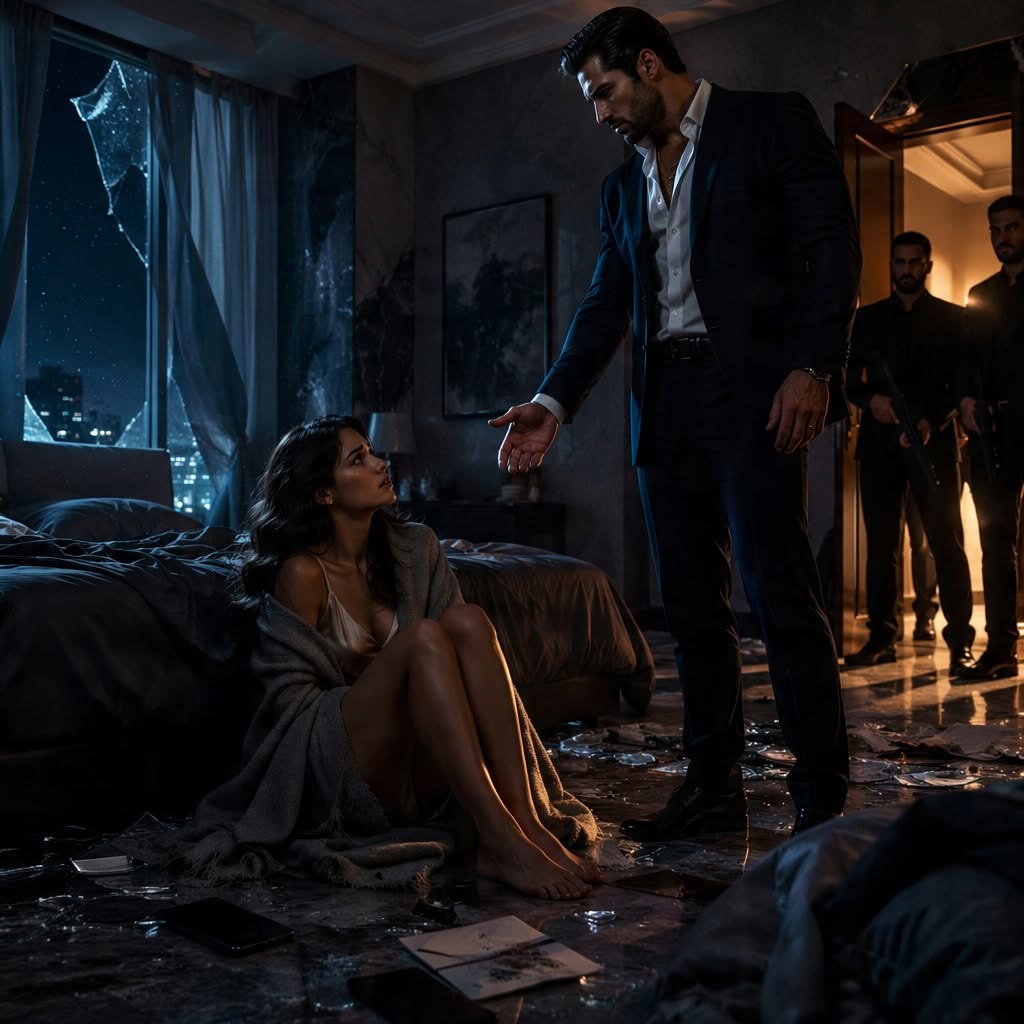
The arrests were only the beginning.
Victor Hale hired twelve attorneys.
Salvatore hired eighteen.
Both men claimed the evidence had been fabricated by Alexander to seize control of North Atlantic assets.
They blamed Dominic.
They blamed Mercer.
They blamed my father.
For several weeks, they tried to blame me.
Every morning, reporters stood outside the courthouse.
Every evening, television experts debated whether Alexander Rossi was a hero, a criminal, or both.
I learned that truth does not enter a courtroom like lightning.
It enters one document at a time.
One testimony.
One contradiction.
One frightened person deciding to speak.
Dr. Mercer testified first.
He admitted referring patients to Harbor Relief.
He admitted altering records.
He admitted remaining silent while people suffered.
In exchange for cooperation, prosecutors offered him reduced charges.
Some victims hated the agreement.
I understood.
Remorse did not erase harm.
But his records connected Victor and Salvatore to more than four hundred fraudulent accounts.
Dominic testified for three days.
He described how Hale had taken Sophie.
How he had been forced into Alexander’s security team.
How he had passed information.
How, over time, fear became habit and habit became betrayal.
When the prosecutor asked why he finally helped me escape, Dominic looked toward Sophie.
“Because my daughter was alive,” he said. “And I realized I had spent twelve years acting like a dead man.”
My mother testified from a hospital room by secure video.
She told the court about my father.
About the key.
About the first accident report.
About Salvatore’s money.
The defense tried to portray her as confused from medication.
She held up the original transfer documents and answered every question.
At the end, Salvatore’s attorney asked, “Mrs. Hart, isn’t it true that you accepted financial support from Mr. Rossi?”
“No.”
“The account contained two hundred thousand dollars.”
“I never used it.”
“You kept it.”
“I preserved evidence.”
“Convenient.”
My mother looked directly toward Salvatore.
“No. Convenient would have been spending it. Integrity was much more expensive.”
The courtroom went silent.
I testified last.
Victor’s attorney smiled at me as though I were still the frightened woman hiding in a bathroom.
“Ms. Hart, you were deeply in debt.”
“Yes.”
“You developed a romantic relationship with Alexander Rossi.”
“Yes.”
“You benefited financially from that relationship.”
“No.”
“You currently live in a residence owned by a Rossi company.”
“Because Victor Hale’s employees burned my home.”
Several jurors looked toward him.
The attorney changed direction.
“You claim Mr. Hale’s company altered your loan agreement.”
“I have photographs of the original.”
“You claim Dr. Mercer manipulated your mother’s insurance record.”
“He admitted it.”
“You claim Mr. Hale ordered men to enter your apartment.”
“One of those men agreed to testify.”
The attorney’s smile thinned.
“You appear very prepared.”
“I had good reason.”
“You expect this jury to believe a coffee-shop employee uncovered a national medical fraud network?”
“No.”
I looked at the jurors.
“My father uncovered it. Nurses noticed it. Families survived it. Doctors recorded it. Investigators proved it.”
Then I looked at Victor.
“I only refused to disappear.”
The prosecution played my father’s cassette.
For the first time, the entire courtroom heard his voice.
My mother cried.
Alexander held my hand.
Salvatore watched without expression.
When Victor’s younger voice said everyone can be reached, several jurors looked directly at him.
Then came the hidden audio from the ferry exchange.
The threats.
The demand for the tape.
Sophie’s video.
The bomb.
Victor’s face finally changed.
Not guilt.
Fear.
The verdict came four months later.
Victor Hale was convicted of racketeering, kidnapping, conspiracy, financial fraud, witness intimidation, and multiple counts related to patient deaths.
Salvatore Rossi was convicted of conspiracy, fraud, obstruction, and the murders of my father and Isabella Rossi.
Additional trials would follow.
Hundreds of civil cases had only begun.
Neither man would leave prison alive.
Outside the courthouse, reporters surrounded us.
“What happens now?”
“Will you sue the hospitals?”
“Are you and Alexander engaged?”
That question made me blink.
Alexander almost smiled.
“We are focused on the victims,” I answered.
It was true.
Mostly.
The frozen reserve accounts contained more than three hundred million dollars.
My father’s encryption allowed investigators to recover the funds.
The court transferred the money into a compensation trust.
Alexander added North Atlantic investment profits and several Rossi properties.
The total exceeded half a billion dollars.
It could not restore the dead.
But it could pay for treatment, cancel fraudulent debts, and help families who had been forced to choose between survival and bankruptcy.
Harbor Relief’s contracts were declared void.
The thirty-thousand-dollar debt that became fifty thousand disappeared from my name.
For days afterward, I kept expecting another collector to call.
Trauma did not understand court orders.
My mother finished treatment in the spring.
Her final scan showed no active disease.
The doctor used the word remission.
Mom made him repeat it three times.
Then she cried so hard the nurse cried with her.
We walked outside together beneath flowering trees.
Alexander waited beside the car.
He held a bouquet of blue hydrangeas.
My mother accepted them, then kissed his cheek.
“You are growing on me,” she said.
“I will try not to ruin it.”
“You probably will.”
He looked at me.
“Your daughter shares your optimism.”
“She gets her stubbornness from her father.”
The happiness should have felt complete.
Instead, something inside me remained afraid.
For months, Alexander and I had lived between danger and survival.
Now the danger was ending.
I did not know who we were without it.
That evening, we returned to the rebuilt café.
The owner had offered me my old job.
I did not need it.
The victim trust had hired me as a patient advocate, and Alexander had made sure my mother’s medical costs were covered through a court-supervised fund rather than personal charity.
But I missed the smell of coffee.
The ordinary rhythm.
The sound of the bell above the door.
I entered at 7:14 the next morning.
Alexander sat in the back booth.
At exactly 7:15, he looked at his watch.
“You are late,” he said.
“It is 7:15.”
“You used to arrive at 6:45.”
“I no longer work here.”
“Then why are you wearing an apron?”
I looked down.
The owner had handed it to me the moment I entered.
“Habit.”
I walked behind the counter and made a double espresso.
Then I carried it to his table.
“Three dollars,” I said.
He placed fifty on the table.
“No.”
“You always accepted it.”
“I thought you were strange and possibly dangerous.”
“I was both.”
“Now I know you are strange and definitely dangerous.”
I returned forty-seven dollars.
He looked offended.
“You are damaging tradition.”
“Create a new one.”
He took a sip.
I sat across from him.
For a moment, we simply looked at each other.
No guards entered.
No phones rang.
No one threatened us.
“Are you unhappy?” he asked.
The question surprised me.
“No.”
“You have been distant.”
“I am learning how to be safe.”
“With me?”
“With everything.”
He nodded.
“Safety can feel unfamiliar.”
“You know?”
“My father taught me danger was love. Control was protection. Suspicion was intelligence.”
He placed the cup down.
“I do not want to become him.”
“You are not.”
“I could be.”
“So could I.”
He frowned.
“I could become my mother and hide every truth because I am afraid of what it will cost.”
I reached across the table.
“We do not promise never to become our parents.”
“What do we promise?”
“That we tell each other when we see it happening.”
He took my hand.
“I can do that.”
“And you do not place trackers in my clothes without asking.”
“One time.”
“More than one.”
“Two.”
“Alexander.”
“Fine.”
I smiled.
He looked at me as if he still could not believe smiles were allowed.
“Come with me,” he said.
“Where?”
“It is a surprise.”
“I dislike surprises connected to Rossi vehicles.”
“No armed men.”
“Dominic?”
“He is not armed.”
“He is always armed.”
“Not visibly.”
“That is not reassuring.”
Still, I went.
He took me to the apartment building where everything had begun.
My old apartment had been repaired.
The door was new.
The bathroom frame was replaced.
The blue vase was gone forever.
Inside, the furniture had been restored as closely as possible.
My father’s photograph stood on the shelf in a new frame.
“I could not replace the vase,” Alexander said.
“I do not want another vase.”
He nodded.
“This apartment belongs to you now.”
I stared at him.
“What?”
“The building owner planned to sell. The compensation trust purchased the property for affordable patient housing. Your unit was included.”
“You bought my apartment?”
“The trust bought the building.”
“Did you arrange it?”
“Yes.”
“Alexander—”
“There is no debt. No condition. You can live here, rent it, or refuse it.”
I walked through the room.
The last time I had stood there, men had dragged me across broken glass.
Now sunlight entered through the windows.
The apartment no longer felt like a crime scene.
It felt like something reclaimed.
“You thought I might want to come back?”
“I thought you should have the choice.”
That was the difference.
Choice.
Not rescue forced upon me.
Not protection used as control.
A choice.
I turned toward him.
“Thank you.”
He looked relieved.
Then nervous.
Alexander Rossi looked nervous.
“What?”
He reached inside his jacket.
I raised a hand.
“No.”
His face fell.
I started laughing.
“You are not proposing in the apartment where I was nearly set on fire.”
“I had not considered that phrasing.”
“Put it away.”
“It is not a ring.”
He removed a small black card.
One number in gold.
Like the card he had given me in the café.
I took it.
Beneath the number were four new words.
YOU NEVER CALL ALONE.
I looked up.
“What does that mean?”
“It means you have people now.”
On the back were numbers for my mother, Dominic, Sophie, Mercer’s legal support office, the victim trust, and Alexander.
A family created from survivors.
My eyes filled.
“I prefer the first four words.”
“Do not make a sound?”
“They saved my life.”
“They nearly stopped my heart.”
I stepped closer.
“What four words would you choose now?”
He looked at me.
“Come home with me.”
The answer landed softly.
Not a command.
Not an ownership claim.
An invitation.
I touched his face.
“Ask again tomorrow.”
His eyebrows lifted.
“You are making me wait?”
“I am patient.”
“You are not.”
“Usually patient.”
May you like
He kissed me in the sunlight.
For the first time, nothing interrupted us.