Chapter 7 - THE WOMAN WHO REFUSED TO DISAPPEAR
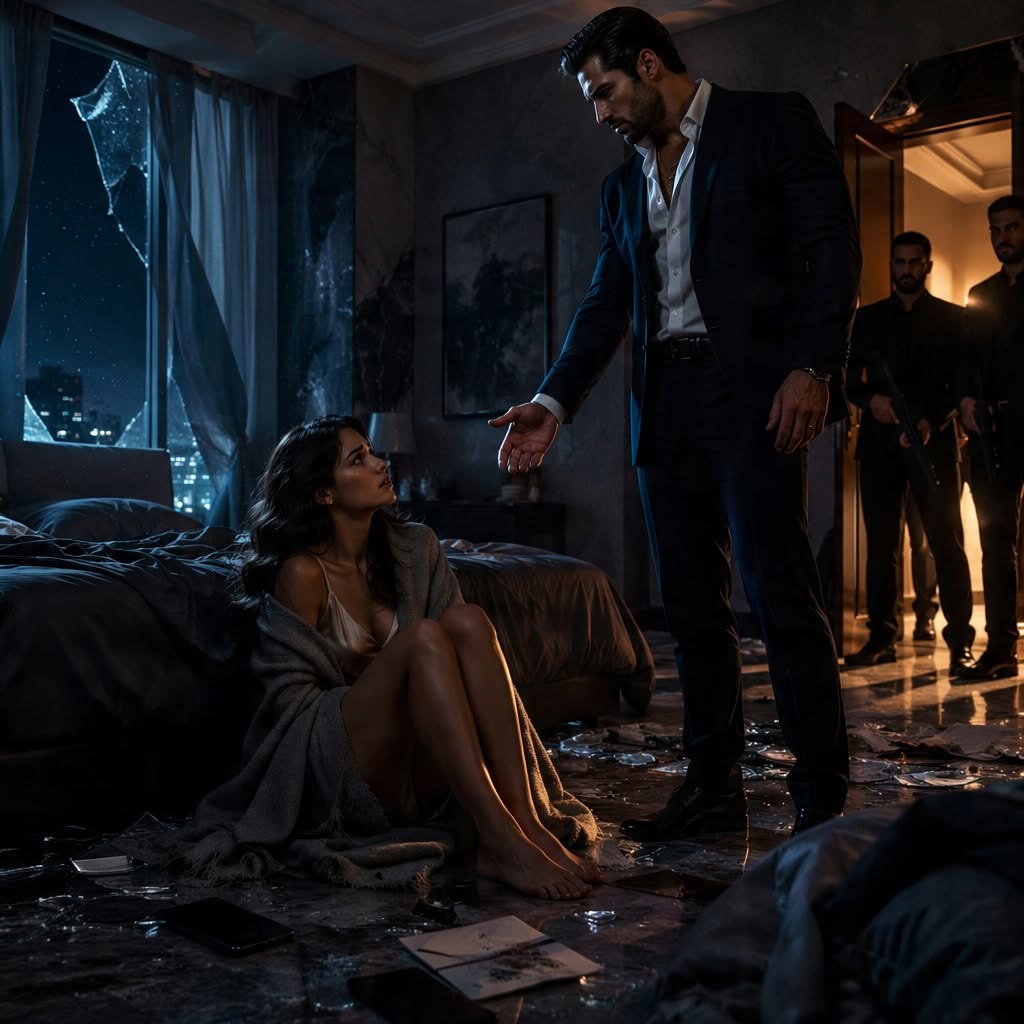
The attack on the safe house had lasted less than three minutes.
The men entered disguised as emergency medical technicians.
They used stolen credentials.
They knew the elevator code.
They knew which room held the evidence.
That meant Victor Hale still had someone inside Alexander’s organization.
Someone besides Dominic.
My mother survived because her doctor moved her into a locked treatment room when the alarm sounded.
The attackers took one flash drive.
They believed it was my father’s.
It was not.
Alexander had switched the original before leaving for the ferry terminal.
For once, we were ahead.
But only barely.
By noon, Victor Hale had begun his counterattack.
News outlets reported that Alexander Rossi was connected to a violent incident at an abandoned ferry terminal.
Anonymous sources claimed weapons had been found.
The burning ferry was described as part of a criminal dispute.
Dominic was named as a missing security executive suspected of kidnapping his own daughter.
My name appeared by evening.
LENA HART, BARISTA LINKED TO ROSSI CRIME NETWORK.
A photograph from the café showed me carrying a tray.
The headline beneath it called me Alexander’s secret mistress.
My mother threw the tablet across the room.
“At least they chose a decent photograph,” I said.
She stared at me.
“That is not funny.”
“No.”
But if I did not laugh, I would scream.
Alexander’s attorneys issued statements.
The stories multiplied.
Former employees accused him of intimidation.
A senator demanded an investigation into Rossi-owned shipping companies.
Hospital executives denied any connection to Harbor Relief.
Dr. Mercer disappeared from federal custody during a transfer.
Everything was moving too quickly to be accidental.
Victor was not defending himself.
He was burying us beneath noise.
“We need to release the evidence,” I said.
Alexander stood at the far end of the conference room.
“Not yet.”
“Why?”
“Because the records name people who may be innocent.”
“They also name murderers.”
“If we release everything without verification, Hale’s attorneys will call it manipulated data.”
“What about the recording?”
“Audio can be challenged.”
“My father says their names.”
“Your father is dead. He cannot testify.”
“My mother can.”
My mother looked up.
Alexander shook his head.
“No.”
“You do not decide,” she said.
“Hale tried to abduct you from a hospital.”
“He already knows where I am.”
“He does not know where this building is.”
“He found the last one.”
Alexander’s jaw tightened.
“You are both staying out of public view.”
I crossed my arms.
“That sounds like an order.”
“It is.”
“Then the answer is no.”
His eyes flashed.
“You are not walking into a television studio while Hale’s people are looking for you.”
“If I hide, the story becomes true.”
“This is not about reputation.”
“It is about control.”
“I am trying to keep you alive.”
“And I am trying to have a life worth keeping.”
The room went silent.
Dominic stood near the door with Sophie.
He had surrendered to federal authorities that morning and agreed to cooperate. Alexander’s attorneys had negotiated temporary protective custody rather than immediate detention.
Sophie refused to leave his side.
Alexander looked at me as if he were trying to find the line between protection and possession.
Finally, he said, “What do you propose?”
“I tell the truth publicly.”
“No live location.”
“Recorded interview.”
“With an attorney present.”
“Fine.”
“Your mother does not appear.”
My mother said, “I will decide that.”
Alexander closed his eyes briefly.
Sophie whispered to Dominic, “Are they always like this?”
Dominic almost smiled.
“Yes.”
We recorded the interview inside a private studio owned by one of Alexander’s companies.
A journalist named Naomi Chen agreed to conduct it.
She had spent years investigating medical fraud and refused to accept anonymous claims without documentation.
She asked hard questions.
“Why did you borrow from Harbor Relief?”
“To pay for my mother’s cancer treatment.”
“Did anyone explain that the interest could triple the debt?”
“No.”
“Did you read the contract?”
“Yes, but the version I signed did not contain the collection fees they later demanded.”
“Do you have proof?”
I showed her photographs of the original pages I had taken before signing.
The digital copy provided by Harbor Relief contained different terms.
Naomi’s expression changed.
“Why did you photograph the contract?”
“My father taught me never to sign anything I could not prove later.”
The answer hurt.
He had protected me without being alive to know it.
My mother gave a separate statement from behind a privacy screen. She described Dr. Mercer, the false transfer, and my father’s investigation.
Alexander refused to appear.
“This is your story,” he said.
“It is yours too.”
“Not yet.”
The interview aired at eight that evening.
Within an hour, thousands of former patients and families began responding.
A widow in Vermont said her husband had borrowed from Harbor Relief after being denied medication.
A teacher in Maine said her identity had been used to open three accounts after her chemotherapy.
A nurse in Rhode Island recognized North Atlantic shipment numbers in the ledger.
The story stopped belonging only to us.
That was Victor’s greatest fear.
One victim could disappear.
Thousands could not.
By midnight, state regulators announced an investigation.
Two hospitals suspended administrators.
Harbor Relief shut down its website.
The stock price of North Atlantic Medical Holdings collapsed.
Alexander watched the news from the study.
“You were right,” he said.
I looked at him.
“Say it again.”
“No.”
“I may never hear it another time.”
“You will hear it too often.”
The tension between us softened.
For the first time since the bathroom, we were alone.
No guards inside the room.
No doctors.
No mothers.
No explosions.
Alexander stood near the window overlooking the harbor.
I joined him.
“Why did you really watch me?” I asked.
“I told you.”
“You told me how it started.”
He looked at the city lights.
“At first, I was trying to decide whether you worked for Hale.”
“And after you knew I didn’t?”
“I told myself I remained because you might be useful.”
“That is romantic.”
“It was a lie.”
“What was the truth?”
He was quiet.
“The truth was that your life looked ordinary.”
I frowned.
“You watched me because I was ordinary?”
“I watched you unlock the café every morning. You turned on the lights before anyone else arrived. You carried food to the homeless man near the alley. You called your mother during every break. You complained about your manager but covered his shift when his wife had a baby.”
He looked at me.
“Your life contained things mine did not.”
“Like minimum wage?”
“Like warmth.”
My chest tightened.
“You could have spoken to me.”
“I did not know how.”
“You own hotels.”
“Yes.”
“You negotiate international shipping contracts.”
“Yes.”
“You walked into my apartment with armed men.”
“Yes.”
“But you could not ask a barista to dinner?”
“That presented a different kind of risk.”
I smiled.
He reached toward me, then stopped before touching my face.
“May I?”
The question affected me more than the kiss at the ferry.
I nodded.
His fingers touched my cheek.
Gentle.
Careful.
Nothing like the man the newspapers described.
“I am not good for you,” he said.
“That is my decision.”
“My life is dangerous.”
“My life became dangerous before you entered it.”
“I have made choices you may hate.”
“Then tell me.”
“Not tonight.”
“Why?”
“Because tonight I want one hour in which you do not look at me like a witness.”
“How should I look at you?”
His eyes lowered to my mouth.
“Like the man who came when you called.”
I kissed him first.
This time, there was no explosion.
No gunfire.
Only his hands at my waist and my fingers in his hair.
He lifted me onto the edge of the desk.
The city glowed behind him.
For several minutes, the world stopped demanding things from us.
Then the door opened.
My mother stood in the doorway.
Alexander stepped away so quickly he struck the chair.
Mom looked from him to me.
“I was going to apologize for interrupting.”
“You do not look sorry,” I said.
“I am not.”
Alexander cleared his throat.
“Mrs. Hart.”
“Mr. Rossi.”
“I should go.”
“Yes.”
He left.
My mother waited until the door closed.
“You kissed him.”
“He kissed me too.”
“That does not improve the situation.”
“You said his father saved Dad once.”
“His family also helped create the people hunting us.”
“He is trying to stop them.”
“He is a man accustomed to controlling every room.”
“So am I.”
She almost smiled.
Then her expression became serious.
“I am afraid you will confuse rescue with love.”
The words struck deeper than I expected.
“I do not love him.”
My mother raised an eyebrow.
“Fine,” I said. “I do not know what I feel.”
“Good.”
“That sounded judgmental.”
“It is maternal.”
Before I could answer, the building alarms activated.
A red light flashed above the door.
Alexander’s voice came through the intercom.
“Security breach. Everyone remain inside.”
My mother reached for me.
The power went out.
Backup lights activated.
The door locked automatically.
I heard footsteps in the hallway.
Then Alexander’s voice.
Not through the speaker.
Outside the door.
“Lena, open it.”
I reached for the control panel.
My mother grabbed my wrist.
“Wait.”
“What?”
“Ask him something.”
I stared at her.
“What?”
“Something only Alexander knows.”
A cold feeling entered my stomach.
The voice outside repeated, “Open the door.”
I stepped closer.
“What did you order the first morning we met?”
Silence.
Then the voice answered.
“Double espresso.”
My hand moved toward the lock.
My mother stopped me again.
“That was in the news profiles.”
She was right.
I asked, “What did I spill on your table?”
The man outside hesitated.
“Coffee.”
Wrong.
I had dropped empty cups.
The door handle moved.
“Lena,” the voice said more sharply. “Open the door now.”
My mother and I backed away.
Someone was impersonating Alexander.
A second voice came from the hallway.
The real Alexander.
“Step away from that door.”
Gunfire erupted.
My mother pulled me behind the desk.
The door burst inward.
A man wearing Alexander’s clothes fell into the room.
The real Alexander appeared behind him.
He dragged the attacker away and entered.
“Are you hurt?”
“No.”
He checked us anyway.
Dominic’s voice came over the radio.
“Two intruders down. One escaped to the roof.”
Alexander looked toward the ceiling.
“What were they after?” I asked.
A smoke alarm flashed.
Then I smelled it.
Gas.
Alexander’s face changed.
“Move.”
We ran into the hall.
Smoke poured from the ventilation system.
The attackers had not come for evidence.
They had come to kill everyone in the building.
Alexander led us toward the emergency stairs.
Halfway down, an explosion shook the structure.
My mother fell.
I caught her.
Alexander lifted her into his arms.
We reached the lower level as sprinklers activated.
Security doors sealed behind us.
Outside, firefighters surrounded the building.
The safe house burned from the upper floors.
As my mother was placed into an ambulance, a federal vehicle arrived.
Three agents approached Alexander.
The lead agent held out a warrant.
“Alexander Rossi, you are under arrest for conspiracy, obstruction, trafficking in counterfeit medication, and the murders of Angela Price and Daniel Hart.”
I stepped between them.
“That is insane.”
The agent looked at me.
“We recovered evidence from Mr. Rossi’s private server.”
“Planted evidence.”
Alexander placed a hand on my shoulder.
“Lena.”
“You did not kill my father.”
“No.”
“Tell them.”
“They are not here to listen.”
The agents moved closer.
Alexander removed his watch and handed it to me.
Inside the band, four numbers were engraved.
The time he had entered my café every morning.
“Do not trust anyone who arrived after the fire started,” he whispered.
“What does that mean?”
His gaze moved toward the ambulance carrying my mother.
Then to one of the paramedics closing the door.
The paramedic wore a gray ring.
The same ring Dr. Mercer had worn.
Harbor Relief.
I ran toward the ambulance.
The doors slammed.
The vehicle sped away.
“Mom!”
Alexander fought against the agents holding him.
“That ambulance is not hospital transport!”
Nobody listened.
I watched the ambulance disappear around the corner with my mother inside.
Alexander was forced into the federal vehicle.
The last thing he shouted before the door closed was my name.
In less than five minutes, Victor Hale had taken both of them.
My mother in one direction.
Alexander in another.
May you like
And for the first time since the nightmare began, I had no dangerous man coming to save me.
I would have to become dangerous myself.