Chapter 11 - What Forgiveness Actually Looked LikeA year after Grant’s conviction, life became ordinary.
I had once underestimated ordinary.
I used to measure successful weeks by client bookings, training contracts, revenue, and whether every dog left my facility better than it arrived.
Now success looked different.
Tessa complaining about homework.
Noah refusing vegetables.
Laundry on the couch.
Soccer cleats in the hallway.
Rachel being seven minutes late because traffic was bad and calling before Tessa had time to worry.
Ordinary was beautiful.
The old house sold.
A young couple bought it.
They loved the kitchen.
I didn’t tell them what had happened there.
Not because it was secret.
Because homes don’t inherit guilt.
People do enough of that already.
I bought a modest house near Edmond with the big oak Tessa wanted.
Three bedrooms.
Wide backyard.
A little workshop.
No hidden cameras.
I checked.
Twice.
Rachel remained in her apartment.
Our separation reached eighteen months.
People kept asking why we hadn’t divorced.
My sister asked most directly.
“Do you still love her?”
We were sitting on my porch.
“Yes.”
“Then why isn’t she home?”
“Because love isn’t the only question.”
Melissa nodded.
“Do you trust her?”
“More than I did.”
“That wasn’t the question.”
I smiled.
“Sister privilege?”
“Absolutely.”
I thought carefully.
“I trust who she is becoming.”
“But?”
“I’m still learning whether I trust her with my heart.”
Melissa looked through the window where Rachel was helping Tessa frost cupcakes.
“That seems fair.”
Rachel had changed.
Not magically.
Not perfectly.
She still became defensive sometimes.
Still tried to explain too much when ashamed.
Still had days when guilt made her withdraw.
But now she caught herself.
She apologized specifically.
She didn’t demand immediate forgiveness.
She told the truth before being cornered.
There was no secret phone.
No hidden bank account.
No private resentment stored until it became poison.
And I changed too.
That part mattered.
I hired a second manager.
Stopped taking every emergency case.
Turned my phone off during dinner.
Attended school events.
I discovered my family had learned not to ask because I had taught them work usually won.
That was mine to repair.
One evening, Tessa had a school presentation.
Ten minutes before we were supposed to leave, a police K9 handler called.
His dog had bitten another officer.
A year earlier, I would have grabbed my keys.
Instead I said:
“Call Caleb. If it can’t wait, take the dog to the emergency veterinary behavior unit. I’ll call after eight.”
Tessa stood behind me.
“You’re not going?”
“No.”
“But it’s an emergency.”
“It is.”
“You always go to emergencies.”
“Not this one.”
“Why?”
“Because Caleb can handle it.”
She stared at me.
Then smiled.
“You’re coming to my presentation.”
“Yes.”
She hugged me.
I wondered how many times children quietly test whether promises are real.
That night she gave a presentation about family history.
One slide showed a photograph of me holding Noah.
Another showed Rachel and Tessa baking.
The last showed all four of us under the oak tree.
The title:
MY FAMILY CHANGED A LOT BUT WE ARE STILL A FAMILY
Rachel began crying.
I pretended not to notice.
Afterward, outside school, Tessa handed us each one of her poster boards.
“Can Mom come home now?”
There it was.
Again.
Rachel and I exchanged a look.
“Tess,” I said, “Mom and I have to decide that ourselves.”
“I know.”
“Then why ask?”
“Because you’re slow.”
Rachel laughed.
I did too.
Tessa rolled her eyes.
“I’m serious.”
“I know.”
She climbed into Melissa’s car because she was staying with her cousin that night.
Rachel and I stood alone.
“She’s not wrong,” Rachel said.
“No.”
“We are slow.”
“I think slow has served us pretty well lately.”
“Yes.”
She tucked her hands into her coat pockets.
“Daniel.”
“Yeah?”
“My lease ends in three months.”
I waited.
“I can renew it.”
“Okay.”
“Or…”
She didn’t finish.
I looked at her.
“Do you want to come home?”
Her eyes filled instantly.
“Yes.”
“That’s not the only question.”
“I know.”
“Why?”
She thought.
“Because I want to build a marriage with you.”
Not “because the kids want it.”
Good.
“Different from the old one?”
“Yes.”
“How?”
“No mind-reading.”
I smiled.
“Strong start.”
“No keeping score.”
“Harder.”
“Therapy even when nothing is burning.”
“Good.”
“Separate identities.”
“Meaning?”
“You work. I work.”
Rachel had begun part-time training as a bookkeeping consultant.
“I have friends. You have friends. We don’t expect one person to fill every empty part.”
I nodded.
“And if you’re unhappy?”
“I say it.”
“If I’m unavailable?”
“You tell me no without pretending it’s yes.”
She smiled.
“Deal.”
“And trust?”
Her smile faded.
“I don’t expect you to give it because I ask.”
“Good.”
“I keep earning it.”
I reached for her hand.
The first time in almost two years.
Rachel looked down at our hands.
Then at me.
“Is that a yes?”
“It’s a conversation.”
She laughed.
“Slow.”
“Very.”
Three months later, Rachel moved home.
Not with everything.
One suitcase.
A few boxes.
Her apartment remained paid for through the end of the month.
Symbolically, that mattered.
There was no dramatic return.
No kiss in the rain.
No swelling music.
She carried a box of kitchen utensils through the door while Noah shouted:
“Mommy!”
He ran into her legs.
Rachel dropped the box.
Tessa came downstairs.
“You’re really staying?”
Rachel nodded.
“We’re trying.”
Tessa pointed a finger at her.
“No disappearing.”
Rachel’s eyes filled.
“No disappearing.”
“Dad?”
“Yeah?”
“No working at dinner.”
“Mostly.”
She narrowed her eyes.
“Dad.”
“No working at dinner.”
“Good.”
Then she hugged both of us.
We began family therapy together.
The first session was terrible.
The second was worse.
By the fifth, we stopped trying to sound reasonable and started being honest.
Tessa told Rachel:
“I still get scared when you are late.”
Rachel answered:
“Then I will always call.”
I told Rachel:
“Sometimes when you turn your phone screen away, I panic.”
Rachel answered:
“Then I’ll tell you what I’m doing instead of getting angry that you’re afraid.”
Rachel told me:
“When you go quiet, I assume you’re leaving.”
I answered:
“I’ll tell you when I need space and when I’ll come back.”
Small promises.
Specific.
Keepable.
Six months after Rachel returned, Eleanor invited us to a memorial for Caroline.
Thomas came with his children.
So did several other families from the case.
They planted a tree in a public garden.
Eleanor spoke.
“My daughter made mistakes.”
Some people looked surprised.
“She believed lies. She told lies. She hurt people she loved.”
Eleanor touched the young tree.
“But none of that means she deserved what happened to her.”
She paused.
“And neither does anyone else.”
Rachel took my hand.
Eleanor continued:
“If we want fewer people like Grant Keller to succeed, we must stop believing victims have to be perfect before they deserve help.”
That stayed with me.
Rachel had done wrong.
Grant had victimized her.
Both could be true.
I had failed parts of my marriage.
Grant had falsely tried to frame me as abusive.
Both could be true.
Healing became possible only after we stopped insisting one truth had to erase another.
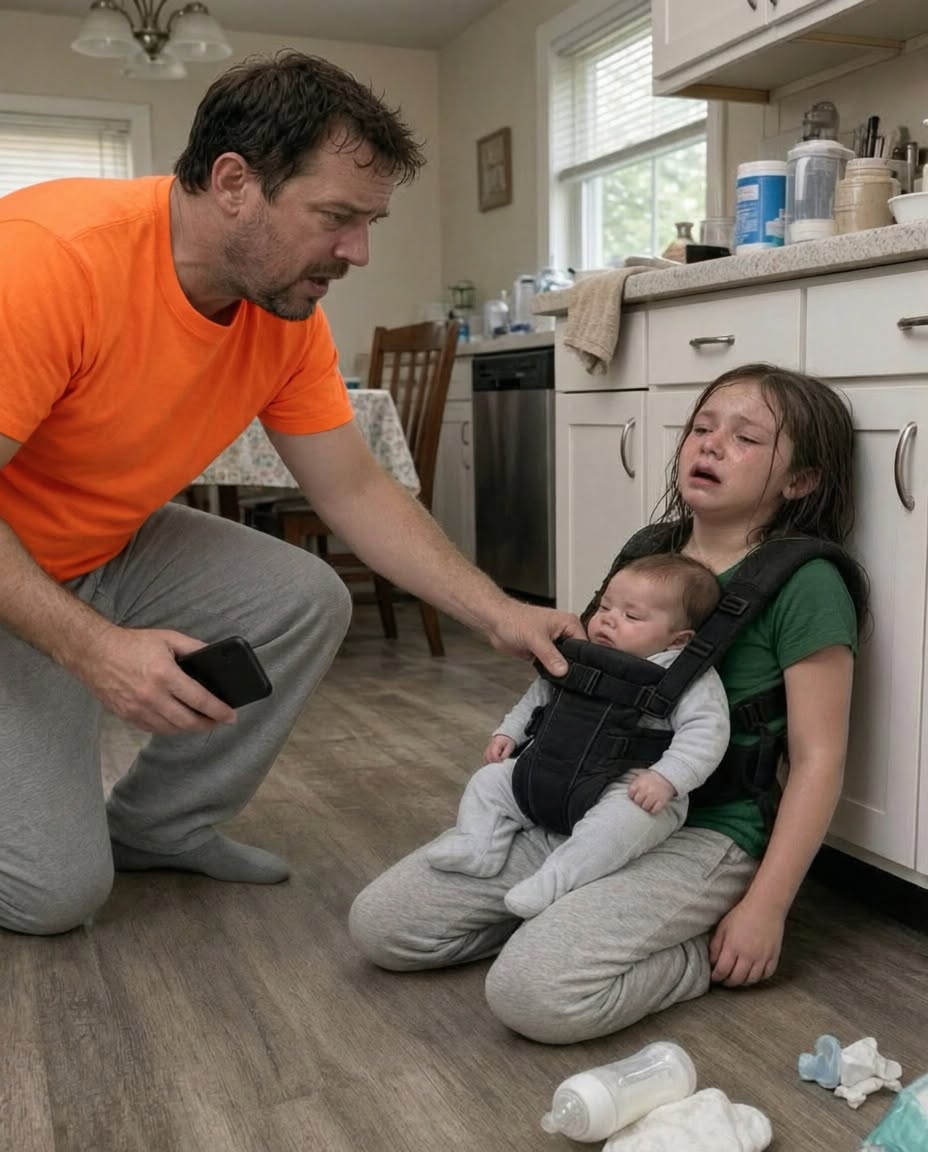
That evening, back home, Tessa sat on the kitchen floor with Noah.
For one terrible second, the image hit me like a memory.
Same posture.
Same cabinets? No.
Different house.
Different child now.
Noah was two and laughing while stacking plastic cups.
Tessa was showing him how.
Rachel walked in.
“Dinner in five.”
Tessa looked up.
“Mom, can you hold Noah?”
Rachel’s expression flickered.
The words carried history.
Then she smiled.
“Absolutely.”
She lifted him.
Tessa stood.
No exhaustion.
No fear.
No responsibility too heavy for her shoulders.
Just a sister passing her brother to his mother.
I watched from the doorway.
Rachel noticed.
She knew what I was thinking.
No words were needed.
Later that night, she found me on the porch.
“You okay?”
“Yeah.”
“You sure?”
“Yes.”
She sat beside me.
For a while we listened to cicadas.
Then she said:
“I don’t want the worst thing I ever did to become the most important thing about me.”
I looked at her.
“It isn’t.”
She began crying.
I put my arm around her.
It was the first time forgiveness felt real.
Not because I forgot.
Not because it stopped hurting.
Because remembering no longer required punishment.
The next morning, I woke to shouting downstairs.
“Dad!”
Tessa.
I ran.
She stood by the kitchen counter holding Rachel’s phone.
My heart jumped.
“What happened?”
“Mom got a message.”
Rachel came behind me.
“What message?”
Tessa turned the screen around.
Unknown number.
One sentence.
You thought Keller worked alone?
For two seconds, the old fear returned.
Then Rachel did something she would never have done two years earlier.
She didn’t hide the phone.
She didn’t delete the message.
She didn’t try to protect us by handling it herself.
She handed it directly to me.
“Call Ortiz.”
May you like



And I realized—
whatever came next, Grant had already lost.







