Chapter 11 - GUILTYClosing arguments lasted nearly four hours.
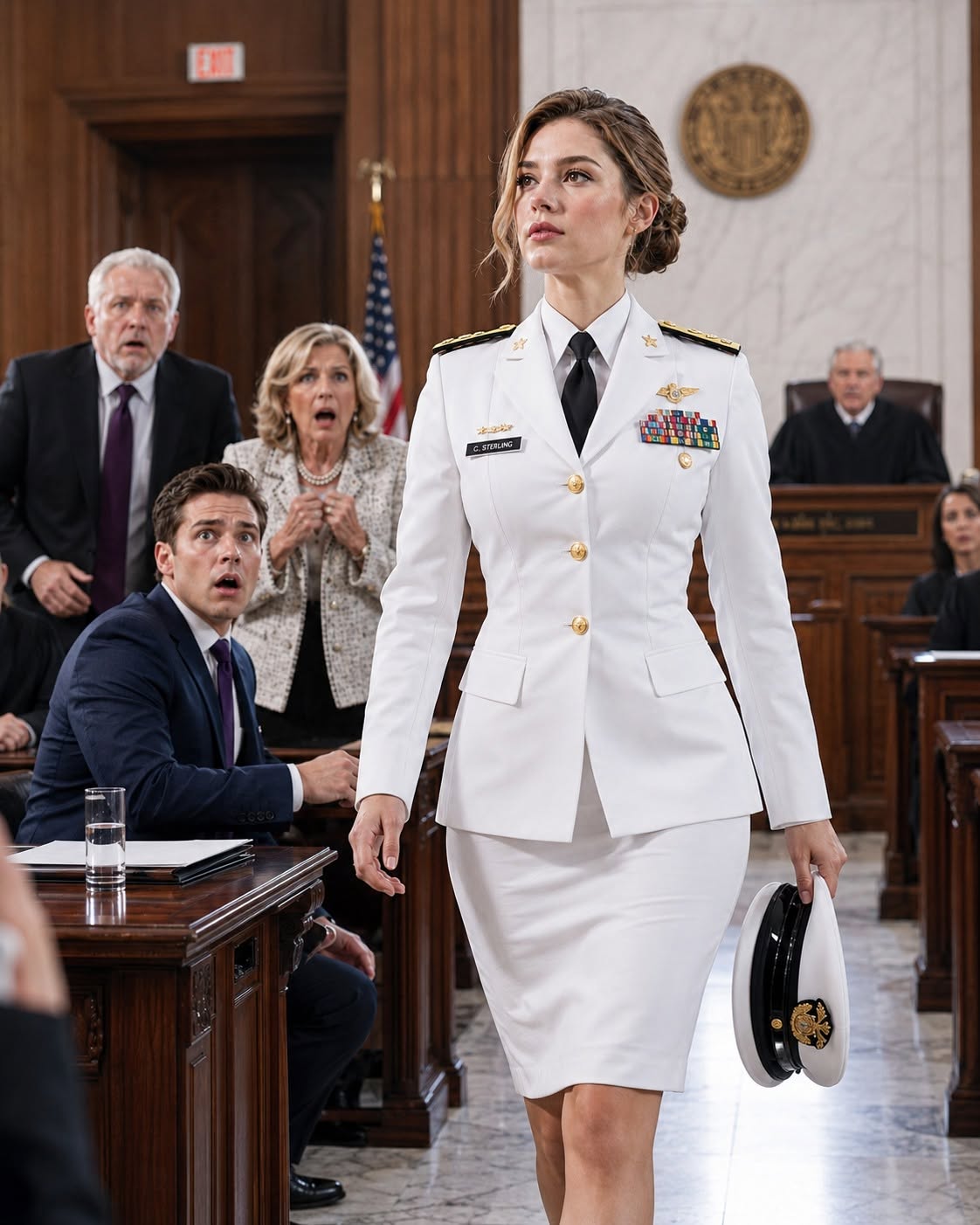
The government built its case like a staircase.
First the invoices.
Then the shell companies.
Then Harbor Ridge.
Then the recordings.
The controlled payments.
Caleb.
Rowe.
The forged emails.
The threat against Dad.
Finally, Luke's own testimony.
Naomi stood before the jury.
“This case is complicated on paper because the defendant worked very hard to make it complicated.”
She gestured toward stacks of exhibits.
“But strip away the shell companies and false invoices, and the conduct is simple.”
She paused.
“He took money that wasn't his.”
Luke stared straight ahead.
“He lied to auditors.”
Another pause.
“He lied to business partners.”
My mother lowered her eyes.
“He lied to his parents.”
Then Naomi looked toward me.
“And when his sister recognized the truth, he decided it was easier to destroy her credibility than stop committing crimes.”
Luke's lawyer offered a different story.
A business grew too quickly.
Poor controls.
Bad associates.
A manipulative older mentor.
An unreliable cooperating witness desperate for a lighter sentence.
A sister with years of resentment.
“Do not convict Luke Sterling because his family is broken,” Martin Shaw told the jury.
Fair point.
“He is not on trial for being a bad brother.”
Also true.
“He is on trial for federal crimes requiring proof beyond reasonable doubt.”
For the first time, I respected something he said.
Luke's treatment of me mattered only where it proved conduct relevant to the fraud.
This wasn't family therapy.
It was court.
The jury needed evidence, not sympathy.
Fortunately, they had plenty.
At 3:41 p.m., deliberations began.
I returned the next morning in civilian clothes.
My testimony was finished.
For the first time all week, I wore a simple navy dress and carried coffee.
Mom smiled when she saw me.
“You look different.”
“Less shiny?”
She laughed.
Dad joined us.
He stopped several feet away.
“Morning.”
“Morning.”
The awkwardness was strangely comforting.
Healthy relationships do not always repair themselves with dramatic hugs.
Sometimes they begin again with coffee and uncomfortable greetings.
At noon, no verdict.
At two, nothing.
At 4:17, the courtroom deputy rushed past us.
Verdict.
My stomach dropped.
We filed inside.
Luke entered.
He looked tired.
The jury returned.
Nobody looked at him.
That told me before the clerk spoke.
“Has the jury reached a unanimous verdict?”
“Yes.”
Luke closed his eyes.
Count One.
Guilty.
Count Two.
Guilty.
Wire fraud.
Guilty.
Conspiracy.
Guilty.
False statements.
Guilty.
Money laundering.
Guilty.
The words continued.
Not guilty on two narrower counts.
Guilty on nearly everything else.
Mom began crying silently.
Dad wrapped an arm around her.
I felt no triumph.
That surprised me.
For ten years, I had wanted vindication.
There it was.
Official.
Unmistakable.
A federal jury had confirmed the fraud.
Recordings confirmed the lies.
My parents knew.
Everyone knew.
Yet I did not feel victorious.
I felt tired.
Luke turned before marshals took him.
He looked at Mom.
Then Dad.
Then me.
“Grace.”
The marshals paused.
I approached only close enough to hear him.
“Are you happy?”
“No.”
He seemed confused.
“You won.”
“This wasn't a game.”
“You always win.”
There it was again.
His entire understanding of us.
Winners and losers.
Chosen child and rejected child.
Success and humiliation.
I shook my head.
“You still don't understand.”
“Understand what?”
“I wanted my brother.”
His face changed.
Just slightly.
“For a long time, Luke, I wanted you to call me and tell me why. I wanted you to fix it.”
He looked down.
“You put me here.”
“No.”
My voice stayed quiet.
“You put yourself here.”
The marshal touched his arm.
Luke looked at me one last time.
Then disappeared through the side door.
Mom came toward me.
I expected her to hug me.
She stopped first.
“Can I?”
That question mattered.
I nodded.
She held me.
Not like the past ten years hadn't happened.
Because they had.
She held me like she understood she had almost lost the right.
Dad stood nearby.
When Mom released me, he opened his arms slightly but didn't move.
I stepped into them.
My father shook.
“I'm sorry,” he whispered.
“I know.”
“I'll say it every day.”
“Please don't.”
He pulled back.
“What?”
“I don't want the rest of our relationship to be one long apology.”
His eyes filled.
“Then what do you want?”
“I don't know yet.”
He nodded.
“That seems fair.”
Outside the courthouse, reporters waited behind barriers.
Naomi gave the official statement.
I intended to leave through another entrance.
Then I saw something.
A young woman in Navy uniform stood beyond the press line.
Maybe twenty-two.
Ensign.
She recognized me and straightened.
I walked toward her.
“Commander.”
“Ensign.”
She looked nervous.
“Sorry. I just wanted to say something.”
“You're fine.”
“My family doesn't really understand why I joined.”
I waited.
“They keep saying I'll come home when I get it out of my system.”
That sentence was so ordinary it almost hurt.
“I saw you testify,” she said. “And I thought… I don't know. It helped.”
I smiled.
“You don't need everybody to understand your path before you're allowed to walk it.”
She nodded.
“Thank you.”
I started to leave.
Then added, “But don't use me as an excuse to ignore your mother's calls.”
She laughed.
“Yes, ma'am.”
Six weeks later, Luke returned for sentencing.
Victim statements filled the hearing.
Representatives from communities affected by the fraud described delayed services.
A clinic administrator described borrowing generators.
A small contractor explained nearly going bankrupt after Vance Shield shifted blame for undelivered equipment.
My parents attended.
So did I.
Luke received a lengthy federal prison sentence.
The exact number mattered less to me than the judge's words.
“You were repeatedly given opportunities to stop.”
Luke stood motionless.
“You did not commit one impulsive act. You made thousands of decisions over many years.”
The judge also ordered restitution and forfeiture.
Properties disappeared.
Accounts froze.
The lake house went.
Vehicles.
Investments.
My parents' mortgage payment became part of the recovery proceedings.
They moved from their large house into a modest rental while their lawyer sorted out what assets were legitimately theirs.
I offered financial help.
Dad refused.
Not angrily.
“We need to live within what we actually earned.”
I understood.
Three months after sentencing, Mom called me on a Sunday.
“Are you busy?”
“I have paperwork.”
“So yes?”
“No. What's up?”
“Dinner.”
I almost said no automatically.
Then stopped.
“Where?”
“Our place.”
“The rental?”
“Don't sound so excited.”
I smiled.
“What time?”
“Six.”
I arrived at 6:12.
Dad opened the door.
“You're late.”
I raised an eyebrow.
His face panicked.
Then I laughed.
“So are you going to throw me out again?”
The joke landed harder than I intended.
Dad's face collapsed.
“Grace—”
“Dad.”
I touched his arm.
“Bad joke.”
He nodded.
“Very bad.”
Then, slowly, he smiled.
“Your sense of humor has gotten terrible.”
“It was always terrible.”
“That's true.”
Mom shouted from the kitchen.
“Stop standing at the door and let my daughter inside.”
My daughter.
I walked in.
The rental smelled like roasted chicken.
Family photographs stood on a shelf.
Most were old.
Then I saw a new one.
My official command portrait.
White uniform.
Same uniform I wore into court.
I stared at it.
Mom appeared behind me.
“Is that okay?”
I looked at her.
“You didn't have to do that.”
“I wanted to.”
Beside the photograph was the old picture of Luke and me on the dock.
I didn't ask her to remove it.
Luke had done terrible things.
He had also existed before them.
Healing did not require pretending my childhood had never happened.
I sat at the table.
Three plates.
Dad poured iced tea.
Mom burned the rolls.
Some things survived every family disaster.
Halfway through dinner, Dad cleared his throat.
“Your mother says you're up for another assignment.”
I looked at Mom.
“You told him?”
“She was excited,” Dad said.
“I'm not allowed to say much yet.”
“We know.”
That sentence mattered too.
We know.
No accusation.
No demand.
No suspicious silence.
Just respect.
Dad lifted his glass.
“Well, wherever it is…”
He paused.
“We're proud of you.”
Ten years earlier, those words would have meant everything.
Now they meant something different.
Not proof of my worth.
I had learned to live without that.
They were evidence that my parents were changing.
And perhaps I was changing too.
I lifted my glass.
“To burned rolls.”
Mom threw a napkin at me.
We laughed.
For the first time in more than a decade, I sat at a table with my parents and did not feel like I was defending myself.
There was still one thing left to do.
A week later, I drove to the federal prison where Luke had begun serving his sentence.
I hadn't told Mom.
Hadn't told Dad.
I wasn't sure why I went until I saw my brother enter the visitation room.
Luke looked thinner.
Older.
No suit.
No expensive watch.
No assistants.
No audience.
He sat across from me.
For almost a minute, neither of us spoke.
Finally, he said, “White uniform would've been a little much for prison visitation.”
I almost smiled.
“Thought about it.”
He looked down.
Then surprised me.
“I'm sorry.”
I said nothing.
“I know that doesn't matter.”
“It matters.”
He looked up.
“It just doesn't fix anything,” I added.
He nodded.
For once, Luke did not argue.
“Mom says they're talking to you again.”
“They are.”
“Good.”
“You mean that?”
He looked toward the reinforced window.
“I don't know what I mean about anything anymore.”
That was the first truthful answer I'd heard from him in years.
I leaned back.
“Then start there.”
“With what?”
“Not knowing.”
He looked confused.
“You've spent your whole life pretending you knew exactly who everybody was. Who was weak. Who was useful. Who loved you more.”
His eyes dropped.
“Maybe stop.”
Luke was quiet.
Then he asked the question I never expected.
“Do you think you'll ever forgive me?”
I considered it.
“I don't know.”
He nodded.
“But I'm here.”
His eyes filled.
That was all I could give him.
For now.
Maybe forever.
But I was there.
May you like



And sometimes the first step toward a different ending is not forgiveness.
It's simply refusing to keep living inside the old one.







