Chapter 6 - THE BROTHER WHO THOUGHT HE BOUGHT METhree years before the trial, Luke called me at 2:13 in the morning.
I almost didn't answer.
We hadn't spoken directly in nearly four years.
His name still existed in my contacts because some part of me had never managed to delete it.
“Grace.”
His voice sounded cheerful.
“Luke?”
“Still recognize your big brother.”
“What do you want?”
He laughed.
“You always were warm.”
“It's two in the morning.”
“Not where you are.”
That told me he'd been tracking my assignment.
I sat up.
“What do you want?”
“I need help.”
“No.”
“You don't know what I'm asking.”
“I know you.”
Silence.
Then his tone changed.
“Still angry?”
“Goodbye, Luke.”
“Five hundred thousand dollars.”
I stopped.
“For what?”
“One favor.”
I reached for a pen.
“I'm listening.”
He interpreted that as greed.
In reality, I was writing down the time of the call.
Luke wanted information.
Not classified battle plans.
Something more mundane and, from his perspective, more valuable.
He wanted to know when a particular group of vendors would face enhanced auditing.
If he had the schedule early enough, he could clean records, move assets and terminate shell subcontractors before investigators looked closely.
“I can't access that,” I told him.
“You can access anything if you're willing.”
“You think very highly of me.”
“I always did.”
That nearly made me laugh.
Luke continued.
“You've spent years pretending you're better than us. How has that worked out?”
“Pretty well.”
“No family. No home.”
“I have a home.”
“You have government housing and coworkers.”
There it was.
The old weapon.
Loneliness.
He had no idea how much less effective it had become.
“What happens if I say yes?” I asked.
“I transfer a hundred grand immediately. Rest after delivery.”
“How do I know you'll pay?”
“My company clears more than that in a week.”
I ended the call and contacted the appropriate authorities.
Within forty-eight hours, a controlled cooperation plan existed.
I was not transformed into a spy overnight.
Television makes such operations look exciting.
Mostly, it involved legal reviews.
Meetings.
Instructions.
Devices.
Precise limits on what I could say.
Luke called again four days later.
This time, investigators were listening.
“I knew you'd come around,” he said.
“I haven't.”
“You asked about payment.”
“I asked how I know you're not wasting my time.”
He laughed.
“That sounds like my sister.”
No.
It sounded like the person he wanted his sister to be.
Someone angry enough to become corrupt.
Someone he could finally prove had always been as dishonest as he claimed.
A hundred thousand dollars arrived through a layered transfer.
That money became evidence.
Luke then arranged our first face-to-face meeting in a hotel lounge in Arlington.
I wore civilian clothes.
He arrived ten minutes late.
I had forgotten how much he looked like Dad.
Same walk.
Same tendency to adjust his watch before sitting.
For a second, I wanted my brother back.
Then he smiled and said, “Look at you. Finally figured out principles don't pay.”
The feeling disappeared.
“You have what I asked for?” he said.
“I have some information.”
I gave him government-prepared material.
Technically accurate in harmless ways.
Operationally useless.
Luke studied it.
“When?”
“Potential reviews could begin next quarter.”
“Potential?”
“That's all I could get.”
“You can do better.”
“Then hire someone else.”
He reached across the table.
“Don't get dramatic.”
“I'm risking my career.”
He lowered his voice.
“Grace, you barely have a career.”
I almost admired the arrogance.
While wearing a recording device, I listened to my brother explain my own life to me.
“Five hundred isn't enough,” I said.
His eyes narrowed.
“How much?”
“One million.”
Luke leaned back.
Then smiled.
“There she is.”
“What?”
“The real Grace.”
He believed greed had finally exposed me.
Over the next fourteen months, Luke revealed pieces of his operation.
Never everything at once.
He wasn't stupid.
But criminals face a structural problem.
If they believe you're joining them, eventually they have to teach you enough to be useful.
He talked about vendor rotations.
Kickbacks.
“Ghost inventory.”
Companies created in other people's names.
He referred to Dad as “the cleanest signature we've got.”
That phrase nearly destroyed my composure.
One night, I asked what it meant.
Luke shrugged.
“Nobody suspects Dad. Whole town thinks he's George Washington.”
“Does he know?”
“Know what?”
“That you're using his name.”
Luke laughed.
“Dad knows whatever I need him to know.”
I stared at him.
“You're risking him.”
“Don't pretend you care.”
“He's our father.”
“He chose me.”
That was the first time Luke admitted what this had truly become for him.
Not merely money.
Winning.
“When?” I asked.
“What?”
“When did this become about beating me?”
His expression hardened.
“You always thought you were better.”
“No. You thought I thought that.”
“You walked around with that uniform and those little achievements while everybody was supposed to clap.”
“You were the one everybody clapped for.”
“Not after you left.”
I realized then.
When I joined the Navy, something changed in Luke.
For the first time, my life existed outside his shadow.
I had achievements he couldn't claim.
People respected me for reasons unrelated to him.
And when I found his fraudulent invoices, I became more than a sibling.
I became a threat.
Luke leaned closer.
“You know why Mom believed me?”
I didn't answer.
“Because you made it easy.”
“How?”
“You left.”
“I was assigned away.”
“You stopped fighting.”
His smile was cruel.
“People believe the person who stays in the room.”
That sentence remained with me.
Because he wasn't entirely wrong.
I had eventually stopped trying.
Not because Luke deserved the victory.
Because constantly proving my own innocence had become humiliating.
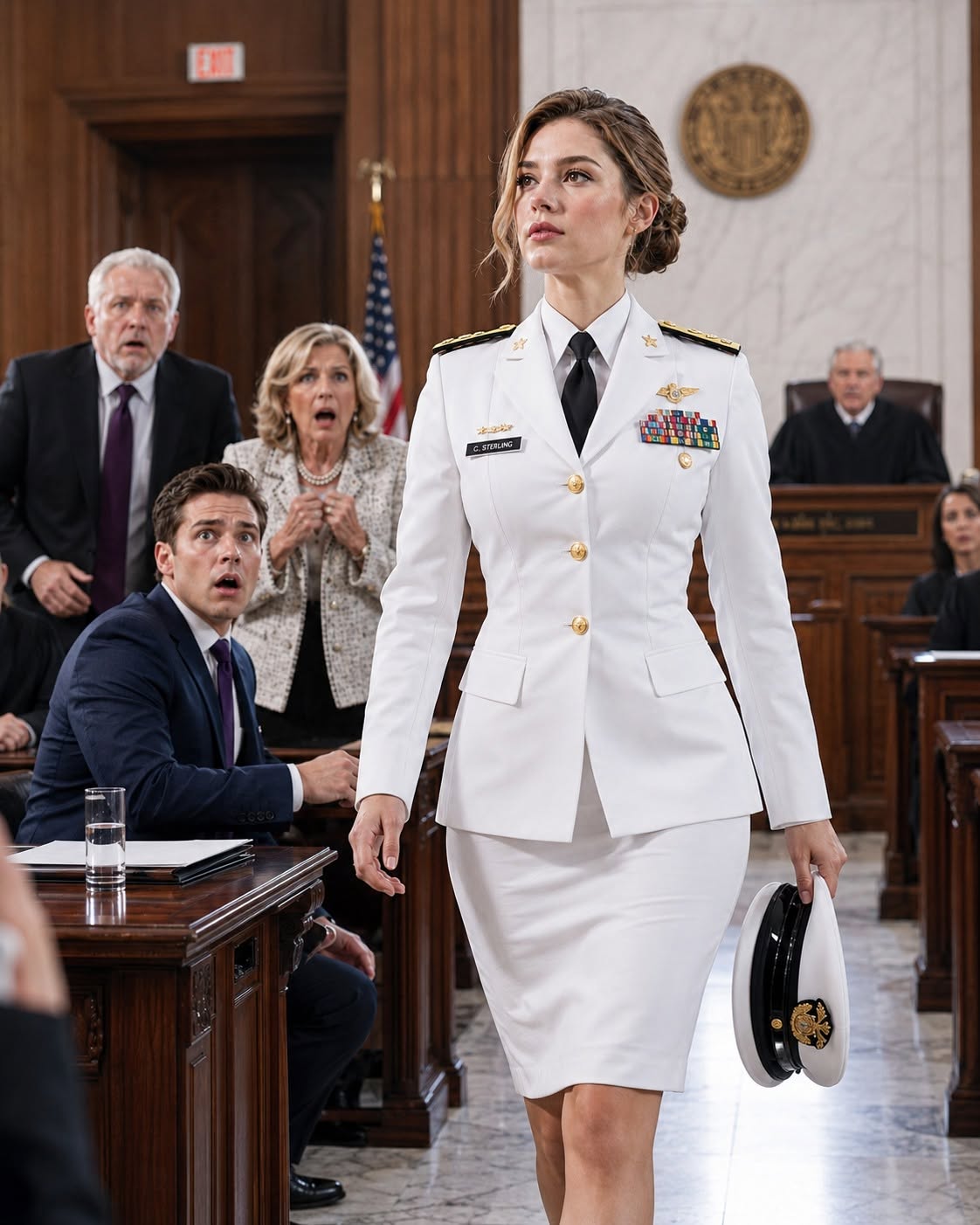
Back in federal court, Naomi played portions of those recordings.
The jury heard Luke discussing shell companies.
Fake invoices.
Our father's identity.
They heard him offer me money.
Then they heard something nobody in my family had ever heard.
My voice asked:
“Why did you tell Mom and Dad I washed out of the Navy?”
Luke laughed.
“Because it worked.”
My mother sobbed quietly.
The recording continued.
“You took my family.”
“No, Grace. I showed you how little it took for them to give you up.”
That sentence seemed to strike Dad physically.
He bent forward.
Luke refused to look behind him.
On the recording, I said, “You sound proud.”
“I am.”
“Why?”
“Because for once, you didn't win.”
Naomi stopped the audio.
Nobody moved.
Then she approached me.
“Commander Sterling, did you ever provide the defendant with restricted government information?”
“No.”
“Did you keep the money he transferred?”
“No.”
“Did you knowingly participate in his fraud?”
“No.”
“What was your purpose?”
“To document what he was doing and identify others involved.”
Naomi nodded.
“Did it work?”
“Yes.”
“How many additional defendants were identified?”
“Seven.”
“How many pleaded guilty before this trial?”
“Five.”
Luke stared downward.
“And did any of those cooperating defendants provide evidence implicating Luke Sterling?”
“Yes.”
The defense objected.
Sustained.
Naomi moved on.
But the damage was done.
At lunch, Dad sat across the hallway from me.
He didn't approach.
He only looked at me.
Then he mouthed two words.
I'm sorry.
I nodded once.
It wasn't forgiveness.
But it was the first brick placed where a bridge might someday exist.
That afternoon, however, everything changed again.
One of Luke's former executives was scheduled to testify.
Marcus Doyle.
The accountant who possessed the recovered drive.
Court resumed at 1:30.
At 1:37, Naomi received a note.
Her face drained of color.
She requested an immediate sidebar.
Ten minutes later, the judge dismissed the jury early.
Outside the courtroom, I caught Naomi.
“What happened?”
She looked at me.
“Marcus never made it here.”
“Why?”
“He was found unconscious in his garage this morning.”
My stomach dropped.
“Accident?”
“We don't know.”
“Is he alive?”
“For now.”
I thought about the threat.
Walk away.
People get hurt.
Luke was in custody.
But someone outside was still cleaning up after him.
May you like



And Marcus Doyle knew more about Luke Sterling's operation than anyone alive.
Including me.
Related Stories







