Chapter 1 - The Box in the Rain
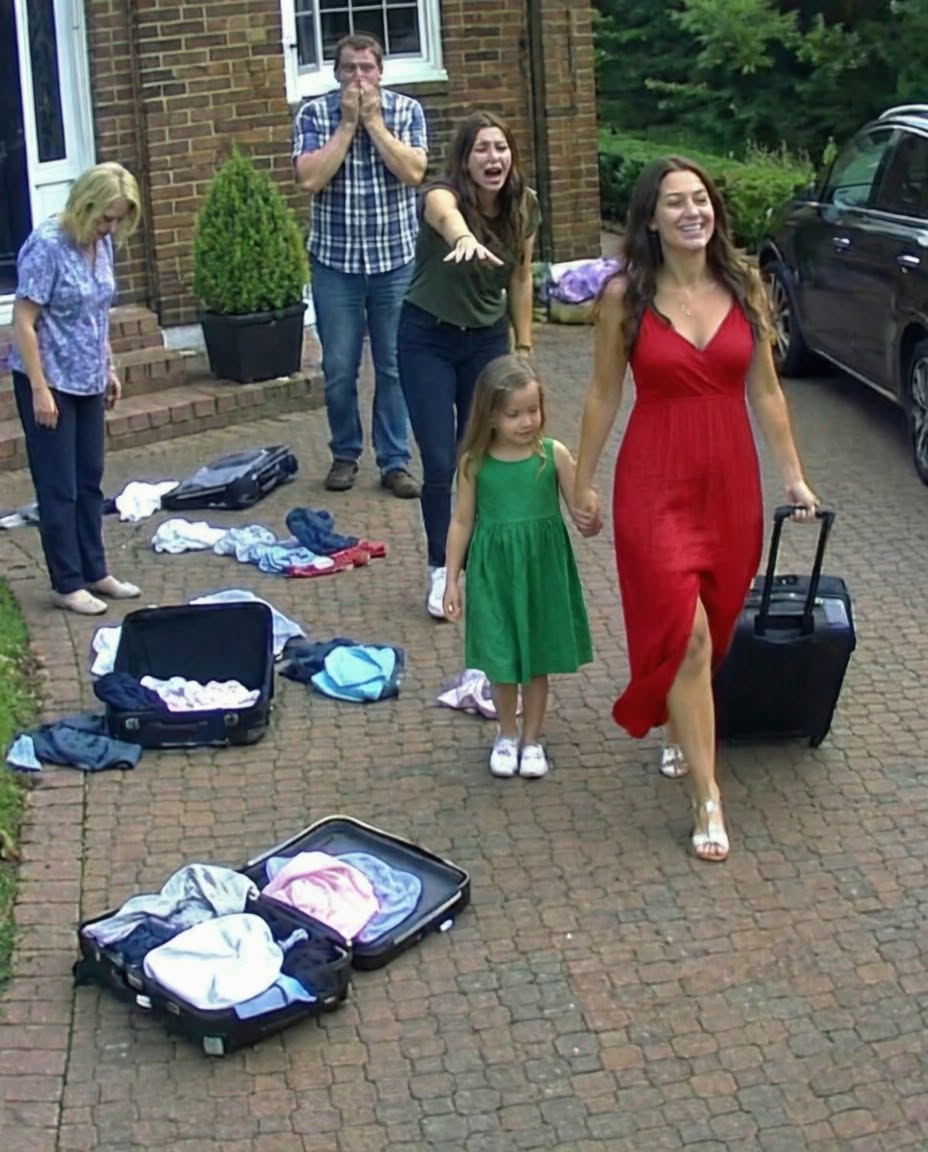
I left my parents’ house with one cardboard box, two garbage bags, and twelve years of silence burning behind my ribs.
The rain had started while my father was still packing my shirts.
Not folding them. Not gently placing them in the box like they belonged to someone he loved. He shoved them in the way people shove old receipts into a drawer they never plan to open again.
My mother stood in the hallway with her arms crossed.
Megan leaned against my bedroom doorframe, scrolling through her phone as if my eviction was a minor weather event.
“Don’t take the blue sweater,” she said without looking up. “It looks better on me.”
I stared at her.
She finally lifted her eyes. “What?”
I almost laughed.
For twelve years, I had paid her car insurance, her gym membership, two semesters of community college she never finished, three “emergency” credit card balances, and the security deposit on the apartment she abandoned after six weeks because the upstairs neighbor “walked too loud.”
And now she wanted my sweater.
I looked at my mother. “Are you going to say anything?”
Linda Sinclair tilted her head, her diamond earrings catching the hallway light. Earrings I had bought her for Mother’s Day after she cried about never having anything nice.
“We are all upset,” she said. “There is no need to be dramatic.”
That was the Sinclair family motto.
When I was twelve and came home with a fever, I was dramatic.
When I was seventeen and asked why Megan got a car for her birthday while I got a used laptop so I could “help with bills later,” I was dramatic.
When I was twenty-eight and said I could not keep paying everyone’s expenses forever, I was selfish and dramatic.
Now I was thirty-four, laid off from the corporate job that had funded their lives, and somehow they were the injured party.
My father taped the box shut.
“There,” he said. “You can come back for the rest when you have somewhere stable.”
Somewhere stable.
I had bought the washer and dryer humming in the laundry room. I had replaced the roof after the hailstorm. I had paid the overdue property taxes they swore were just a misunderstanding. I had refinanced my own life so this house could keep pretending to be stable.
But I did not say any of that.
Not yet.
I picked up the box.
Megan moved aside like I was carrying something contagious.
At the bottom of the stairs, my mother followed me with her voice.
“Joanna, don’t make this ugly. Your sister has been under so much stress.”
I turned.
Megan’s stress wore acrylic nails and drove a white Lexus she could not afford.
“My job was eliminated today,” I said quietly. “And you are worried about Megan’s car payment.”
My mother’s face hardened. “Your sister has always needed more support.”
“No,” I said. “She has always taken more.”
The room went silent.
For one perfect second, nobody knew what to do with the truth.
Then my father pointed at the door.
“That is enough.”
And just like that, I was no longer useful enough to tolerate.
I walked out.
The rain hit my face cold and sharp. I loaded the box into my old Honda, the one I still drove because every time I considered replacing it, someone in my family had a crisis that cost exactly the amount I had saved.
Megan opened the front door behind me.
“Wait,” she called.
A sick little part of me turned around hoping she might apologize.
Instead, she held up her phone.
“Are you still paying my car loan Friday, or do I need to call them?”
Something inside me went very still.
I looked past her, into the glowing house I had held together with my paycheck and my spine.
“No,” I said. “You need to call them.”
Her mouth fell open. “You can’t do that.”
“I can.”
“Mom!” she shrieked. “She’s being vindictive!”
My mother appeared behind her. “Joanna, be reasonable.”
Reasonable.
I had been reasonable until reason turned me into furniture.
I got into my car, closed the door, and drove away before they could see my hands shaking.
Three miles down the road, my phone began to buzz.
Mom.
Megan.
Dad.
Megan again.
I let every call go unanswered.
At a red light, I reached into my purse and touched the key in the side pocket.
A plain brass key.
Not impressive. Not flashy.
But it opened the front door of a small office suite in Austin, Texas, where my name was painted on glass beside the words Co-Founder and Chief Operations Officer.
J. Sinclair.
Not Joanna, the daughter who paid bills.
Not Jo, the sister who fixed problems.
J. Sinclair.
The woman I had built in secret.
Six months earlier, while my corporate department was being slowly hollowed out by executives who smiled during layoffs, I had started a logistics software company with my former colleague, Caleb Ward. We had built it nights and weekends, quietly, carefully, legally.
The company was already funded.
The contracts were already signed.
My first official day was Monday.
My corporate layoff was not the end.
It was the door finally opening.
My family just didn’t know they had pushed me through it.
By the time I reached the highway, my phone lit up with a text from my father.
You need to come back and talk like an adult.
Then one from Megan.
You’re ruining my life over one stupid payment.
Then my mother.
Family helps family, Joanna. Don’t forget who raised you.
I pulled into a gas station, parked beneath the flickering canopy, and stared at that message until the letters blurred.
Don’t forget who raised you.
I didn’t.
I remembered teaching myself to cook because Mom was too tired after taking Megan to dance.
I remembered working two jobs in college because Dad said there was no money, then watching him buy Megan a spring break trip to Miami.
I remembered giving them my first real bonus and hearing my mother say, “That’s wonderful, honey, but after taxes it isn’t as much as I expected.”
I remembered all of it.
Then I opened my banking app.
One by one, I canceled every automatic transfer tied to their lives.
Megan’s car subsidy.
Mom’s salon membership.
Dad’s business storage unit.
The family phone plan.
The grocery delivery account.
The streaming services.
The utility backup card.
The “emergency household fund” that had somehow become Megan’s weekend money.
My thumb hovered over the final payment.
Mortgage contribution: $2,400 monthly.
I had never been on the deed.
They had said it was because paperwork was complicated.
I canceled that too.
Then I did something I had never done in my adult life.
I turned my phone off.
The silence was so sudden it felt like stepping underwater.
I sat in the car while rain hammered the windshield and cried for exactly seven minutes.
Not because I wanted to go back.
Because I didn’t.
Then I started the engine and drove east, toward a place nobody in my family knew I owned.
The beach house sat two hours away on a quiet stretch of Carolina coast, white siding weathered by salt air, porch lights glowing warm against the storm.
I had bought it through my LLC three years earlier after a client paid me a consulting bonus bigger than anything I had ever held in my hands. I told no one. Not Mom. Not Dad. Not Megan.
Especially not Megan.
It was not grand, but it was mine.
Every nail. Every window. Every imperfect board in the porch floor.
I unlocked the door just after midnight.
Inside, the house smelled like cedar, lemon cleaner, and peace.
I dropped my box in the entryway and stood there listening to the ocean breathe in the dark.
For the first time all day, I could breathe too.
At 2:13 a.m., I turned my phone back on.
Forty-six missed calls.
Seventeen voicemails.
Thirty-one texts.
The newest message was from Megan.
The car finance company says payment was declined. What did you do?
A minute later, Dad.
The business card isn’t working.
Then Mom.
Joanna, this is cruel.
Then another from Dad, all caps.
CALL ME NOW.
I stared at the screen.
Hours later, it had begun.
The collapse they blamed on me.
May you like



The collapse they had built themselves.
And I was no longer standing underneath it.







