Chapter 15 - The House With Open Doors
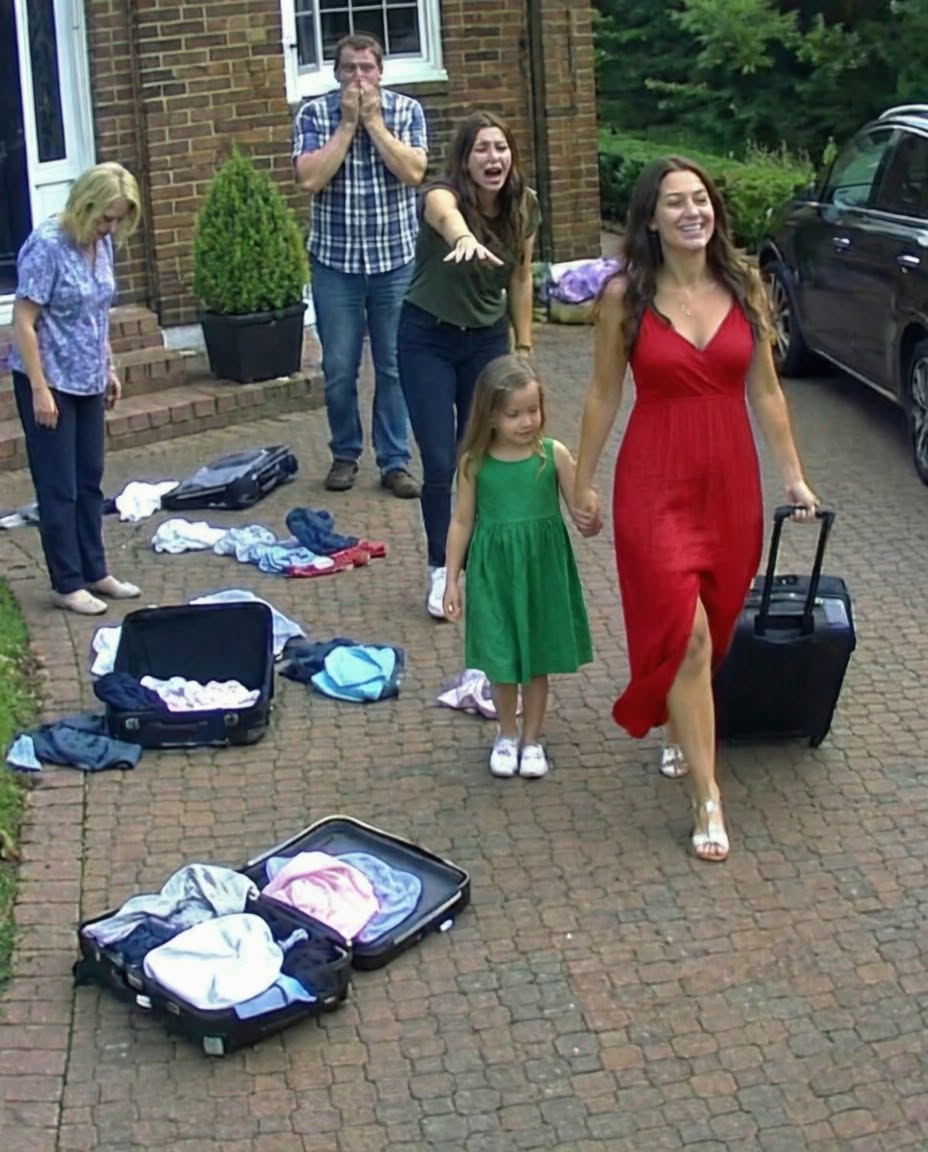
One year after the night they packed my bedroom, I hosted dinner at the beach house.
Not for everyone.
Not for a perfect family reunion with soft lighting and miraculous forgiveness.
Real life is not that cheap.
I invited Hannah, Aunt Carol, Caleb, Nia, and three AnchorPoint employees who had become friends.
I invited my mother.
I invited Megan.
I did not invite my father.
That choice cost me less than I expected.
Mom arrived first, carrying a pie from a bakery where she now worked weekends in addition to the library.
“I didn’t bake it,” she said immediately. “Growth includes honesty.”
I laughed and took the box.
She looked around the beach house with quiet eyes.
“So this is yours.”
“Yes.”
“It’s beautiful.”
“Thank you.”
No accusation.
No calculation.
Just a sentence.
Megan arrived twenty minutes later in a used Toyota with one dented door and a hotel uniform hanging in the back seat.
She brought salad.
Store-bought.
Still in the plastic container.
“I panicked,” she said.
“It counts,” I replied.
She stepped into the house awkwardly, as if expecting alarms.
In a way, I suppose she was.
During dinner, Mom asked Caleb about the company without once asking how much money it made.
Megan told Nia a horrifying story about a hotel guest who tried to pay for a room with collectible coins.
Hannah made margaritas too strong for Aunt Carol, who drank two and announced she had always hated my father’s mustache.
Everyone laughed.
I watched them from the kitchen doorway, holding a dish towel.
The house was full.
But not invaded.
That was the difference.
After dinner, Megan found me on the porch.
The sky was deep blue, the ocean silver under moonlight.
She leaned against the railing beside me.
“I’m still paying you back,” she said.
“I know.”
“I’ll probably be paying you back until I’m ninety.”
“Probably.”
She huffed. “You could say no.”
“You said not to laugh.”
A smile tugged at her mouth.
Then she grew serious.
“Dad called me last week.”
I looked at her.
“He said you destroyed him.”
My body went still.
“What did you say?”
Megan looked out at the water.
“I said he did that part himself.”
The old Megan would never have said that.
The new Megan looked terrified that saying it made her cruel.
“It doesn’t make you a bad daughter,” I said quietly.
She swallowed.
“Does it feel that way forever?”
I thought about it.
“No. Not forever. But longer than seems fair.”
She nodded.
For a while, we stood in silence.
Then she said, “I used to think you were lucky because everyone trusted you to handle things.”
“I used to think you were lucky because nobody expected you to.”
She glanced at me.
“We were both wrong.”
“Yes.”
It was not forgiveness.
Not completely.
But it was the beginning of knowing each other without the roles our parents assigned.
Inside, Mom was helping Hannah clear plates.
Actually helping.
Not directing.
Not sighing until someone noticed.
Helping.
Later that night, after everyone left, Caleb stayed behind to lock up the folding chairs.
“You know,” he said, “for someone who claimed this house was a secret fortress, you throw a decent party.”
“It’s still a fortress.”
“With pie.”
“Fortresses can have pie.”
He smiled.
The porch light softened the angles of his face. Over the past year, Caleb had become my business partner, my friend, and the person who saw me most clearly without trying to own what he saw.
There had been moments.
A hand brushing mine over a contract.
A late-night laugh in an empty office.
A look that lasted half a second too long.
But he never pushed.
That was one of the reasons I trusted him.
“You seem happy,” he said.
I looked through the window at the living room.
The graduation photo.
The investor dinner photo.
The empty plates.
The door I had chosen to open.
“I am,” I said, surprised by how true it felt.
Not perfectly.
Not permanently.
But presently.
Caleb nodded toward the ocean.
“Walk?”
We walked barefoot along the wet sand under a sky crowded with stars.
No dramatic confession.
No movie kiss in the surf.
Just two people moving at the same pace.
That was enough.
For now, enough had become beautiful.
A week later, AnchorPoint moved into a larger office.
The new sign was bigger.
J. Sinclair, Co-Founder & COO.
On my first morning there, a young operations coordinator named Elise stood in front of my office door, nervous and pale.
“Do you have a minute?” she asked.
“Of course.”
She sat across from me twisting her hands.
“My family keeps asking for money,” she said. “I don’t know how to say no.”
The room seemed to tilt gently backward through time.
I saw myself in her.
Tired.
Capable.
Praised only when useful.
I opened my desk drawer and took out a blank sheet of paper.
At the top, I wrote:
What I Can Give Without Losing Myself
Then I slid it toward her.
“We start here,” I said.
Her eyes filled.
“Is it selfish?”
“No,” I said. “It’s math.”
She laughed through tears.
After she left, I looked at the framed graduation photo on my shelf.
For years, I thought power would feel like revenge.
Like slammed doors.
Frozen accounts.
Lawyers.
A company rising while the people who used me watched from below.
And yes, some of that had felt satisfying.
I am human enough to admit it.
But real power was quieter.
It was a locked door.
It was an unanswered call.
It was a paycheck deposited into an account nobody else could touch.
It was telling the truth without begging people to believe it.
It was helping someone else before they disappeared into the same machine that nearly consumed me.
That evening, I drove home through Austin traffic with the windows down and music playing too loud.
My phone buzzed at a red light.
Mom:
Coffee next Sunday? My treat again.
Megan:
Sent another payment. Don’t spend it all in one place, rich lady.
Hannah:
Proud of you. Always.
Caleb:
Tacos? Company emergency.
I smiled.
Then I looked at the road ahead.
A year ago, my father packed my things because my sister needed the house more than I did.
He was right about one thing.
I did not need that house.
I needed the truth.
I needed my name back.
I needed to stop being the atmospheric pressure holding up a world that never held me.
And now?
Now I had a company.
A beach house.
A family I chose carefully.
A mother learning.
A sister trying.
A father I could love from a distance without letting him near the locks.
Most of all, I had myself.
May you like
And this time, I was not leaving her behind.
THE END