Chapter 10 - The House That Was Never Theirs
The mortgage company called on a Thursday.
Not mine.
My parents’.
Their account was thirty-two days past due.
I knew because my mother gave the representative my number as an “authorized payer,” which was both absurd and perfectly on brand.
The representative sounded tired.
“Ms. Sinclair, we’re trying to confirm whether you intend to bring the account current.”
“No,” I said.
A pause.
“You are listed as a contact for payment.”
“Remove me.”
“Your mother indicated you manage family finances.”
“My mother indicated incorrectly.”
Another pause.
Professional discomfort.
“I understand.”
I wondered if she did.
If she heard these calls every day from daughters, sons, ex-wives, elderly parents, people whose names were used as bridges over pits they did not dig.
When I hung up, I sat quietly for a moment.
The house was not just a house.
It was where I learned to make myself small at dinner.
Where Megan got the bigger bedroom because she “needed space to express herself.”
Where Mom put my trophies in a closet because they made Megan feel pressured.
Where Dad taught me that praise was something you earned with utility.
And now that house was cracking because I had stopped paying for the illusion.
I expected guilt.
It came, but thinner than before.
Not gone.
Just weaker.
That evening, Mom called from Aunt Carol’s phone.
I answered because Carol texted first.
She’s with me. I told her I won’t let her yell.
Mom’s voice came through small.
“Joanna?”
“Yes.”
“I didn’t know the mortgage was that behind.”
I closed my eyes.
“Mom.”
“I knew it was tight. I didn’t know your father had stopped paying.”
“Where did my money go?”
Silence.
“Megan needed help.”
“Megan always needed help.”
“She’s not as strong as you.”
There it was.
The original sin.
My strength had made me less deserving.
“Mom,” I said, “you raised one daughter to survive anything and the other to survive nothing. Then you punished me for surviving.”
She started crying.
For once, it did not move me the way it used to.
Not because I had become cruel.
Because I had become tired of tears used as locksmiths.
“I don’t know what to do,” she whispered.
“Get a job.”
The silence after that was almost physical.
“I haven’t worked in years.”
“I know.”
“Your father wouldn’t like that.”
“Then Dad can pay the mortgage.”
She inhaled sharply. “You sound hard.”
“No,” I said. “I sound unavailable.”
When we hung up, I shook for ten minutes.
Then I went back to work.
AnchorPoint was gaining traction quickly. WestBridge signed the expanded contract. A second client asked for a demo. Our investors scheduled a dinner in Austin.
For the first time, my professional life was rising faster than my family could pull it down.
So they changed tactics.
Dad filed a claim in small claims court.
Against me.
Amount: $10,000.
Reason: “Unpaid family business obligations and damages caused by financial abandonment.”
Evelyn laughed when she saw it.
Actually laughed.
A short, elegant sound of disbelief.
“He wants discovery?” she said. “Wonderful.”
I did not feel wonderful.
Court, even small court, sounded like a stage where my father could perform injury.
Evelyn saw my face.
“Joanna, he just opened a door we were politely knocking on. Now we can request documents.”
Dad withdrew the claim four days later.
But not before Evelyn filed a response with exhibits.
Not before Aunt Carol saw it.
Not before several relatives learned that the “unpaid obligations” were actually payments I had made for years.
Dad’s credibility began to collapse in public.
And when men like my father lose credibility, they reach for control.
On a Sunday morning, I woke to pounding on my apartment door in Austin.
Not the beach house.
Austin.
I checked the peephole.
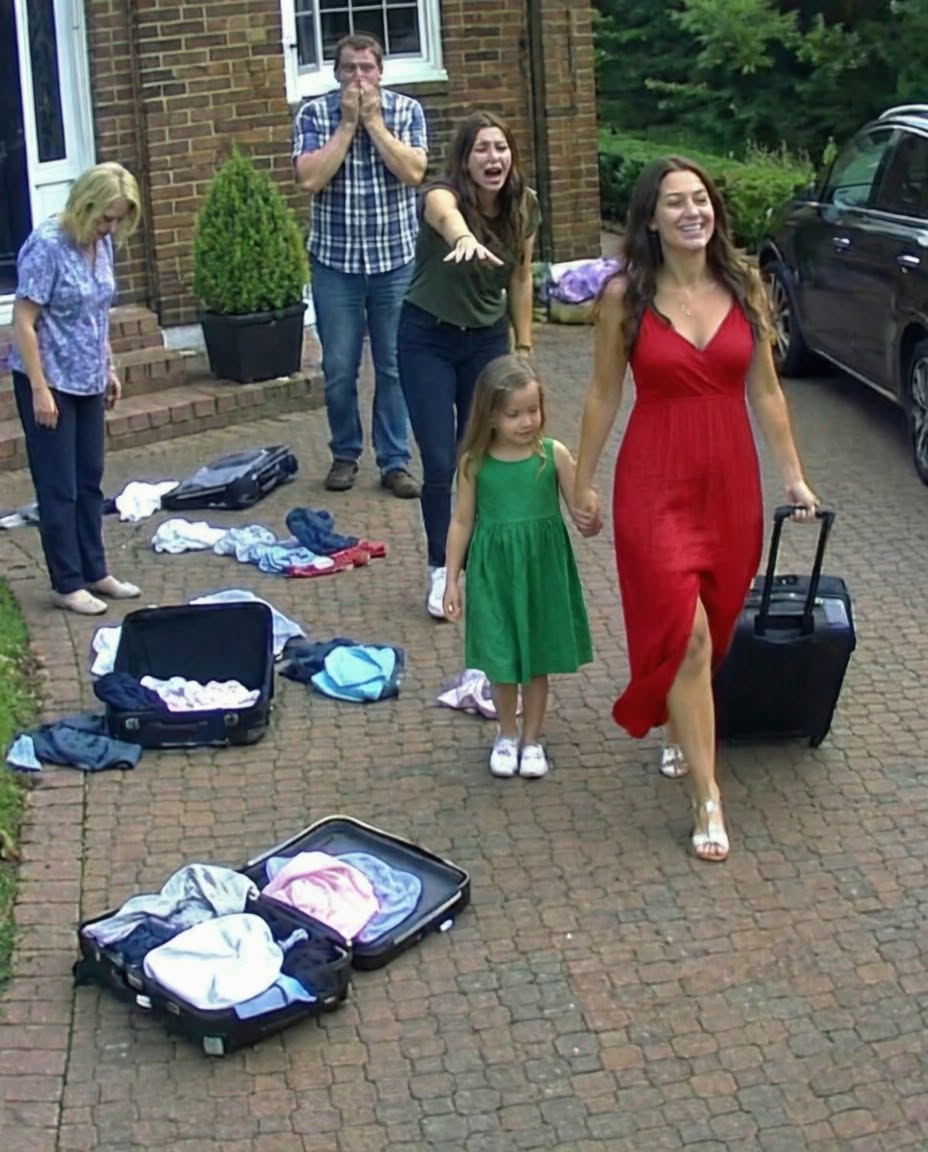
Megan stood in the hallway with mascara under her eyes and a suitcase beside her.
My heart kicked.
I opened the door with the chain still on.
“What are you doing here?”
She looked past me into the apartment.
“Seriously? This is where you live now?”
“Why are you here?”
She lifted her chin.
“Mom kicked me out.”
I stared at her.
“What?”
“She said she needs to rent my room.”
Of all the things I expected, that was not one.
Megan’s face crumpled, but anger held it together.
“She chose money over me. Just like you.”
I almost laughed at the tragic symmetry.
Then I saw the suitcase.
The trembling hand.
The fear she was trying to disguise as contempt.
For the first time, Megan looked less like my tormentor and more like the failed product of the same broken factory.
But compassion was not the same as access.
“You can’t stay here,” I said.
Her mouth fell open. “Are you serious?”
“Yes.”
“I’m your sister.”
“I know.”
“I have nowhere to go.”
“I can give you numbers for shelters, extended-stay hotels, and job placement services.”
She recoiled as if I had slapped her.
“You’re enjoying this.”
“No,” I said. “I’m refusing to become your solution.”
Her eyes filled.
Real tears this time.
“You think you’re so much better than me.”
“No, Megan. I think I was trained to carry you, and you were trained to climb on. I’m done carrying.”
She stood there shaking.
Then she whispered something that changed the air between us.
“I didn’t ask them to do all of it.”
I went still.
“What?”
Her voice dropped.
“The loans. The accounts. Dad said it was handled. Mom said you didn’t mind. I didn’t ask him to sign your name.”
My pulse roared in my ears.
“Did you know he did?”
She looked away.
Not yes.
Not no.
Worse.
“I didn’t want to know.”
That was the closest thing to honesty Megan had ever given me.
I unlatched the chain but did not step aside.
“You need to tell Evelyn that.”
“Your lawyer?”
“Yes.”
“No way.”
“Then we’re done.”
She stared at me.
For once, she had to choose between comfort and truth.
She picked up her suitcase.
“You’ll regret treating me like this.”
May you like
Maybe.
But I watched her walk away and knew I would regret letting her in more.