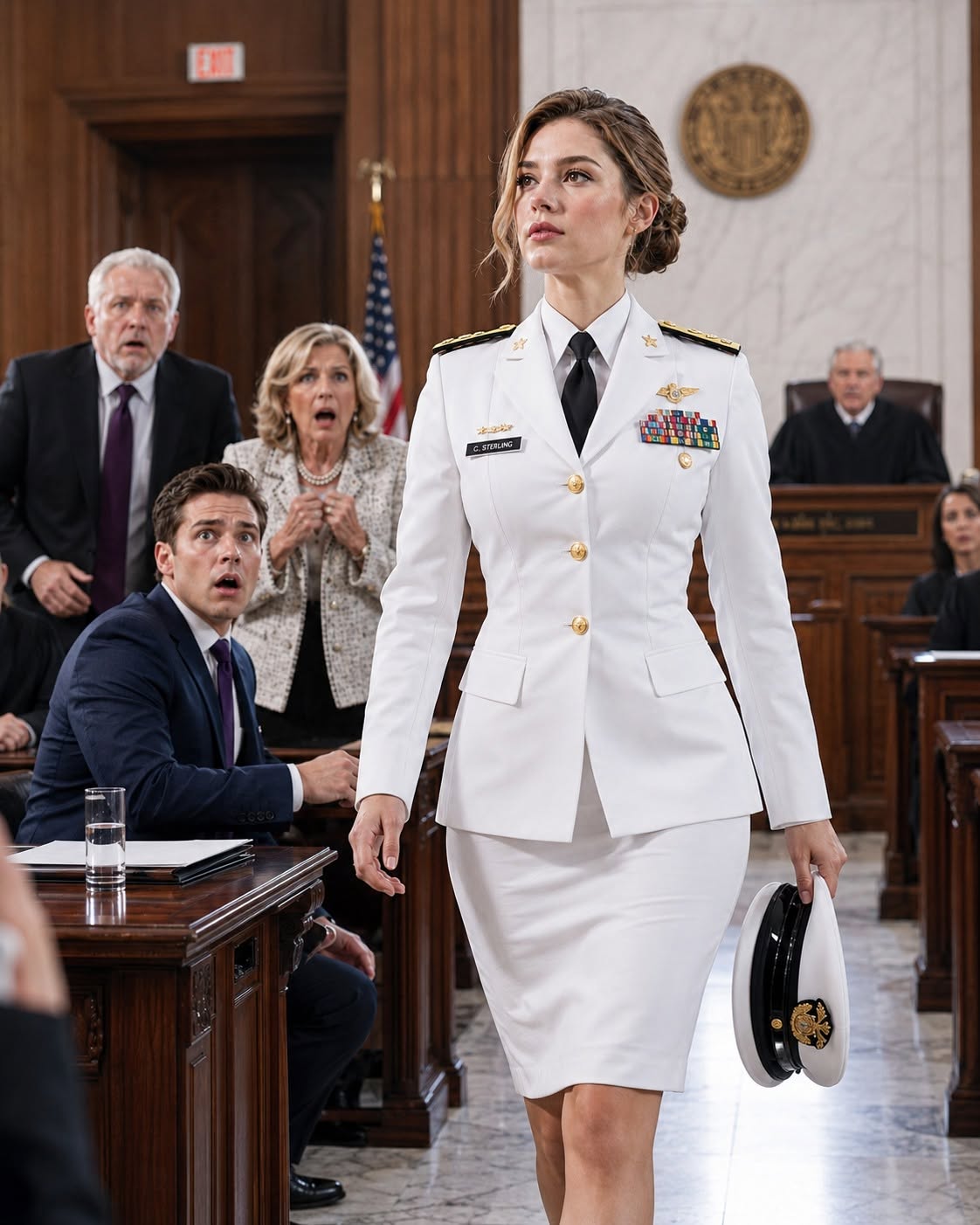
Chapter 3 - Eleven HoursThe airport police wanted to take the phone.

General Holloway refused.
Politely at first.
Then not politely.
Within fifteen minutes, two federal agents and an Army Criminal Investigation Division officer were inside the lounge.
Corporal Carter sat against the far wall looking like he wished he could disappear through it.
I almost forgot he was there.
Almost.
Special Agent Naomi Pierce placed the phone inside an evidence pouch without touching the screen.
“Where exactly did you find it?”
Carter pointed toward the conference-room door.
“Under Colonel Shaw’s chair at the gate.”
“You saw who left it?”
“Yes, ma’am.”
“Describe him.”
“White male. Maybe forty-five. Gray hoodie. Baseball cap. He had a roller suitcase.”
Pierce glanced at me.
“Did you notice him?”
“No.”
“You notice everyone.”
Holloway knew me too well.
“I was distracted.”
Carter lowered his head.
Nobody commented.
Pierce continued.
“Height?”
“About six feet.”
“Facial hair?”
“Short beard.”
“Anything unusual?”
Carter frowned.
Then his eyes widened.
“He wasn’t traveling.”
Pierce leaned forward.
“What makes you say that?”
“He had a suitcase, but the luggage tag was blank.”
“That isn’t unusual.”
“No, ma’am. But he went toward baggage claim.”
Carter shook his head.
“He’d been sitting at the gate for at least thirty minutes. If he was flying, why leave the secure area?”
Pierce looked toward one of the airport officers.
“Pull cameras from C concourse.”
The officer left.
I stared at Carter.
“Why were you watching him?”
His face reddened.
“I wasn’t.”
“Then how do you remember the luggage tag?”
He hesitated.
“Because after the general showed up, I figured I’d already made myself look like an idiot.”
Price coughed softly.
Carter ignored him.
“So I started paying attention.”
Despite everything, the corner of Holloway’s mouth moved.
“Learning.”
“Yes, sir.”
“Remarkable concept.”
Carter deserved it.
But the truth was, his observation might have given us our first lead.
Pierce turned back to the phone.
“Countdown currently reads eleven hours, thirty-two minutes.”
“What happens when it reaches zero?” I asked.
“We don’t know.”
“Yes, we do.”
Everyone looked at me.
I pointed at Mercer’s photograph.
“Something happens to him.”
Pierce didn’t argue.
“What did Mercer know?” I asked Holloway.
“The transmission log.”
“Where is it?”
“If I knew, we wouldn’t be having this conversation.”
“What was his last contact?”
“Phone call with me.”
“When?”
“Wednesday, 9:14 p.m.”
“What did he say?”
Holloway glanced toward Pierce.
She nodded.
“He said, ‘I found the original traffic.’”
My pulse accelerated.
“That exact phrase?”
“Yes.”
In military communications, traffic meant messages—radio logs, encrypted transmissions, command authorizations.
“Anything else?”
“He said somebody had moved the archive.”
“Where?”
“He didn’t say.”
“Why?”
“The call dropped.”
“Then?”
“Nothing.”
Pierce slid a printed timeline toward me.
Mercer’s car had been found at Reagan National Airport.
No ticket purchased.
No surveillance footage of him boarding an aircraft.
His phone was found inside the vehicle.
Someone wanted investigators to think he had disappeared voluntarily.
But Mercer had a wife.
Two sons.
And zero reason to vanish.
I looked at Carter.
“Did the man who left the phone look military?”
Carter thought.
“No.”
“That wasn’t my question.”
He blinked.
I repeated it.
“Did he move like military?”
That changed his expression.
“Yes.”
“How?”
“He kept checking exits.”
“What else?”
“He sat where he could see the whole gate.”
“Anything about his shoes?”
Carter looked surprised.
“Brown boots.”
“Polished?”
“Yes.”
“Laces?”
“Straight-bar.”
Pierce stared at Carter.
“You got all that from seeing him for thirty minutes?”
Carter shrugged awkwardly.
“My dad was a cop.”
The airport officer returned.
“We found him.”
He placed a tablet on the table.
Security footage showed a man standing near Gate C27.
Gray hoodie.
Cap.
Roller bag.
The image quality was excellent.
Pierce zoomed in.
Holloway swore under his breath.
I recognized him too.
“Who?” Carter asked.
Holloway didn’t answer.
I did.
“Colonel Nathan Briggs.”
“Colonel?”
“Former.”
Briggs had worked operations planning under Richard Vale.
He had testified during the original investigation.
According to Briggs, General Vale never received our warning about compromised intelligence.
His testimony had protected Vale.
Two years later, Briggs retired.
Six months after that, he became vice president of security at Vale Strategic Systems.
Pierce immediately started making calls.
I stared at the photograph.
Briggs had been twenty miles away on the night Daniel Holloway died.
But he had effectively been inside our helicopter.
Because it was his voice on the radio telling us the route was clear.
I remembered asking twice.
Confirm intelligence package.
His response:
Confirmed. Proceed.
Then the mountains lit up.
I stood.
“Where’s Briggs now?”
Pierce looked at me.
“You’re not going after him.”
“That wasn’t my question.”
“You’re a witness in an active federal investigation.”
“I’m also an active-duty Army colonel.”
“And I’m the federal agent responsible for preventing you from getting killed before tomorrow.”
“You’re doing an excellent job so far.”
Holloway stepped between us verbally before the conversation sharpened.
“Enough.”
Pierce turned toward him.
“General, if Vale knows she’s testifying—”
“He knows.”
“If Briggs planted the phone—”
“He did.”
“Then Colonel Shaw is compromised.”
I looked at the countdown.
Ten hours, fifty-eight minutes.
“Mercer doesn’t have ten hours for bureaucratic caution.”
Pierce’s jaw tightened.
“He may already be dead.”
“No.”
“How can you know?”
“Because they sent the picture.”
I tapped the evidence pouch.
“If Mercer were dead, they would send proof. Instead they sent a clock.”
“They want something.”
“The hearing canceled.”
Holloway shook his head.
“Too obvious.”
“Then the transmission log.”
Pierce stared at him.
“If they don’t have the log…”
“They think Evelyn does.”
I looked at Holloway.
“Why would they think that?”
He didn’t answer immediately.
That was enough.
“What did you do?”
“Nothing.”
“General.”
“Mercer mentioned you before he disappeared.”
My voice dropped.
“Why?”
“He said if anything happened to him, you would understand where to look.”
A chill moved down my back.
“Those were his words?”
“Yes.”
I turned away.
Mercer and I had served together once before Syria.
Germany.
Fort Rucker.
Fort Campbell.
He was annoyingly fond of puzzles.
During exercises, he used to hide contingency plans inside ordinary phrases.
If anything happened to him, I would understand where to look.
I closed my eyes.
Something surfaced.
A conversation from three months earlier.
Mercer had called unexpectedly.
We talked for six minutes.
Most of it meaningless.
His oldest son was applying to college.
His knee still hurt when it rained.
Then he had asked me an odd question.
You still have Danny’s watch?
Daniel Holloway’s watch.
Recovered from the crash site.
His father had given it to me after the funeral.
I opened my eyes.
“Holloway.”
He saw something on my face.
“What?”
“Daniel’s watch.”
His expression changed.
“What about it?”
“Mercer asked about it.”
“When?”
“Three months ago.”
“Why?”
“I didn’t know.”
I reached for my carry-on.
The watch was inside.
I traveled with it whenever I flew.
A ridiculous superstition.
One I had never admitted to anyone.
I removed a small wooden box.
Holloway recognized it.
His face tightened.
I opened the lid.
The watch lay inside.
Old.
Scratched.
Stopped forever at 02:17—the approximate moment our helicopter hit the ground.
Pierce leaned closer.
“What are we looking for?”
“I don’t know.”
I lifted it.
Turned it over.
Nothing.
Then Carter spoke from behind us.
“Ma’am?”
I looked back.
“Yeah?”
“Is the strap supposed to be that thick?”
I stared at him.
Then at the leather band.
He was right.
Daniel’s original strap had been replaced after recovery because it was badly damaged.
I had assumed the Army preservation office did it.
I pressed the edge.
Something shifted.
Pierce put on gloves.
“Give it to me.”
She carefully separated the inner leather lining.
A thin piece of metal slid onto the table.
Not metal.
A microSD card.
Nobody spoke.
Holloway looked as though the floor had vanished beneath him.
“Daniel carried that watch.”
“Yes.”
Pierce placed the card beside the phone.
“Mercer must have hidden it later.”
I nodded.
“Which means he found the transmission log months ago.”
Holloway stared at it.
“And knew somebody inside the investigation couldn’t be trusted.”
The room went silent.
That possibility was worse than Vale.
A traitor inside the reopened investigation.
Pierce picked up her phone.
“I’m getting an air-gapped laptop.”
I looked again at the countdown.
Ten hours.
Forty-one minutes.
Then the burner phone vibrated inside its evidence pouch.
A new message appeared.
A photograph.
My sister Rachel standing beside her car outside Lily’s school.
Taken minutes earlier.
Underneath:
WE WARNED YOU ONCE.
My heart stopped.
Another message arrived.
BRING THE WATCH.
Then a location.
An abandoned Army airfield fifty miles east of Denver.
And underneath:
COME ALONE, COLONEL.
The countdown changed.
03:00:00.
Three hours.
Carter stared at the screen.
“They know we found it.”
General Holloway looked at me.
“No.”
I already knew what he was going to say.
“You’re not going.”
I put Daniel’s watch back on the table.
For nine years, I had obeyed orders.
Orders to remain silent.
Orders to accept findings I knew were false.
Orders to let dead soldiers be reduced to administrative language.
This time, one living soldier was waiting.
May you like



I met Holloway’s eyes.
“Then you’d better arrest me now.”
Related Stories