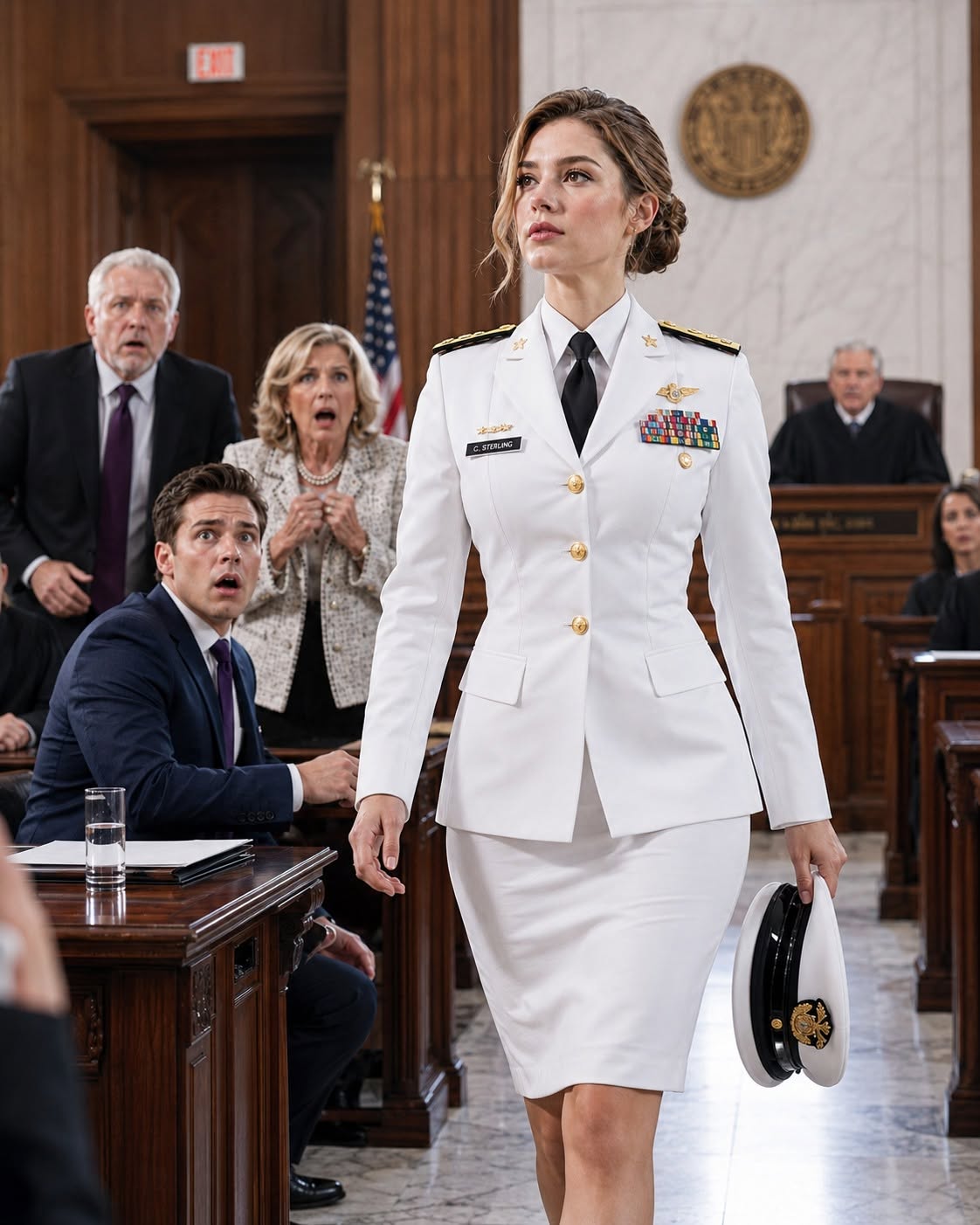
Chapter 7 - WashingtonThe military jet landed at Joint Base Andrews shortly after sunrise.

Rain covered Washington in a dull gray haze.
I hadn’t slept.
Neither had Holloway.
Pierce spent most of the flight on encrypted calls, speaking in clipped phrases and walking to the rear of the aircraft whenever she discussed Deputy Secretary Wentworth.
Nobody trusted the original hearing anymore.
Not the location.
Not the staff.
Possibly not the security.
The Inspector General moved the closed session to a secure federal courthouse conference facility without notifying most participants until forty minutes before it began.
My ceremonial recognition would still happen at the Pentagon publicly.
That was deliberate.
Canceling it would signal fear.
Proceeding meant Vale had to guess where the real testimony would occur.
At 8:20, I stood inside a dressing room adjusting my white jacket.
The uniform looked exactly as it had at Denver.
Only I felt different.
Yesterday, a stranger had mocked the ribbons.
Today, national media waited outside.
Public affairs suggested I make a statement.
I refused.
“You’ll have to say something eventually,” Pierce told me.
“Eventually isn’t today.”
“You could correct the story.”
“The Army already did.”
“The public wants to hear from you.”
“The public didn’t serve with Daniel.”
Pierce stopped.
I looked in the mirror.
“The medals are not content.”
She nodded.
“Fair.”
A knock sounded.
Holloway entered.
He was holding a small box.
“What’s that?”
“Something that should have happened nine years ago.”
I knew immediately.
“No.”
“Evelyn.”
“No.”
“You haven’t even opened it.”
“I know what it is.”
He sighed.
“The board approved Daniel’s posthumous Silver Star.”
My throat tightened.
“That should go to his family.”
“I am his family.”
“His mother.”
“She’ll receive the official set.”
He opened the box.
Inside lay a second Silver Star.
“This one was struck for the regimental memorial.”
I stared at it.
Holloway held it toward me.
“I want you to carry it.”
“Why?”
“Because he followed you into that valley.”
“He followed orders.”
“He trusted you.”
I looked away.
“He died.”
“So did men who followed me.”
“That doesn’t make it easier.”
“No.”
Holloway’s voice softened.
“It never does.”
I took the box.
At 9:00, we entered the Pentagon ceremonial hall.
There were cameras.
Senior officers.
Families.
Veterans.
And near the back, three young Marines.
Carter.
Price.
Moreno.
I stopped.
Holloway followed my gaze.
“I invited them.”
“Why?”
“Education.”
Carter saw me.
His back straightened.
He looked terrified.
I nearly laughed.
The ceremony began.
Names were read.
Citations summarized actions using formal military language.
Extraordinary heroism.
Disregard for personal safety.
Actions in keeping with the highest traditions of military service.
Words.
Clean words.
They couldn’t describe the smell of burning insulation.
They couldn’t describe carrying a twenty-four-year-old soldier while he cried for his mother.
They couldn’t describe deciding who received the last unit of plasma.
When my name was called, I walked forward.
Holloway pinned the decoration.
Cameras flashed.
Then he whispered so quietly only I could hear:
“For Daniel.”
I nodded.
“For all of them.”
Afterward, reporters shouted questions.
“Colonel Shaw, did you forgive the Marine?”
“Colonel, were your medals really classified?”
“Colonel Shaw, are you testifying against Richard Vale?”
That last question stopped everyone.
Pierce appeared instantly.
“Move.”
We entered a secured hallway.
“How did they know about Vale?”
“I don’t know.”
“That hearing was sealed.”
“I know.”
Another leak.
We left through a service entrance.
Twenty minutes later, I was inside the federal courthouse facility.
No cameras.
No reporters.
No ceremony.
Just a long table and eight people.
Inspector General Monica Reeves.
Two federal prosecutors.
Pierce.
Holloway.
Two military legal officers.
And Deputy Secretary Charles Wentworth.
He smiled when I entered.
“Colonel Shaw.”
I looked at him.
“Mr. Secretary.”
If he knew we had seen the photograph of him with Vale, he didn’t show it.
“Quite an eventful twenty-four hours.”
“That’s one description.”
He gestured toward a chair.
“Please.”
I sat.
The questioning began.
For ninety minutes, I described the Syria mission.
The intelligence warning.
My request to hold.
Briggs’ confirmation.
Vale’s voice.
The ambush.
The crash.
The rescue delay.
The dead.
I kept my voice steady.
Until Daniel.
“Lieutenant Colonel Holloway survived the crash with severe abdominal injuries.”
His father sat six feet away.
I continued.
“He remained conscious for approximately seventeen hours.”
“Did he speak?”
“Yes.”
“What did he say?”
I hesitated.
Holloway looked at me.
I told the truth.
“He asked whether rescue was coming.”
“What did you tell him?”
“That it was.”
“Did you know that?”
“No.”
The prosecutor waited.
“I lied to him.”
Nobody moved.
“I wanted him to hold on.”
My voice broke slightly.
“He did.”
Silence filled the room.
Then Wentworth spoke.
“Colonel, trauma affects memory.”
There it was.
The same weapon used nine years earlier.
I looked at him.
“It can.”
“You were injured.”
“Yes.”
“Concussed.”
“Yes.”
“Blood loss?”
“Yes.”
“You’re asking us to accept that your recollection of specific radio calls during a catastrophic event is accurate nearly a decade later?”
“No.”
Wentworth looked surprised.
I slid a transcript across the table.
“I’m asking you to listen to the recording.”
Pierce pressed play.
My younger voice filled the room.
Then Briggs.
Then Vale.
Wentworth stopped smiling.
The audio ended.
Inspector Reeves looked at him.
“Mr. Secretary?”
Wentworth cleared his throat.
“I’d need authentication.”
“Already authenticated,” Pierce said.
“When?”
“Six thirty this morning.”
Wentworth looked irritated.
“I wasn’t informed.”
“That was intentional.”
The room changed.
He realized he was no longer overseeing the proceeding.
He was inside it.
Reeves placed the financial documents in front of him.
“Do you recognize the company Avalon Strategic Consulting?”
“No.”
Pierce slid a photograph across the table.
Wentworth with Vale.
“Do you recognize Richard Vale?”
“Obviously.”
“When was this taken?”
“I don’t know.”
“The metadata says eleven days ago.”
Wentworth leaned back.
“Vale is a prominent defense executive. I meet hundreds of—”
The door opened.
Everyone turned.
A federal marshal entered.
He whispered into Reeves’ ear.
She looked at Pierce.
Then at me.
“We found Briggs.”
My heart jumped.
“Alive?”
“Yes.”
“Where?”
“Outside Baltimore.”
Reeves closed her folder.
“He surrendered twenty minutes ago.”
Wentworth stood.
“This hearing is becoming irregular.”
“No,” Reeves said.
“It’s becoming useful.”
He stared at her.
Then she added:
“And Colonel Briggs has requested immunity in exchange for testimony.”
Wentworth’s face changed.
Only slightly.
But I saw it.
Fear.
The door opened again.
This time two federal agents entered.
One moved behind Wentworth.
Reeves looked directly at him.
“Mr. Secretary, before you leave, we need your government phone.”
Wentworth went still.
“For what reason?”
“A preservation order.”
He laughed.
“That requires authorization.”
Reeves slid a document across the table.
“We have it.”
Wentworth looked at the paper.
Then toward me.
His expression sharpened.
“You have no idea what you’re doing.”
I had heard powerful men say versions of that sentence all my career.
Usually when someone finally stopped obeying them.
I stood.
“No.”
May you like



I looked at him.
“But I know exactly who I’m talking to.”
Related Stories